
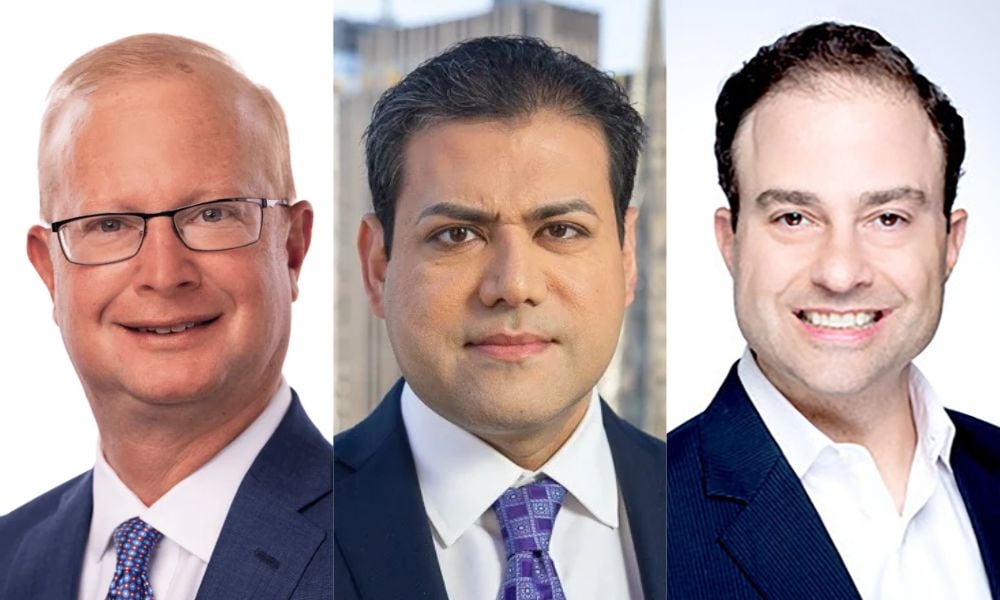
Financial advisors fielding calls about this month's market volatility should start with the client's plan, not the price screen, according to three chief investment officers who spoke with InvestmentNews.
Democrats won control of both chambers of Congress in the Nov. 3, 2026, midterm elections. Two days later, a selloff led by chipmakers and data center stocks erased roughly $2.5 trillion in market value. The Cboe Volatility Index, or VIX – a gauge of expected S&P 500 swings over the next 30 days – jumped about 70%, its biggest one-day rise in almost two years, and all 11 S&P 500 sectors closed lower. The 10-year Treasury yield has since climbed to 5.152% in the week ended Nov. 13.
In a Morningstar survey from November 2026, 65% of investors said they were at least occasionally stressed about their investments, up 7 percentage points from July.
Yet the CIOs agree the swings are no reason to overhaul a portfolio, echoing advisors who argued before the vote that a midterm election won't change portfolio fundamentals. Instead, they see openings to rebalance and confront concentration risk.
Todd Rabold, investment management partner at Callan Family Office, said check-ins on cash needs and life changes should happen proactively, since strategic shifts made mid-volatility can force sales at poor prices.
"Market volatility can serve as a temporary pressure test for an investment strategy. It reinforces the importance of thoughtful diversification, which helps reduce a portfolio's sensitivity to sharp movements in individual asset classes. The question advisors should be asking is whether anything has fundamentally changed in the client's circumstances or long-term objectives, rather than simply reacting to what has changed in the markets," Rabold said.
Stuart Katz, chief investment officer at Robertson Stephens, first asks whether near-term cash needs or retirement timelines have actually changed. He then asks how much worry stems from headlines rather than real concern about risk, and whether clients feel overexposed to artificial intelligence.
"Many investors are unknowingly concentrated in just a handful of mega-cap names despite owning what may appear to be a diversified holding such as the S&P500," Katz said. "Framing the conversation around personal goals rather than daily performance changes pivots the client from a short-term reactive mindset back to a more intentional long-term plan."
Technology still makes up roughly a third of the S&P 500 even after the pullback, Katz said, leaving index investors heavily tied to AI.
"Advisors should use this environment to proactively consider tax-aware rebalancing, trimming overly concentrated positions and rotating into undervalued areas like healthcare, industrials, and dividend-paying equities that benefit from broader market rotation. Additionally, with 10-year Treasury yields hovering above 5%, fixed income, including municipals, now offers compelling income and potential ballast against equity drawdowns," he said.
"We have been trimming U.S. large-cap growth exposure and adding to large- and small-cap value throughout the year, well before the AI halo began losing some of its luster. Higher interest rates have also improved the relative attractiveness of fixed income, particularly intermediate-term municipal bonds and floating-rate loans. We are finding compelling opportunities in private debt as well," Rabold said.
He added that tax-loss harvesting can improve after-tax results but should complement, not dictate, investment decisions.
Abe Sheikh, chief investment officer at Cordoba Advisory Partners, said fundamentals still support higher stock prices, even with tech under pressure.
"With 301 out of 500 S&P 500 companies having reported third quarter results, the original snapshot shows revenue growth of 13.6% and earnings growth of +29.4% compared with a year earlier," Sheikh said, adding that earnings outpacing revenue points to improving profitability.
FactSet's S&P 500 earnings season update for Oct. 30, 2026 put blended third-quarter earnings growth at 30.2%, which would be a third straight quarter above 25%.
Sheikh sees the selloff as a test of temperament. "The key to successful investing – in addition to disciplined research – is maintaining the right temperament. In practice, this means having a long-term view of investing and seeing stocks as real businesses and not merely tickers that fluctuate on a screen."
He also favors adding European equities, arguing that a dollar strengthened by the Iran war has opened a gap between local-currency and dollar returns that should narrow once the conflict is resolved.
Sheikh noted that stocks have risen in the year after each of the past 19 midterm elections. "CAP expects stocks to perform strongly toward the end of 2026 and into 2027," he said. Not every strategist agrees: some have warned that a Republican White House paired with a Democratic Congress has historically been among the weaker setups for equities.
Katz is watching megacap tech earnings, guidance on AI infrastructure spending and the Federal Reserve's next rate decisions as inflation stays sticky.
"While a newly divided government will likely bring heightened congressional oversight and regulatory hearings for big tech, executive vetoes typically prevent sweeping legislative shocks," he said. He recommends clear rebalancing guidelines, since behavior is one of a portfolio's biggest hidden risks.
Rabold is tracking credit markets. "At present, we do not see evidence of an alarming near-term default environment. Higher yields can therefore represent an opportunity for long-term investors rather than simply a source of concern," he said.
"The role of an advisor is to help clients distinguish between short-term market movements and fundamental changes in their investment outlook. Volatility is inevitable, but allowing it to dictate investment decisions is not," Rabold added.

The two financial advice leaders announce a settlement to ongoing trade disputes involving financial advisors.

Altruist’s AI platform will let financial advisors summarize, build and discuss client estate plans starting in early 2027

Navigation and security beat flashy features for advised investors as U.S. Bank and Vanguard top digital experience rankings

The RIA consolidator's M&A run continues with a Louisville acquisition, a Nashua deal and a Dallas-area advisor

The Lenexa, Kansas broker-dealer and its 25 advisors managing $2.5 billion will gain expanded technology and product resources
Advisors are broadening the conversation beyond savings to help clients prepare for the realities of longer lives
Growing wealth, evolving priorities, and untapped opportunities are reshaping how women approach long-term investing.

