An improving U.S. economy will eventually lead to rising interest rates, but for investors, it's not time to panic.
Such was the conclusion reached by Bob Doll, senior portfolio manager and chief equity strategist at
Nuveen Asset Management, and Claus te Wildt, senior vice president and head of capital markets strategy group at
Fidelity Investments.
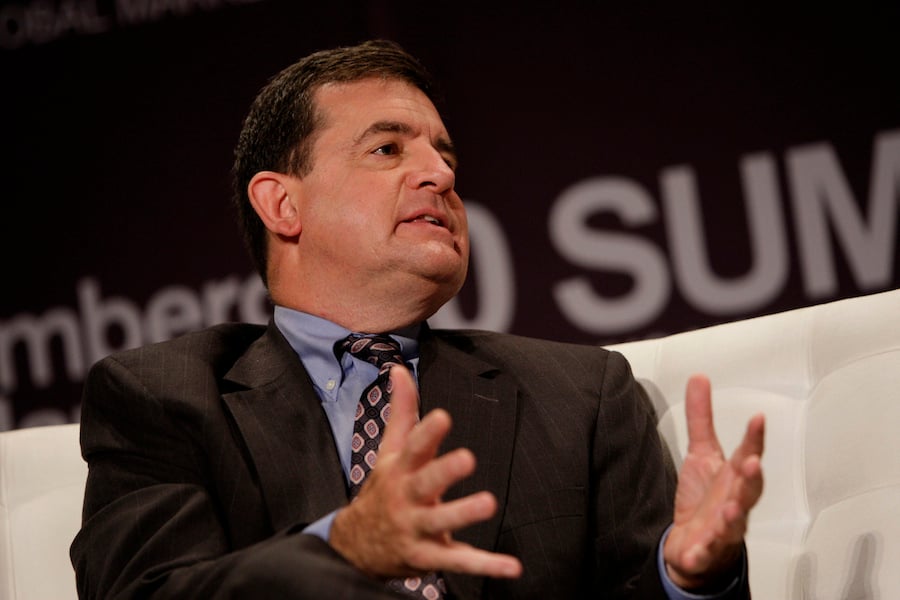
On a panel Monday at the National Association of Plan Advisors' 401(k) Summit in San Diego, Mr. Doll was sanguine about the status of the U.S. economy.
“It's important to point out that the US is leading the way,” he said, explaining that that was still the case despite weakness in the
first quarter due to a port strike in California and lousy weather elsewhere in the country. The job market has been strengthening, consumers are faring better, and the Fed's monetary policy is still stimulative, even though an interest rate increase is on the table, Mr. Doll added.
While that interest rate hike is coming, both Mr. te Wildt and Mr. Doll agreed it would likely be gradual. “The Fed will raise rates earlier than the markets expect, but a lot slower than expected,” Mr. te Wildt said.
Meanwhile, the outlook for earnings for U.S. companies is up in the air due to two factors.
“The flies in the ointment are the rising dollar and declining energy prices,” said Mr. Doll. “The rising dollar is part of the Fed's not-so-subtle message. They want the dollar rise to slow down.” Indeed,
Monday the dollar declined amid speculation that the Fed will raise rates later than originally anticipated.
On the political front, Mr. Doll noted that even with the Republicans' sweep of Congress last November, “the new Congress isn't very different from the old one.” “We still have a Democratic president, and after the November [2014] elections, the focus moved to November 2016,” Mr. Doll said.
He likened the government to being the tail and U.S. corporations and consumers as the dog: “Don't let the tail wag the dog.”
ANXIETY OVER RATE HIKE HYPED
Mr. te Wildt put into perspective the U.S. low 10-year Treasury rates, which are hovering around 2%, by comparing it to rates on the German 10-year bund, which is providing yields in the neighborhood of 0.18%.
He added that anxiety in the U.S. about an upcoming rate hike is overplayed. “There's far too much anxiety about interest rates going up; that anxiety is misplaced,” Mr. te Wildt said. “What you do need in your portfolio is some duration and investment grade bonds.”
Advisers are wrong to go running toward unconstrained, or so-called go-anywhere, bond products, Mr. te Wildt said, because to do so is to lose sight of bonds' purpose as a diversifier against equity risk.
“I don't think a lot of clients understand the risk they take on if they invest in unconstrained bonds,” Mr. te Wildt said.
“If you peel the onion on a high-yield bond fund with zero duration and 100% credit risk, the correlation this product will have is very high with equity markets,” he added. “We should make sure that our clients have enough real fixed income in their 401(k) plan that is providing the cushion to ride out the volatility the equity markets will cause.”
Those words resonated with some audience members, including attendee Philip Chao, an adviser at Chao & Co., who observed after the session that clients often fail to realize that there is a tradeoff in risk for bonds that grant higher yields.
“The purpose of bonds is to provide stability in returns and to act as a counterbalance to equity beta,” he said.
Advisers to retirement plans have recently been
reassessing their bond fund menus and talking to plan sponsor clients who are asking whether they should make changes.
ACTIVE VS. PASSIVE
Mr. Doll had sharp words for his fellow active managers, particularly as assets flow toward low-cost passive management funds.
“We active managers have to do a better job if we're not going to have all that money disappear,” he said.
The issues behind the underperformance of active managers relates to where those managers are putting the money to work, he said.
“The average U.S. active large cap manager has 5% of his or her money outside of the U.S.,” Mr. Doll said, noting that the U.S. has outperformed foreign countries. “The average manager has 3% of the money in cash — that's like having a 3% stock position that goes nowhere.”
Indeed, there are opportunities for active managers, if they are willing to work for them.
“I love the fact that so much money is going to Valley Forge; [the market] is becoming less efficient,” Mr. Doll said, making a thinly-veiled reference to Vanguard, the index investing behemoth, which is based in Valley Forge, Pa. “As a result of that, I'm finding nickels and dimes to pick up off the floor and put into clients' pockets.”
“There is so much money going in that direction, and you know what they buy when they get that inflow — they buy everything, the good and bad,” said Mr. Doll of passive investing strategies.
“If we get up a little early and sharpen our pencils, we ought to be able to find a few more good ones,” he said. “Shame on us if we can't do better.”