
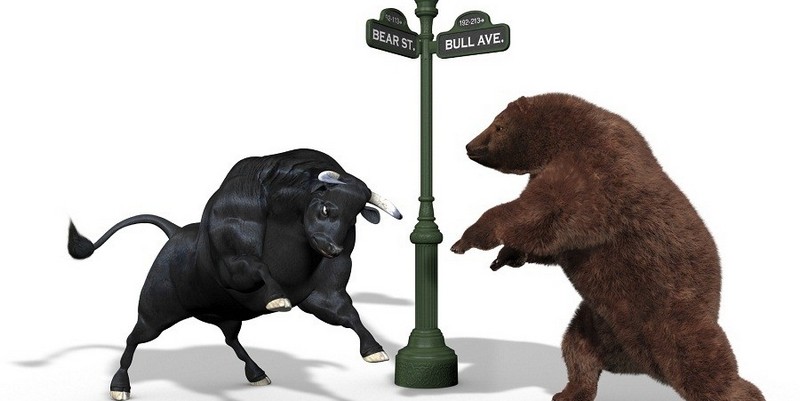
Correction: An earlier version of this story used annualized figures for the funds' performances, which exaggerated their actual losses for the period. The updated figures are for the period of May 21, 2015 though January 16, 2016. The Standard and Poor's 500 closed Friday at an 11.8% loss, pushing large-company stocks into official correction territory. But many large diversified stock funds are posting losses of 20% or more — bear-market territory — between the market peak on May 21 and Friday. You'd expect emerging markets funds to be well into the bear lair, and you'd be correct: Diversified emerging markets funds are down 27.3% since the market peak. But PIMCO RAE Fundamental Plus EMG (PEFIX), a $1.7 billion fund with a furious 537% turnover rate, has plunged 39.37%, according to Morningstar, the Chicago-based investment trackers. But the carnage isn't limited to emerging markets. Templeton Foreign A, a $6.4 billion fund with a 5.75% maximum sales charge, has shed 26.03% in the ongoing correction. Vanguard International Value (VTRIX), a $7.6 billion fund, has fallen 24.16%. CLOBBERED FUNDS By and large, funds that looked for underpriced stocks saw their holdings get much, much cheaper. Value funds in general have been clobbered in this market: The average large-cap value fund is down 14.8% and the average midcap value fund is down 17.75%. And some have produced surprisingly bad losses. For example, Dodge & Cox International Stock (DODFX), a $57 billion behemoth value fund, has fallen 28.56% since the top of the U.S. stock market. The fund's 20% stake in emerging markets may be one key to its poor performance. And like many international funds, it was also hurt by the soaring value of the U.S. dollar. (Related read: Emerging markets now in bear territory) DIRT CHEAP But a large part of the fund's poor performance may be its fondness for stocks that Wall Street hates — and has kept hating through the correction. For example, its sister fund, the $54.8 billion Dodge & Cox Stock (DODGX), is down 16.54% since the start of the market's decline. The fund has 26% of its assets in financial services stocks, which have fallen about 9% this year, vs. 7.5% for the S&P 500. Cheap stocks got dirt cheap for Longleaf Partners (LLPFX), a $3.2 billion large value fund that's down 29.93% since the May market peak. And Sequoia, which has 10.88% of its $6.2 billion portfolio in Berkshire Hathaway, saw its share price become 24.95% cheaper since the May 2015 peak. Fairholme (FAIRX), another giant value fund with $2.9 billion in assets, has tumbled 23.02%. And, as is often the case, small-company funds got much, much smaller in the recent downturn. Pacific Advisors Small-Cap Value (PASMX) has plunged 42.71%, and Jacob Small Cap Growth Investor (JSCGX) took a 39.39% hit.
| Name | Ticker | Morningstar Category | Performance since 5/21 |
|---|---|---|---|
| PIMCO RAE Fundamental PLUS EMG Inst | PEFIX | Diversified Emerging Mkts | -39.37% |
| Russell Emerging Markets S | REMSX | Diversified Emerging Mkts | -30.33% |
| Templeton Developing Markets A | TEDMX | Diversified Emerging Mkts | -30.14% |
| Longleaf Partners | LLPFX | Large Blend | -29.93% |
| Dodge & Cox International Stock | DODFX | Foreign Large Blend | -28.56% |
| FPA Capital | FPPTX | Mid-Cap Value | -27.12% |
| Templeton Foreign A | TEMFX | Foreign Large Value | -26.03% |
| DFA International Value I | DFIVX | Foreign Large Value | -25.69% |
| Sequoia | SEQUX | Large Growth | -24.95% |
| Vanguard International Value Inv | VTRIX | Foreign Large Value | -24.16% |
| Longleaf Partners International | LLINX | Foreign Large Blend | -29.93% |
Could things get worse? Some experts point to a collapse in small-cap stocks as a harbinger of doom for the broad market, but S&P Capital IQ's chief investment strategist Sam Stovall says there's no evidence for that. Since 1980, the S&P 500 followed Russell 2000 small-company stock index into bear territory only 50% of the time, he points out. “History reminds us that even though large and small cap stocks are very highly correlated, just because small caps have now fallen into a bear market doesn't mean that large caps will, too,” he said. Another takeaway: Concentrated funds, which fared reasonably well in 2015, are among some of 2016's biggest losers. Sequoia, for example, had a 29% stake in Valeant Pharmaceuticals, which is the fund's main source of woe. FPA Capital (FPPTX) has suffered a 27.12% loss since May, despite a cash position of 21.8%, according to Morningstar. “If you put most of your eggs into a very small basket and you get those stock calls wrong, there's nothing to serve as a buffer,” says Todd Rosenbluth, director of mutual fund research at S&P Capital IQ.

The financial advice industry has been facing inquiries into its cash sweep programs for years now.

Investor money allegedly went to strip clubs, exotic cars, and landscaping

Procyon adds $415 million in assets under management in New Jersey while Savant picks up a $213 million Southern California planning firm

With a growing number of real estate-rich Baby Boomers aging into retirement, some advisors may be failing to consider all the options available for those clients' assets.

Cornerstone Advisors study reveals compliance bottlenecks stall campaigns weeks after customer opportunities close.
As AI makes financial information more accessible than ever, Lana Hock explains why human judgment, trust, and empathy remain the qualities clients value most in a financial advisor
Northern Trust’s Ken Lassner shows advisors how to convert volatility into after-tax portfolio gains

