
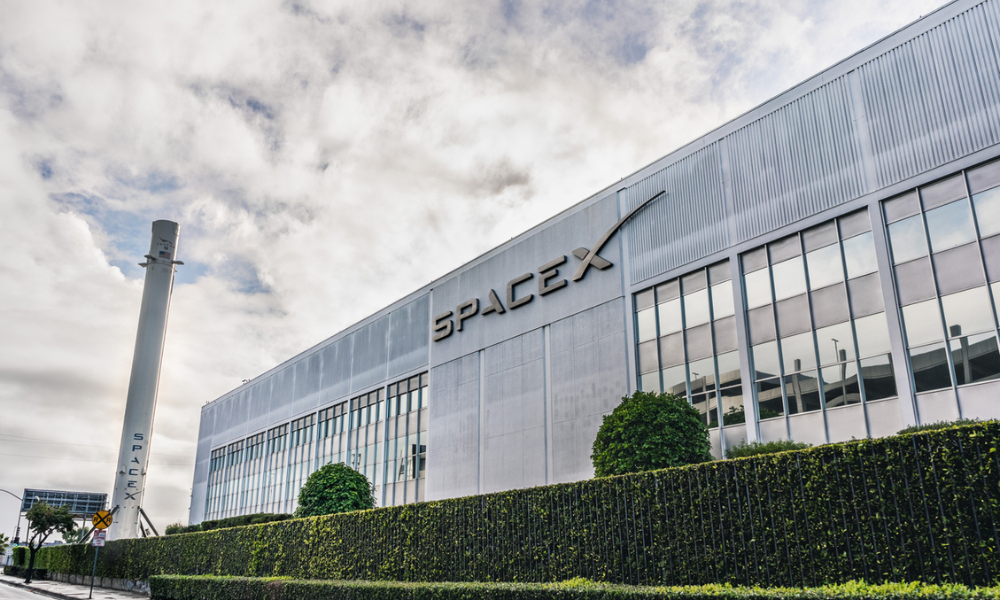
SpaceX shares jumped as much as 11% in premarket trading on Tuesday, extending a rally that has made the rocket and satellite company one of the most closely watched stocks on Wall Street since its market debut last week.
The move builds on a 20% gain registered on Monday, the company's first full day of trading following Friday's initial public offering. At last check the stock was up 10.4% at $212.50, putting shares more than 57% above their $135 IPO price, according to Reuters. T
That would value the company at close to $2.8 trillion, more than Amazon with its market capitalization of $2.66 trillion.
CEO Elon Musk said in a post on X on Sunday that SpaceX "might be able to reach approximately" $1 trillion in revenue by 2030.
That target dwarfs the company's actual 2025 results, when it generated $18.7 billion in revenue while posting a net loss of $4.9 billion. The losses have continued into this year, with the company reporting a $4.28 billion deficit in the first quarter of 2026.
But while investors are eagerly watching share prices and mulling holding or selling, for many retail investors the numbers are smaller than they had hoped. CNBC reported Monday that the oversubscribed IPO meant that many smaller investors received only a fraction of the shares they wanted. Examples include an investor anticipating 1,000 shares but got 17 and another who’s expectation of 4,250 turned into a reality of just 147.
For those investors with more clout, SpaceX shares were more abundant.
Gina Rinehart, Australia's richest person, has built a stake in SpaceX worth more than $1 billion through her privately held company Hancock Prospecting, according to The Wall Street Journal. The position is Hancock's largest investment outside of iron ore, the commodity underpinning its core mining business.
In emailed remarks to the Journal on Monday, Rinehart said the investment reflects her confidence in Musk and the case for Western economies to keep funding technology and innovation. "We see SpaceX as a rare business: led by a truly exceptional person, technically exceptional and operating in sectors that are crucial, and with long-term potential," she said.

Faulty Forms 1099 and account statements reportedly left some Vanguard brokerage customers overpaying or underpaying taxes for over a decade.

The democratization of ETFs cuts both ways

Independent broker-dealers snap up experienced advisors as competition for established practices intensifies.

Derek Flowers, a nearly 30-year veteran, is set to retire in mid-January, handing the reins to the executive who helped lead the bank's regulatory turnaround.

The campaign spans broadcast TV and streaming, as the brokerage faces slowing client net flows and an $8.1 billion advisor team that left to launch an RIA this month.
As AI makes financial information more accessible than ever, Lana Hock explains why human judgment, trust, and empathy remain the qualities clients value most in a financial advisor
Northern Trust’s Ken Lassner shows advisors how to convert volatility into after-tax portfolio gains

