
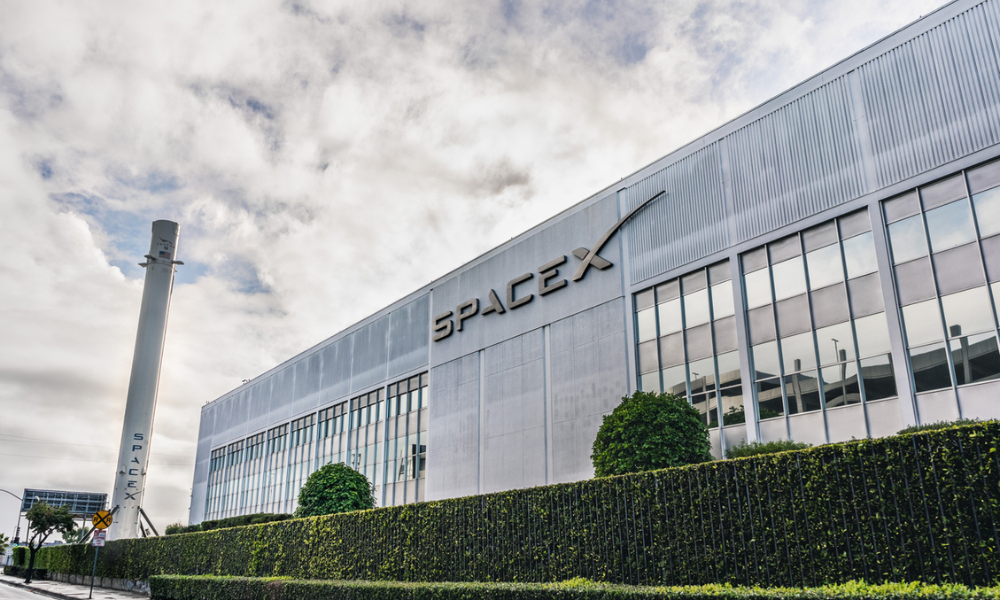
SpaceX's historic post-IPO collapse has wiped out hundreds of billions in market value in less than two weeks and a capital markets specialist says the damage goes well beyond a single stock.
Christopher Della Fave, senior vice president at Texas based investment bank Post Oak Group, sees the selloff as the market finally asking hard questions about whether AI-driven valuations were ever grounded in reality.
"This is a liquidity grab, plain and simple," Della Fave told InvestmentNews. "A lot of early insiders were able to sell the moment the stock went public, and when that much paper hits the market at once, you get exactly this kind of move."
The numbers tell the story. Priced at $135 on June 12, SpaceX shares briefly touched an intraday high of $225.64 before sliding back near $150. Della Fave says that spike was never a fair read on the business.
"That $225 print was euphoria, and yeah, that was unrealistic. The company wasn't mispriced; the first few days of trading were," he said. "I read this pullback as a buying opportunity, not a warning."
But the bigger concern he raises sits beyond SpaceX itself. Della Fave believes the selloff is drawing attention to stretched valuations across the AI sector.
"Most of AI is overvalued right now. I'll say that flatly," he said. "At the highs, SpaceX was trading at roughly 94 times trailing revenue, versus about 23 times for Nvidia, all while posting a net loss of $4.94 billion in 2025. That's the story of the whole space in one number."
He is careful to distinguish between being overvalued and being in freefall.
"Overvalued doesn't mean the bubble bursts; overvalued and falling apart are two different things,” he said. “But you can't pay multiples like that on a story indefinitely."
On the question of whether macro forces, including interest rates and Fed policy, are behind the move, Della Fave is direct.
"I don't think this is a macro story at all. Rates and the Fed are the easy things to point at because they're always in the headlines, but that's not what's driving this," he said. "This is the market looking at AI valuations and asking a simple question: are these inflated like everything else in the space? I don't see this as a broader economic problem leaking into tech, I see it as tech getting questioned on its own merits."
The question of whether AI infrastructure spending is generating real returns is where Della Fave grows most pointed. He cites a striking data point to illustrate the gap between investment and adoption.
"Despite all the hype, data from the Bank of America Institute show only about 3% of its customers pay for AI services, mostly households earning more than $125,000 a year. Billions are going into the build, and almost no one's paying yet."
Della Fave’s advice to investors navigating the space is similarly grounded.
"Money is moving toward companies that can point to something tangible and away from anything that's just an idea with a good name. Back the build, not the pitch," he said.
When it comes to evaluating specific AI names, Della Fave argues against relying on any single metric.
"No single number tells you anything here; you have to look at several together," he said. "Is revenue actually accelerating, or just large? Are gross margins real, and is there a credible path to profit, not a 'someday' story? How much cash are they burning against the runway they have left? And are customers actually paying and staying, or just parked on a free tier? If a valuation only holds when you take the rosiest read on every one of those at once, that tells you everything."
As for the IPO pipeline, he does not expect the SpaceX turbulence to slow the queue.
"If anything, this speeds the pipeline up," he said. "There is so much capital being poured into this space that a couple of rough trading weeks don't change the math for a private company deciding whether to go out. Look at SpaceX itself, its bankers were preparing to meet investors about a bond offering of at least $20 billion within a week of the IPO to fund the AI expansion. Capital is flooding in even while the stock wobbles."
The lesson for companies considering going public, in his view, is operational rather than strategic. "The lesson from SpaceX isn't 'don't go public', it's to manage your float and your insider selling so you don't hand the market a reason to gap your stock down in the first two weeks. Get that right and the demand is absolutely there."
Looking ahead, Della Fave is watching three things over the next six to twelve months: where SpaceX finds technical support and resistance, any regulatory movement on AI that could reprice the entire group overnight, and the midterm elections, which he says will set the policy backdrop for two years.
"The market will start pricing it well before November," he said.

Parents must still act to get the $1,000 federal seed and employer contributions, giving financial advisors a role in the rollout.

FINRA booted Rudy Anguiano from the industry for “conversion - the intentional and unauthorized taking of another person’s property.”
Notice 2026-62 also flags box spread ETFs and tax-aware fund trades as Treasury opens month-long consultation period.

Heartwood Wealth Advisors deal marks the serial acquirer's 36th-ever transaction as third-quarter RIA M&A volume slips 19%

The AI lab disclosed more than $8 billion in 2025 losses on an operating basis as financial advisors weigh a supersized listing likely to land past the midterms.
As AI makes financial information more accessible than ever, Lana Hock explains why human judgment, trust, and empathy remain the qualities clients value most in a financial advisor
Northern Trust’s Ken Lassner shows advisors how to convert volatility into after-tax portfolio gains

