

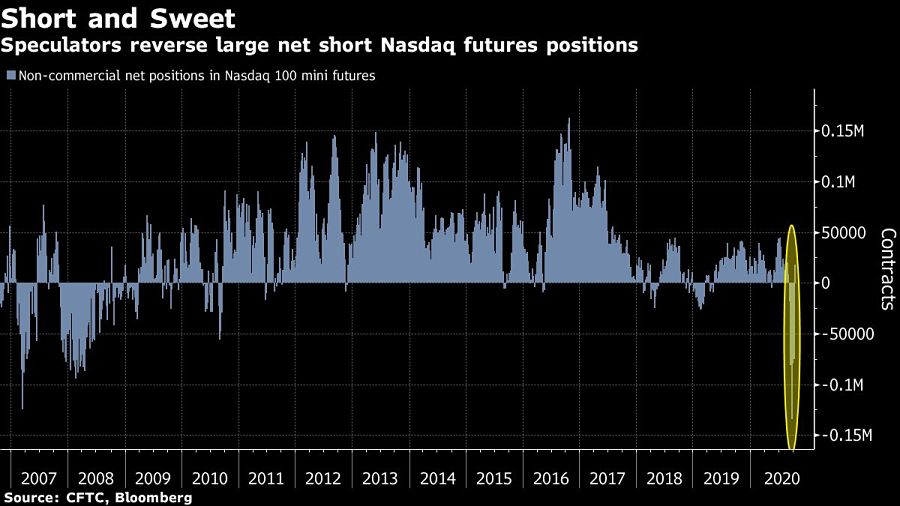
Hedge funds have pulled back from one of the biggest short positions in U.S. tech stocks in over a decade, in a near-record buying spree of Nasdaq futures last week.
Net speculative positions in Nasdaq 100 mini contracts surged by the most in more than 13 years in the week through Oct. 13, according to the latest Commodity Futures Trading Commission data. The increase was the second biggest on record in data going back to 1999 and left speculators net long the futures for the first time since the beginning of last month.
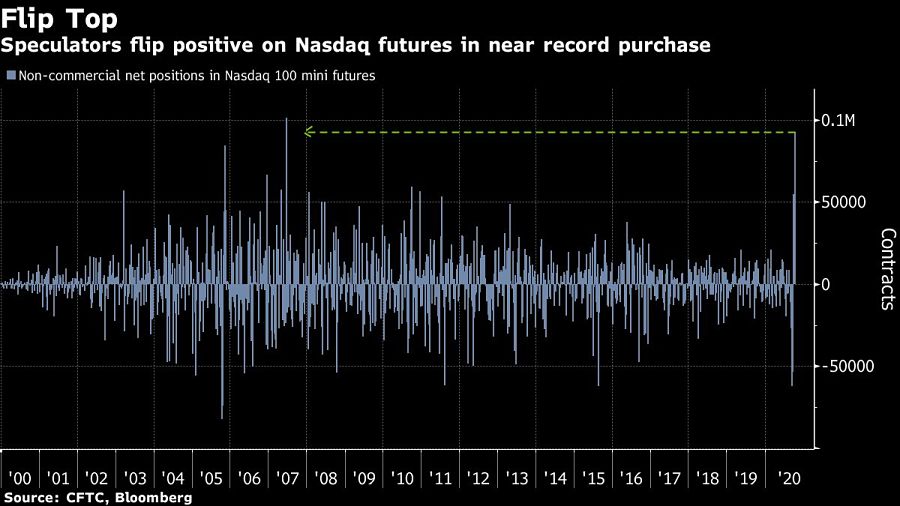
The buying frenzy comes after fast-money accounts had driven net short bets to the highest level since before the financial crisis during September.
The U.S. tech gauge has risen more 9% from its Sept. 23 low amid signs of a return of bullish options activity that helped push it to an all-time high earlier that month. It remains about 5% below that record.
The dialing back of bearish expectations for tech stocks coincided with an increase in wagers that equity volatility will decline. Net short non-commercial positions on futures linked to the Cboe Volatility Index hit the largest since February, the CFTC data showed.

FINRA's proposed rule filing would create a new 10-day fraud delay and nearly triple the maximum hold period for exploited senior investors

Fueled by a recent shot in the arm from private equity firm Carlyle, MAI adds a $490 million Atlanta RIA as it keeps building out its national footprint.

“Todd Burkhalter organized what is likely the largest Ponzi scheme in Georgia history,” said one FBI official.

With experience from Goldman Sachs and TD Ameritrade, the RIA's newest SVP hire adds to a recent wave of executive departures from hybrid Osaic.

Chicago-based Mesirow Fiduciary Solutions adds flexPATH's plan-level outsourced fiduciary book, boosting its retirement market reach to $164 billion.
Northern Trust’s Ken Lassner shows advisors how to convert volatility into after-tax portfolio gains
Dan Biagini of American Equity says the steady decline of pensions, longer lifespans and a reset in interest rates are rewriting how advisors build retirement income

