A quarter of the way through earnings season, the raw numbers look strong. The market doesn't care.
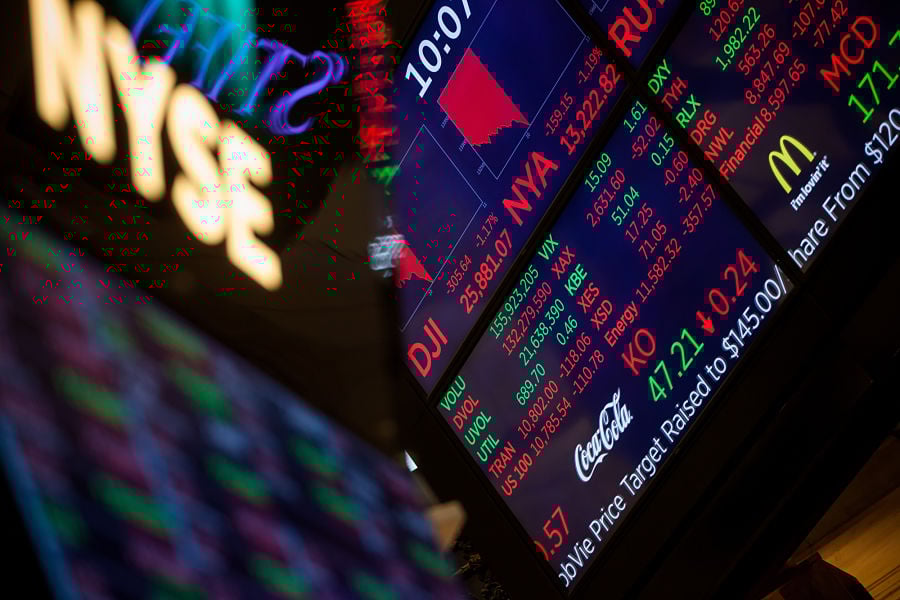
You can see the apathy in the S&P 500, which fell 3.1%Wednesday, extending its October rout to 8.8%, making it the worst month since February 2009. The Dow Jones Industrial Average slumped 2.4% Wednesday and the Nasdaq Composite Index fell 4.4%.
The stock market's weakness is evident at the granular level, too, with companies that surpass estimates getting almost nothing to show for it in the market. Those that miss? They're falling, but not by much.
"What is different this time is that the market is focusing more on the macro issues than earnings," said Gary Bradshaw, a portfolio manager at Hodges Capital Management in Dallas. "There's the Fed, there's a trade war, there's China slowing down a little bit, there's the uncertainty in Europe."
Earnings season is supposed to be the time when investors shift focus to individual companies, allowing stocks to break their lockstep moves imposed by macro drivers. It happened in the last two quarters, when correlation among S&P 500 members dropped at this time of reporting season.
That hasn't happened this time. Two weeks in, correlation is stuck near a six-month high.
Amid all the chatter about high costs, tariffs, and a stronger dollar, it's easy to forget this has been a pretty stellar reporting season. Out of 142 S&P companies that have reported results, 78% have posted earnings above estimates.
But companies that have posted positive surprises aren't getting rewarded nearly as much as they used to. On average, firms that have beaten on earnings have gained 0.2% the day after reporting, according to
Wells Fargo Securities data. That's less than a fifth of the reward last quarter. Beat on sales, and companies have seen gains of half the last time.https://cdn-res.keymedia.com/investmentnews/uploads/assets/graphics src="/wp-content/uploads2018/10/CI1176091024.PNG"
"As we get the earnings, they're coming in good and most of the outlooks are pretty solid, but everybody focuses on the few that aren't," said Kate Warne, investment strategist at Edward D. Jones & Co., which manages almost $1.2 trillion. "You need to get a little further through earnings and a little more beyond the worries about the Fed increasing rates. When you look at the aggregate and look back a couple of months from now it'll be, 'Oh, that was a good earnings season too."'
While positive surprises at large aren't getting rewarded, though, misses aren't exactly getting pummeled either, according to Keith Parker, head of equity strategy at
UBS Securities. In an environment where investors are set on selling equities no matter the numbers, performance of individual companies just hasn't mattered as much.
"Passive selling puts pressure on all stocks," he said in a message. "That performance is more indiscriminate than it normally would be in an environment where investors are not selling equities broadly."
(More: Stock market pullback brings out the buyers)