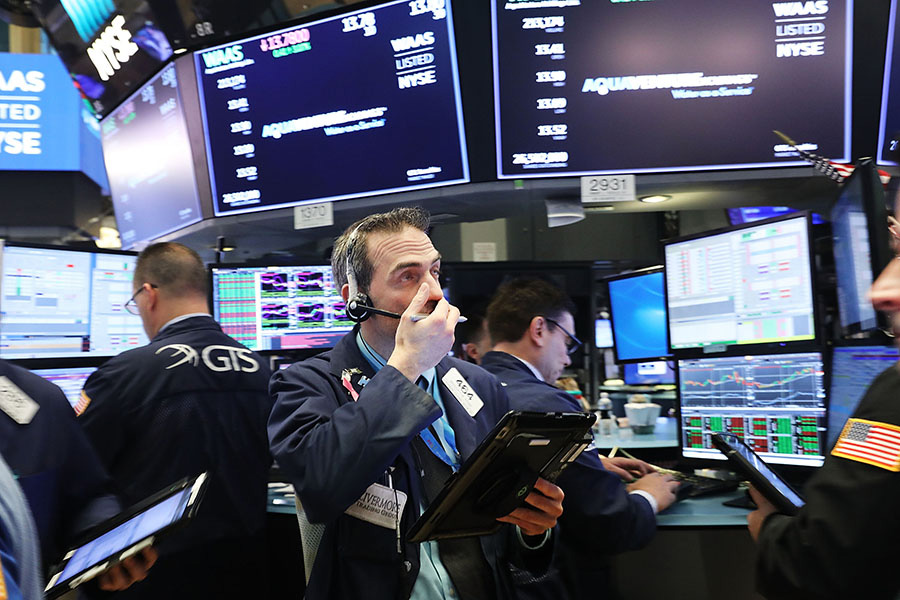
The S&P 500 fell the most since February and the Nasdaq 100 had its worst day in seven years. But while the size of Wednesday's declines were a shock, with the Dow plunging 831 points, Wall Street traders reported little in the way of panic.
A quick survey of 10 sell-side and buy-side traders found an "uptick in hedging activity" Tuesday and early Wednesday. Others said investors stepped in to add to positions, with a majority of sell tickets driven by passive funds via program desks.
Larry Weiss, head of trading for Instinet, said by phone: "I don't think anyone senses any panic at this point. Given the levels we are currently at, a lot of people think that something like this and even more downside are slightly overdue."
As the afternoon wore on, with the Nasdaq 100 heading toward a loss that reached 4.4% at the close, Mr. Weiss noted additional profit-taking and a "flight to safety as people realized we weren't bouncing after the Europe close."
"A big part of late-day moves usually revolves around the passive investors," he said. "Index funds do most of their trading at/into the close, so as they get redemptions, the moves are exacerbated."
Alon Rosin, head of institutional equity derivatives at Oppenheimer, said in an email: "Over the past two weeks, we have been aggressively looking to add November ETF downside trades and long volatility exposures into November as companies like BorgWarner and Delphi Technologies issued profit warnings citing global concerns such as trade, softness in China and FX."
"Many are pointing to overall confusion, gross exposure reductions (selling longs/covering shorts), risk parity/factor related unwinds, etc., driving the overall selling," Mr. Rosin wrote. "ETF options volumes have been relatively light since Friday's initial breakdown and we would like to see that pick up and more activity in the puts before any true stabilization kicks in for a trade-able bottom."
Most attributed Wednesday's weakness across consumer goods stocks to comments from LVMH's chief financial officer Jean-Jacques Guiony, who said on a call with analysts that Chinese customs authorities are stepping up border checks on returning travelers, reinforcing concerns over the U.S.-China trade war.
(More: The 4 biggest risks for U.S. equity investors)