
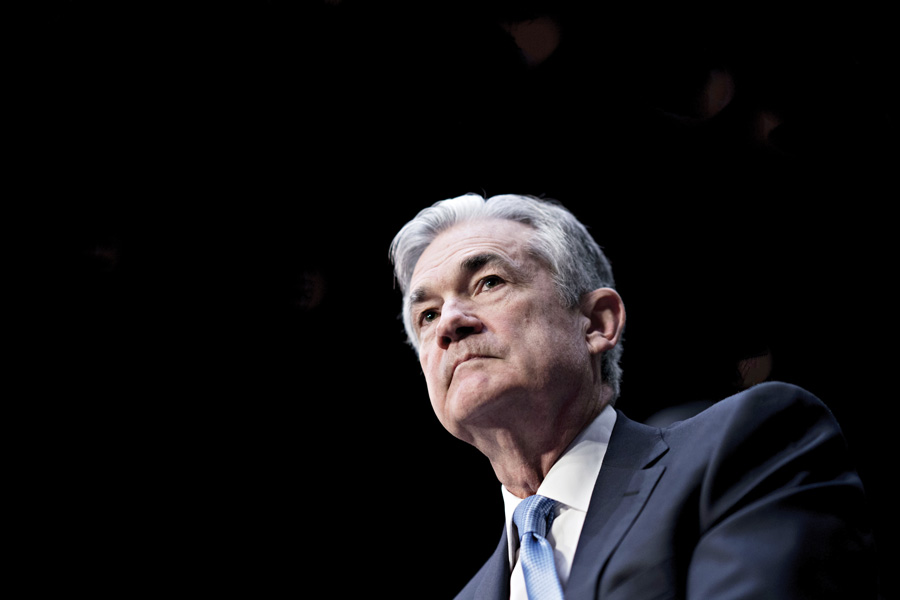
With the Federal Reserve poised to release its latest policy statement, President Donald Trump sharply criticized central bank leadership Wednesday, describing Chair Jerome Powell as “stupid” and warning that the Fed’s reluctance to lower interest rates is imposing heavy costs on the US economy.
Speaking outside the White House just hours before the Federal Open Market Committee’s anticipated announcement, Trump expressed little confidence that policymakers would ease borrowing costs.
“So we have a stupid person. Frankly, you probably won’t cut today,” Trump told reporters as per CNBC. “Europe had 10 cuts, and we had none. And I guess he’s a political guy, I don’t know. He’s a political guy who’s not a smart person, but he’s costing the country a fortune.”
Markets currently assign zero probability to a rate cut at the June meeting, with the Fed maintaining its target range between 4.25% and 4.50%. The central bank has signaled continued caution, citing lingering questions about economic momentum and inflation persistence.
Trump, however, has been relentless in calling for a more accommodative stance. Since returning to office in January, he has urged Powell to act quickly to reduce the cost of financing. Apart from softer inflation readings and Powell's history of being "too late," Trump has also highlighted mounting interest payments on federal debt as a top concern.
Recent Treasury data shows the US paid $776 billion in interest over the past eight months – a 7 percent increase compared with the same stretch last fiscal year. Trump has argued that even a modest reduction in rates could result in substantial fiscal relief.
“I would like to get this guy to lower interest rates, because if he doesn’t, we have to pay,” he said during a June 12 event in which he called the Fed Chair a "numbskull."
The president estimated that two percentage points of easing could save $600 billion annually.
Despite a private meeting between Powell and Trump earlier this year, tensions have escalated. Trump has repeatedly questioned the Fed’s inflation concerns and suggested Powell’s decisions are either politically motivated or personally antagonistic.
“If he’s worried about inflation, that’s OK. I understand that. I don’t think there’s going to be any. So far there hasn’t,” Trump said Wednesday. “But now we have a man that just refuses to lower the Fed rate, just refuses to do and he’s not a smart person.”
While Powell and his colleagues have maintained their commitment to independence, the pressure has intensified from within the administration. Vice President JD Vance and other officials have joined Trump in publicly advocating for rate cuts.
At one point, Trump floated the idea of assuming leadership at the central bank himself. “I’d do a much better job than these people,” he said.
Powell’s current term expires in May 2026. Trump has indicated he plans to name a successor well before that date.

Retiring RIA seller David Laidlaw alleges the Carnegie valued his stake on $11.7 million EBITA while pitching potential buyers on $21.3 million.

New tool gives RIAs and family offices AI help vetting private market deals, with some users reportedly halving review time.

Investors got projected returns dressed up as real ones, SEC says

Parents must still act to get the $1,000 federal seed and employer contributions, giving financial advisors a role in the rollout.

FINRA booted Rudy Anguiano from the industry for “conversion - the intentional and unauthorized taking of another person’s property.”
As AI makes financial information more accessible than ever, Lana Hock explains why human judgment, trust, and empathy remain the qualities clients value most in a financial advisor
Northern Trust’s Ken Lassner shows advisors how to convert volatility into after-tax portfolio gains

