
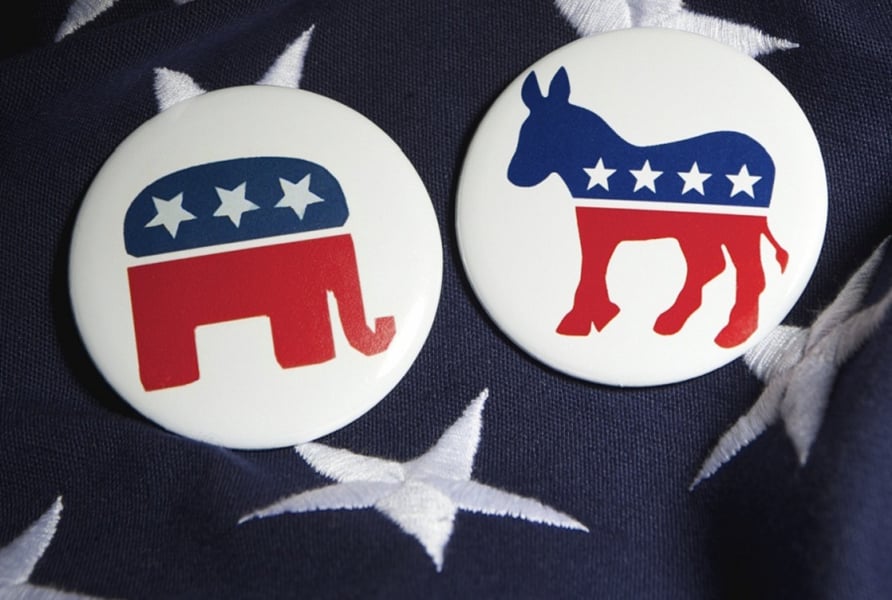
A sweep for Donald Trump’s Republican party in elections is likely to be the most bullish outcome for US stocks, with the energy and financial sectors benefiting the most, according to a survey of analysts at RBC Capital Markets.
The poll found its US analysts see a Trump presidential victory on Nov. 5 accompanied by Republican majorities in the Senate and the House of Representatives as the best scenario for equities, while a split Congress could also be slightly positive.
The most bearish scenario for US analysts would be a sweep for Kamala Harris’s Democratic party, although the survey showed a modest tilt of opinions for all outcomes. Strategists said that reflected how difficult it is to accurately assess the potential impact of policy ideas, a big focus for Wall Street as the two candidates are close in polls with just over a month to go.
“Our survey results point to a Trump win as a possible short-term positive for stocks, and a Democratic sweep scenario as a possible short-term negative,” said RBC strategists led by Lori Calvasina. “However, the survey results also add to our growing belief that the thing that may matter most for US equities (for 2024 at least) is simply getting past the event so that companies, and investors, know what they are dealing with.”
Neither campaign responded immediately to Bloomberg’s request for comment outside of regular working hours in Washington DC. The RBC poll canvassed 116 industry teams at the brokerage globally.
Market forecasters have flagged that equity volatility is likely to pick up ahead of the vote next month. A nationwide poll by RealClearPolitics shows Harris leading Trump by about 2 points as of Oct. 1.
Proposals around tax policies and trade tariffs are broadly seen by investors as having the biggest impact for corporate earnings and the market outlook. Strategists at Goldman Sachs Group Inc. said last month that US earnings could shift in the ballpark range of 5% to 10%, depending on how policies are enacted and whether Trump’s 2017 tax cuts are allowed to expire.
Citigroup Inc. strategists, including David Groman and Beata Manthey, expect both candidates’ policies to lead to fiscal expansion. A Trump victory, which could result in higher tariffs and lower taxes, would favor US stocks over European peers, they wrote in a note on Tuesday.

Goldman Sachs retirement survey finds 83% want guaranteed income, while the annuities providing that income increasingly hold private credit.

The AI meeting assistant's Advisor Intelligence plugin turns client conversation data into annual reviews, tax scans and attrition alerts.
Chuck Roberts and Stifel have been facing scrutiny due to sales of structured products and structured notes.

Among other updates, the proposals would let advisors to regulated funds earn performance fees and allow interval funds to offer monthly repurchases.

What will financial advice look like 20 years from now? Evan Vladem explores how AI may transform wealth management while reinforcing the enduring value of human guidance, trust, and empathy.
As AI makes financial information more accessible than ever, Lana Hock explains why human judgment, trust, and empathy remain the qualities clients value most in a financial advisor
Northern Trust’s Ken Lassner shows advisors how to convert volatility into after-tax portfolio gains

