
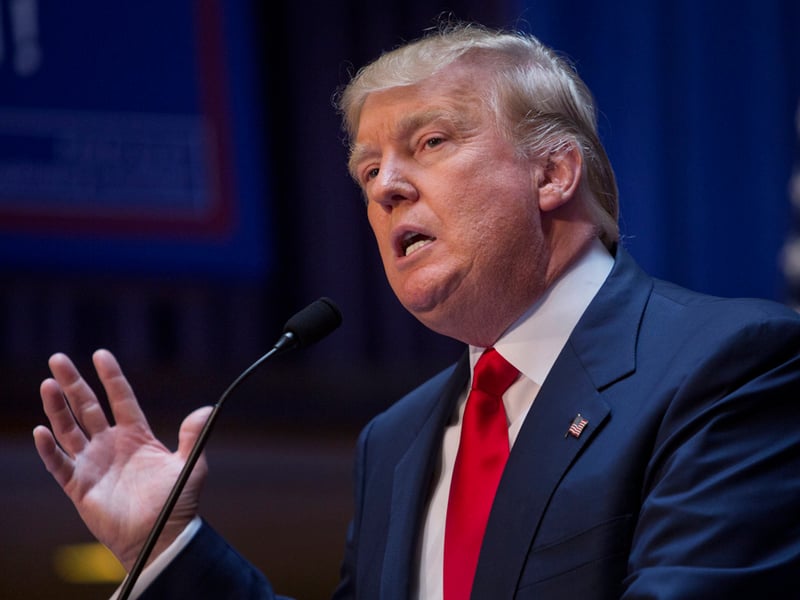
Investor nerves intensified Monday as President Trump’s deadline for Iran to reopen the Strait of Hormuz loomed, injecting fresh uncertainty into global markets already strained by a weeks-long conflict.
The White House has warned Tehran to restore access to the critical oil transit route by Tuesday evening or face severe retaliation. Trump has threatened sweeping strikes on Iranian infrastructure ("all hell will rain down") if the standoff continues, while still signaling that a negotiated agreement remains possible.
The ultimatum lands at a pivotal moment for investors, with markets swinging between hopes for a ceasefire and fears of a deeper geopolitical shock. Oil prices have surged above $100 per barrel as the strait, responsible for roughly a fifth of global oil flows, remains effectively disrupted.
Financial markets are showing signs of strain as traders respond to each headline. Currency markets remained jittery, with the US dollar holding steady while investors weighed the risk of further escalation against the possibility of a short-term truce.
Equities have been similarly unsettled. US stock futures pointed to a cautious open, reflecting concern that prolonged conflict could slow economic momentum even as domestic data remains resilient.
Broader capital flows suggest investors are not fully retreating from risk. With equity funds still attracting inflows in recent weeks, even as money rotates away from bonds and cash, highlighting a fast-changing risk backdrop, according to Reuters.
Crude prices have climbed sharply since the conflict began, with gains accelerating after Trump’s latest warnings and higher oil prices are fueling renewed concern about inflation and growth, raising the risk of stagflation just as central banks had begun to stabilize policy expectations. Analysts warn that prolonged disruption could ripple through supply chains, increase transportation costs and weigh on global demand.
Regional markets in the Gulf have reflected that uncertainty, trading unevenly as investors await clarity on ceasefire talks and whether the strait will reopen.
Despite the intensifying rhetoric, diplomatic efforts remain underway. A potential framework would involve an immediate ceasefire followed by a broader agreement within weeks, though Iran has resisted key conditions tied to reopening the waterway, Reuters reported.
Trump has continued to signal that a deal is still achievable even as military threats escalate, underscoring the binary outcome investors are now pricing in: a rapid de-escalation or a sharp intensification of the conflict.
Diplomatic activity on Monday has centered on a fast-moving, multi-country push to broker at least a temporary halt to hostilities, with several overlapping proposals now circulating between Washington and Tehran.
The most prominent framework, via Pakistan acting as mediator with involvement from regional players including Turkey and Egypt, lays out a two-stage path beginning with an immediate ceasefire tied to the reopening of the Strait of Hormuz, followed by negotiations toward a broader agreement within roughly 15 to 20 days. However Iran has signaled it is not open to any deal that is temporary.
For investors, the coming days represent a critical inflection point. A reopening of the Strait of Hormuz could ease energy pressures and stabilize markets, while further escalation risks amplifying volatility across asset classes.
The unfolding crisis highlights how quickly geopolitical shocks can reshape the investment landscape, forcing portfolio managers to adjust positioning as diplomacy, conflict and market dynamics collide.

Salespeople at the firm often went beyond the matching algorithm to recommend network advisors on its Zoe Wealth platform, according to the regulator.

The Protect College Sports Act would cap school payments and codify NIL rights, with implications for advisors guiding young athletes.

"I know the number that I want to be able to retire on, and now I just want out," says Wilmington Trust's Marguerite Weese, describing a common refrain among business-owner clients.

Bessemer and Brown Brothers Harriman veteran Robert Ludricks III and private markets specialist Olof Akesson join the ultra-high-net-worth push on the East Coast.

765 investors were promised 260% annual returns on truck leases
As AI makes financial information more accessible than ever, Lana Hock explains why human judgment, trust, and empathy remain the qualities clients value most in a financial advisor
Northern Trust’s Ken Lassner shows advisors how to convert volatility into after-tax portfolio gains

