
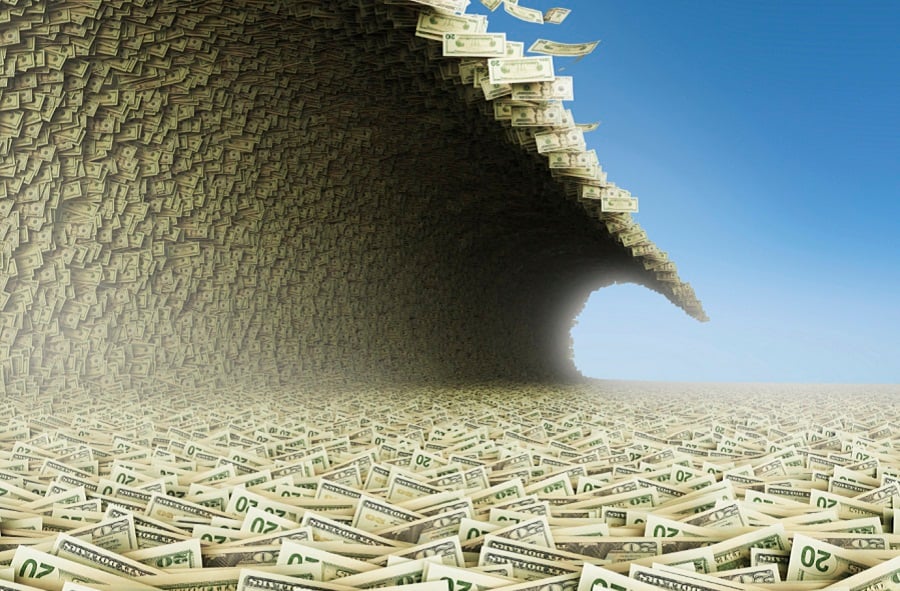
US companies are planning to buy back shares at a historic pace, a sign of Corporate America’s confidence in the economy.
Announced buybacks surpassed $1 trillion on Aug. 20, marking the shortest amount of time needed to reach that level, according to data compiled by Birinyi Associates. The previous record was in October last year.
Over the last few months, corporate heavyweights have given the green light to large share repurchasing programs. Apple Inc. announced it would buy back $100 billion in stock following its quarterly results in May. Meanwhile, Alphabet Inc., JPMorgan Chase & Co., Goldman Sachs Group Inc., Wells Fargo & Co. and Bank of America Corp. announced buybacks of at least $40 billion.
“There is going to be a continuation of the ultimate dip buyer in the market, which is the company themselves,” said Jeffrey Yale Rubin, president of Birinyi Associates. “Earnings are good, they have enough money for capital expenditures, and this is a nice way to reward investors and owners of the company.”
Last month, announced share repurchases totaled $166 billion, the highest dollar value on record for July as buyback plans from the largest American financial and technology companies kicked in. Buybacks offer a crucial pillar of support for the US stock market, which has seen the S&P 500 Index return to all-time highs in recent weeks. A pipeline of stock repurchase programs indicates rising confidence among corporate executives.
Rubin expects the momentum to continue through to the end of the year, forecasting announced buybacks to reach $1.3 trillion and completed repurchases to reach a record.
“Absent a dramatic slowdown in the economy, we forecast that 2026 completed buybacks will reach $1.2 trillion which would be a new record,” Rubin wrote in a note published on August 26.
Buybacks have drawn the ire of some members of the Trump administration, having been a topic in the wrangling over President Donald Trump’s signature tax bill. Speaking on Fox Business on Wednesday, Treasury Secretary Scott Bessent took aim at Boeing Co. for a “massive” share buyback the company did instead of investing in research and development.

Retiring RIA seller David Laidlaw alleges the Carnegie valued his stake on $11.7 million EBITA while pitching potential buyers on $21.3 million.

New tool gives RIAs and family offices AI help vetting private market deals, with some users reportedly halving review time.

Investors got projected returns dressed up as real ones, SEC says

Parents must still act to get the $1,000 federal seed and employer contributions, giving financial advisors a role in the rollout.

FINRA booted Rudy Anguiano from the industry for “conversion - the intentional and unauthorized taking of another person’s property.”
As AI makes financial information more accessible than ever, Lana Hock explains why human judgment, trust, and empathy remain the qualities clients value most in a financial advisor
Northern Trust’s Ken Lassner shows advisors how to convert volatility into after-tax portfolio gains

