
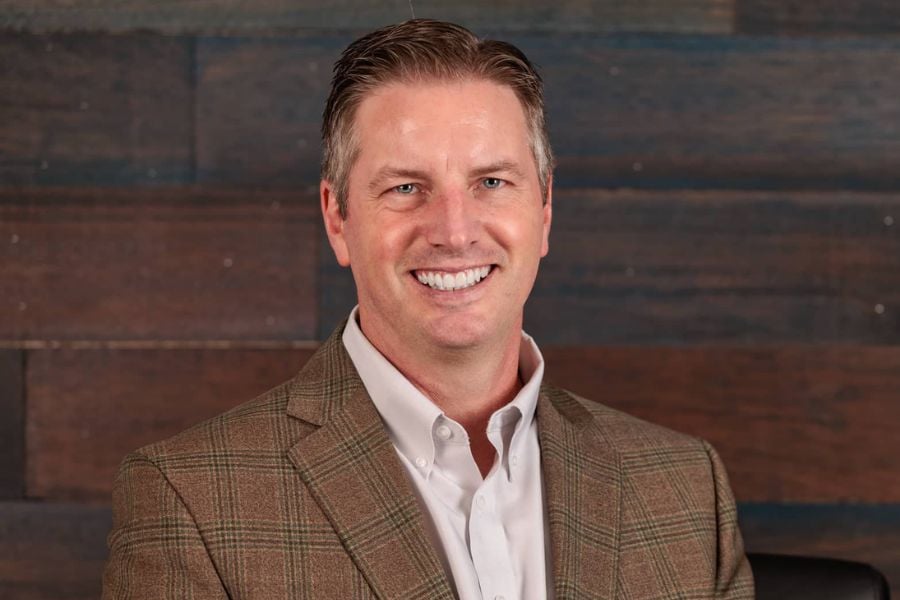
With ESG continuing to be a divisive topic among investors, a recent InvestmentNews Award winner is adding gasoline to the fire.
Peter Krull, InvestmentNews’ inaugural 2024 Advisor of the Year - ESG/Responsible Investing award winner, believes investors are being misled when it comes to how the terminology is presented. The founder of Equity Earth Advisors, an RIA based in North Carolina says ESG is simply looking at risks to a company from the three metrics of environmental, social and governance. Sustainable investing, however, is "more of a ground-up way of looking at investing.”
The industry, he highlighted, has moved away from sustainable responsible investing (SRI) to more hardcore environmental, social and governance (ESG) investing because people wanted to have data “quantified.”
“They wanted to be able to see what are the numbers that are associated with ESG but at some point, it became a political issue."
Krull added that ESG also became politicized around issues on the social side when companies were making a stand for abortion rights or DEI initiatives.
“We've started to maybe move away a little bit from using the term 'ESG.' Providers or companies will take a traditional index, and they'll layer on some ESG metrics, and adjust the allocation based on what the risk for those metrics is and call it sustainable,” Krull said. “At the end of the day, it doesn't make it sustainable. It just makes it a less bad version of the original index.
"When you look at the materiality of many of the ESG metrics, they are actually completely material,” he highlighted. For example, an investor might consider excluding a company based on whether they have facilities in hurricane or fire-prone areas which could potentially negatively impact operations.
"Investors should know the whole story, which includes both traditional financial metrics as well as environmental, social and governance risk metrics. We need to understand what the terms are."
According to Morningstar, there are almost 650 different funds with a sustainable label. But when one looks at those funds and their holdings, Krull says, “Many of them leave you to scratch your head and say, ‘What's sustainable about this?
His perspective of what it means to be sustainable is owning – and being - solutions providers.
“The problem that we run into is that the traditional investment industry focuses so much on things like indexing and tracking error that it's hard to index where the economy is going by looking in the rearview mirror,” he added. “A lot of the standard indexes aren't building into them fast enough.”
Krull also throws doubt on the popular belief that ESG gauges the impact a company has on their environment, society and governance. “It's actually just the opposite,” he says. “ESG gauges environmental impacts on the company, social impacts on the company, governance impacts on the company, so it truly is a risk measure.”
As sustainable investors, when Krull and the Earth Equity team put a portfolio together, they’re looking at the companies, the industries and the sectors that will “lead us into a cleaner, a more resource efficient and a more equitable economy. We might call it ‘a new economy’ or ‘next economy’,” explains Krull.
Rather than working their way down from something that already exists like a traditional index, they start from the ground up, exploring the specific companies that are going to be the next “market leaders for the economy” that will not only help deal with the effects of climate change but also help get through it at the same time.
As a case in point, Krull points out that over the past six to 12 months, there’s been an increase of insurance rates because of a link between climate risk and the cost of insuring housing, facilities or municipalities.
“We want to invest in the insurers that are really integrating climate risk into their underwriting policies,” highlighted Krull. “They're the ones who price risk and they're the ones who can be influencers on governmental policy and help to start putting policies in place.”
Name: Peter Krull
Position: Founder, partner & director of sustainable investing
Company: Earth Equity Advisors
Founded: 2004
AUM: $180 million

Daejon Love and Taylor Chan's $1.3 million romance fraud scheme exposes how AI search engines can be manipulated by fabricated online identities

“It was a third party scam,” said the attorney representing the claimants.

Meanwhile, &Partners draws another Commonwealth practice, and Wealthcare welcomes a $550 million planning practice in the Northeast.

Palo Alto AI platform recruits RIA and fintech leaders as industry data show AI adoption reshaping advisor staffing.

Meanwhile, Raymond James, Wedbush, and LPL recruited veteran advisors from across Texas, North Carolina, and California.
Northern Trust’s Ken Lassner shows advisors how to convert volatility into after-tax portfolio gains
Dan Biagini of American Equity says the steady decline of pensions, longer lifespans and a reset in interest rates are rewriting how advisors build retirement income

