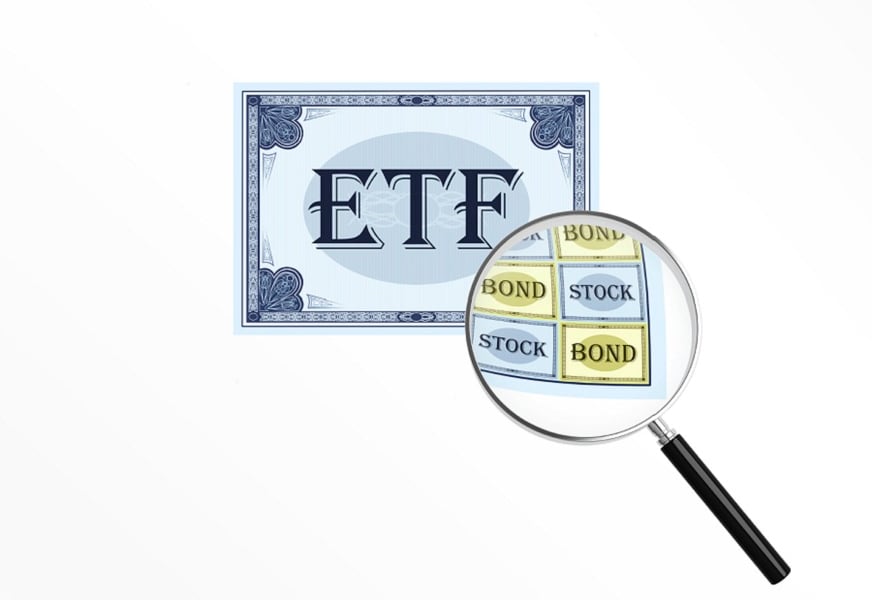
Investors could find it easier to differentiate between exchange-traded funds and other investments under a new proposal put to the Securities and Exchange Commission.
Under the plan, issuers would be banned from calling their products ''ETFs,'' unless they meet certain criteria set out in a comment letter from the regulator's Fixed Income Market Structure Advisory Committee. Leveraged products and those that promise inverse exposure by mirroring an index would not be eligible, the working group on ETFs and bond funds said, in recommendations that were unanimously approved by the broader committee.
"I welcome this comment letter and I think it goes a long way toward addressing an issue for our retail investors," Jay Clayton, the SEC's chairman, said. "People often don't read beyond the title of a fund, and if we can do something to substantially improve the understanding of our retail investors as to what they're investing in, we should do it."
That ignorance became all too apparent in February, when
soaring volatility derailed bets against market fluctuations and pushed one exchange-traded note (which trades like a fund but is structured as a debt obligation issued by a bank)
to close after its value dropped 90%. Another product that described itself as an ETF, although it used a similar strategy as the ETN, survived, but many ordinary investors
lost their shirts.New Categories
The blow-up "highlights the need for clearer labeling," according to the committee. It recommended in the letter that to be considered an ETF a product must comply with the proposed ETF rule, on which the regulator sought comments earlier this year, or be structured as a unit investment
trust like some older funds. That would include the SPDR S&P 500 ETF Trust, known as SPY, which is the first and largest U.S. ETF.
Exchange-traded products that do not qualify as ETFs would be categorized as either ETNs, exchange-traded commodities or exchange-traded instruments, the letter said. ETCs would include products based on physical commodities and futures contracts on those assets. And an ETI would be any product that incorporates leverage or caps an investor's upside or downside performance.
These new categories echo proposals put forward by
BlackRock Inc., the world's largest ETF issuer. Ananth Madhavan, BlackRock's global head of research for ETF and index investing, was part of the committee that drew up the latest recommendations for the SEC.
The committee also proposed that the regulator help form an industry group to promote investor education and create a database of standard information about ETFs.