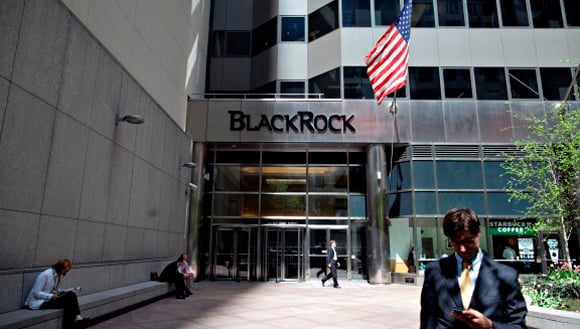
BlackRock Inc. (BLK), the largest provider of exchange-traded funds, is seeking permission from regulators to offer actively managed ETFs aimed at competing with stock-picking mutual funds.
The New York-based firm applied to open 13 equity ETFs that wouldn't disclose their holdings daily, according to a filing by
BlackRock today with the U.S. Securities and Exchange Commission. The firm already has permission to sell active ETFs that offer daily transparency.
ETFs in the U.S. took almost half of the $2.01 trillion market for so-called passive products, which replicate the composition of a stock or bond index, as of the end of 2010, according to the Investment Company Institute, a Washington- based trade group. Firms managing or planning active ETFs are looking for a way to compete for the $10.8 trillion market of funds managed by stock and bond pickers. (Click on the following link to see
the alternative investments advisers use most).
Active ETFs seek to combine the skill of a manager selecting investments with the trading flexibility, lower fees and tax advantages of ETFs, which typically track an index. ETFs hold baskets of securities, commodities or other assets while trading throughout the day like individual stocks.
ETFs reveal their holdings because institutional investors need to know a fund's composition to create new blocks of shares. That process also keeps an ETF's share price aligned with the value of its assets.
Transparency Issue
The SEC hasn't approved ETFs that wouldn't reveal holdings daily. In a June 2010 interview, Andrew Donohue, then head of the SEC's investment management division, said the agency was concerned the lack of transparency would disrupt that mechanism.
That has discouraged companies from opening stock-picking ETFs because the transparency would allow other investors to mimic their holdings.
BlackRock's newly proposed funds would seek to solve that problem by allowing large investors to create blocks of new shares in exchange for cash, instead of buying the underlying holdings and swapping them for the ETF shares.
The funds would invest in a variety of equity categories such as large and mid-size companies, and include versions free to bet on both rising and falling prices.
BlackRock received approval from the SEC in March to open actively run ETFs that would disclose their holdings daily, Christine Hudacko, a spokeswoman, said today in a telephone interview. She wouldn't say when the company planned to introduce such funds, and she declined to comment on the new filing.
Through its iShares unit, acquired in the 2009 purchase of
Barclays Global Investors, BlackRock controlled about 39 percent of global ETF assets, including exchange-traded notes and trusts, with $640 billion as of June 30.
State Street was second with $262 billion, according to BlackRock's report.
--Bloomberg News--