
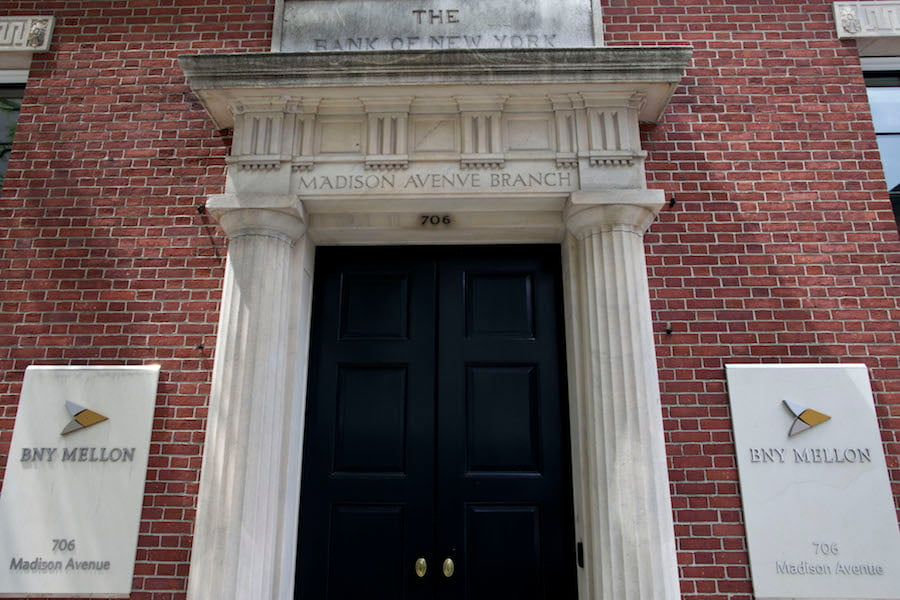
The rush to zero costs in the competitive ETF industry is showing no signs of abating, with BNY Mellon escalating that perilous war.
The company is launching the BNY Mellon Core Bond ETF (BKAG), the first ever no-fee U.S. fixed-income fund, according to a statement Thursday. Another fund that tracks big American companies will also have no cost: the BNY Mellon US Large Cap Core Equity ETF (BKLC).
A wave of cost-cutting has swept the ETF industry in the past year. But BNY Mellon’s debut marks the first big entrant into the zero-cost space with the potential to shake up established funds from BlackRock Inc., State Street Corp. and Vanguard Group, according to Bloomberg Intelligence.
“We have a very unique set of capabilities and efficiencies that allow us to price very competitively,” said Stephanie Pierce, chief executive of ETF and index for BNY Mellon Investment Management. “With the increasing concern about concentration risk in the industry, we believe we can give clients an institutional quality choice.”
Abolishing fees generates publicity, something that could mean the difference between survival and liquidation in a marketplace with more than 2,000 options. More than 70% of U.S. ETF assets are in funds that charge $2 or less per $1,000 invested, and 93% of new money this year has flowed into such products, according to data compiled by Bloomberg.

Retiring RIA seller David Laidlaw alleges the Carnegie valued his stake on $11.7 million EBITA while pitching potential buyers on $21.3 million.

New tool gives RIAs and family offices AI help vetting private market deals, with some users reportedly halving review time.

Investors got projected returns dressed up as real ones, SEC says

Parents must still act to get the $1,000 federal seed and employer contributions, giving financial advisors a role in the rollout.

FINRA booted Rudy Anguiano from the industry for “conversion - the intentional and unauthorized taking of another person’s property.”
As AI makes financial information more accessible than ever, Lana Hock explains why human judgment, trust, and empathy remain the qualities clients value most in a financial advisor
Northern Trust’s Ken Lassner shows advisors how to convert volatility into after-tax portfolio gains

