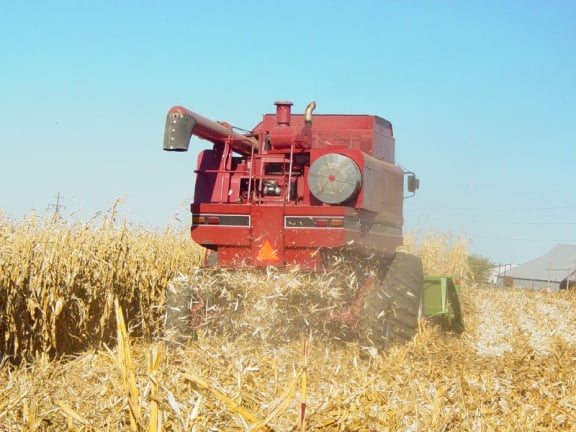
The Teucrium Agricultural Fund holds an equal weighting of exchange-traded funds that invest in corn, sugar, soybean and wheat futures and is the first ETF to combine the four major agriculture commodities in a single fund.
Teucrium Trading LLC is making it easier for investors to gain access to agricultural commodities, but the easy access comes with a steep price.
The Teucrium Agricultural Fund Ticker:(TAGS) holds an equal weighting of exchange-traded funds that invest in corn, sugar, soybean and wheat futures. It's the first ETF to combine the four major agriculture commodities in a single fund. Sal Gilbertie, president and chief investment officer, said the ETF was born out of demand from advisers for a diversified approach to agricultural commodities.
Teucrium uses its own corn, sugar, soybean and wheat commodities ETFs as the underlying funds. Teucrium's ETFs are structured to limit the effects of contango and backwardation by investing across the futures markets curve, rather than in just the front-month contract, which would it put it closest to the actual price of the commodity, said Mr. Gilbertie. The four commodities are re-balanced to equal weight “as needed,” said Mr. Gilbertie.
However, since the Teucrium Agriculture Fund is an ETF of ETFs, investors are picking up the costs of the underlying ETFs as well as the expense ratio of the Teucrium Agriculture Fund. So instead of the prospectus' listed expense ratio of 0.32%, the estimated costs of owning the ETF are actually 1.6%, according to footnotes in the prospectus and on the Teucrium website. That makes the ETF the most expensive commodities ETF on the market.
Mr. Gilbertie said the extra 1.28% is a result of the indirect cost of owning the ETF, which is why it's not included in the listed expense ratio. He said the full estimated expense ratio of 1.6% is listed six separate times in the ETFs prospectus, so that investors are aware of it. He also said Teucrium does not charge a management fee for running the ETF of ETFs because it's already getting paid the management fee for the underlying funds. “We're not double-charging anybody,” he said.
There is an alternative for agriculture exposure in the $5.9 billion Market Vectors Agribusiness ETF Ticker:(MOO), which has an expense ratio of 0.54%. Unlike the Teucrium ETF, the aptly tickered MOO invests in companies with exposure to agriculture, such as Deere & Co. Ticker:(DE) and Monsanto Co. Ticker:(MON). Investing in equities does make it more prone to swings in the overall market, earnings reports and management, in addition to movements in the commodities market, said Jeff Tjornehoj, senior research analyst at Lipper Inc.