For returns more than triple the stock market average so far this year, look no further than a quirky group of exchange-traded funds that bet on the latest investment fads.
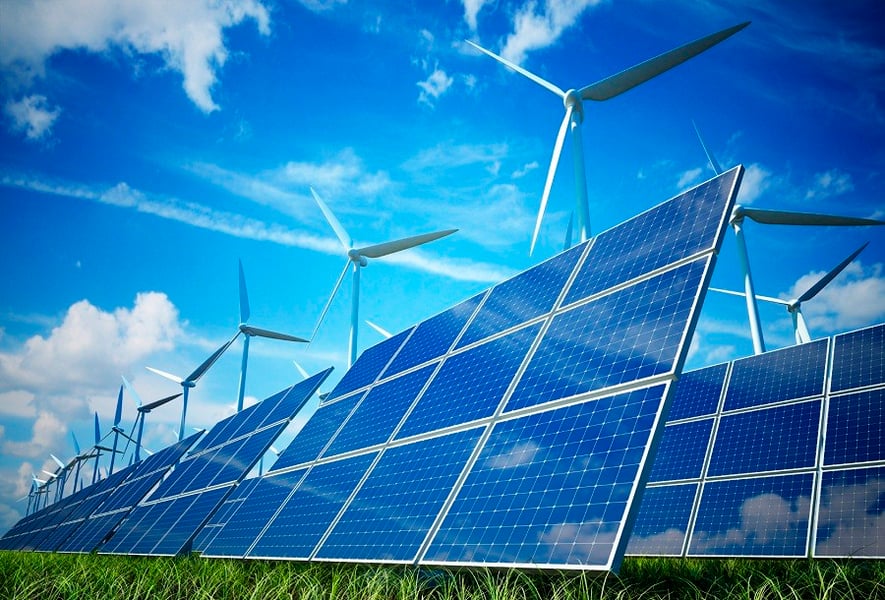
The top three performing U.S.-listed, non-leveraged ETFs this year are so-called thematic funds — niche products that focus on categories. From marijuana to solar power and clean energy, portfolios constructed with companies betting on industrial and social transformations are trouncing rivals across the broader equity market.
While it's only the end of February, their performance has been astounding. The ETFMG Alternative Harvest ETF (MJ), which wagers on the
growth of cannabis, has surged nearly 50%. A fund that focuses on
solar power, the
Invesco Solar ETF ( TAN) and the
Invesco Wilderhill Clean Energy ETF (PBW), which holds companies across the new-energy spectrum, have both gained more than 30%.
"This is really investing on steroids," said Todd Rosenbluth, director of ETF research at CFRA. "You're taking significant risk — sometimes that gets rewarded, but you're going to fail quite often with these investment strategies."
(More: Life is brutish and short for new ETFs)
Most recently, investors have been compensated for the risk. While the S&P 500 is experiencing its best start to a year since 1987, these funds have tripled year-to-date returns. But that comes after a volatile 2018, when all three funds fell more than double the benchmark index. In fact, TAN saw losses four times greater than the S&P 500's 6.2% decline.
While performance has wowed, investor flows haven't necessarily followed suit. So far this year, investors have pulled cash from TAN and PBW. The weed-focused fund has taken in $227 million, sending its total assets above $1 billion.
In the more than $3.5 trillion ETF industry, thematic ETFs have grown increasingly popular as issuers look for ways to differentiate themselves,
while charging more money.
(More: 9 ways investors are using ETFs)
Last year marked a record for thematic ETF launches.
State Street Corp. set out with the first-ever fund tracking
space and deep sea exploration. Other niche products look to pets, self-driving cars and the growth of artificial intelligence. Thematic ETFs on average cost investors $5.80 for every $1,000 invested, compared with $5.00 for all ETFs.
With higher costs and elevated risk, ETFs such as these aren't for everyone. At Kingsview Asset Management, the team tends to stay away from thematic ETFs since they're more a "flavor of the day," according to Paul Nolte, a Chicago-based portfolio manager at the firm.
"If you hit them right, they're wonderful — they're up huge amounts already this year," Mr. Nolte said. "But if you hit them wrong, or you think this theme is going to work out and it doesn't, you end up with a big dud."
(More: Social Finance plans no-fee ETFs)