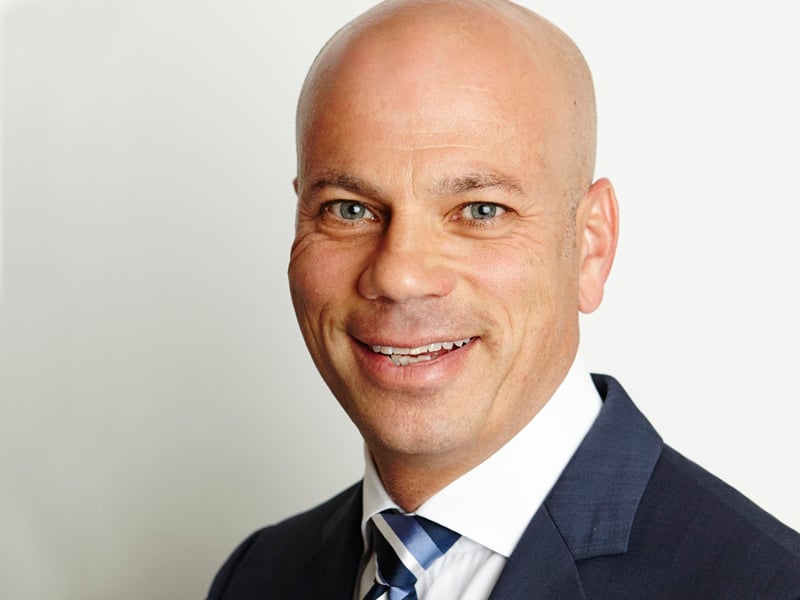
When F. William McNabb III asked the Vanguard Group Inc.'s institutional-sales chief to develop a strategy to sell Vanguard funds to financial advisers in 2002, Thomas M. Rampulla said he knew it wasn't going to be easy.
“Some of the advisers, for years, had seen Vanguard as a competitor: We were a 'direct' business, and they thought we were stealing their business,” said Mr. Rampulla. “We stopped paying commissions back in 1977. There's actually some old-timers who didn't forget that.”
Yet in the six years that followed, Vanguard's then-adviser-unit chief, Martha G. King, Mr. Rampulla and their colleagues transformed their firm from an insurgent challenging the traditions of retail wealth management into one of the industry's greatest patrons.
It wasn't the first time Mr. McNabb, now the company's CEO, had asked Mr. Rampulla to go out on a limb. And it wouldn't be the last.
He asked the former portfolio manager to cross over into sales in the first place. And just as those efforts were starting to bear fruit, in 2008, Mr. McNabb asked Mr. Rampulla — married, with young kids — to move from Vanguard headquarters in Valley Forge, Pa., to London to build a business for Vanguard in Europe.
HOME AGAIN
On Monday, Mr. Rampulla returned to Valley Forge to become head of Vanguard Financial Advisor Services, a once-tiny unit within the firm that now accounts for half of the company's new cash, a third of its total assets and is a key leg in a business strategy that has allowed Vanguard to bring in more than half of the Morningstar Inc.-estimated $536 billion that moved into “open-end” mutual funds and exchange-traded funds over the last year.
In the process of building that business, the $3 trillion money manager transformed many of its biggest critics — financial advisers and the powerful Wall Street banks that back them — into its best customers.
Today, a fifth of the Vanguard's $1.1 trillion in adviser-sold funds come from the brokerage channel. An additional quarter apiece comes from the bank and registered investment adviser channels, Vanguard said.
In a feat that seemed out of reach a decade ago, when Vanguard managed just a handful of ETFs and maintained what some describe as strained relations with the top retail brokerages, 54% of advisers at the wirehouses put some client money into a Vanguard ETF last year, according to Meredith Rice, senior director at Cogent Reports, an industry research service by Market Strategies International.
In his first interview since taking the new role, Mr. Rampulla, 49, told
InvestmentNews the firm made “a pretty good call” on positioning itself early for a wealth management industry more driven by fees paid by investors than commissions paid by product firms.
And he said the firm has successfully rebuilt its relationships with advisers across the industry as those changes have happened.
“In the early days, when we started proactively calling on the broker-dealer channel, there wasn't a lot of love for Vanguard,” he said. “Over the years we've been able to show them that we can support them, that we think advice is important, and we've earned their
trust.”
HURDLE OVERCOME
Kelly Kuennen, a Hudson, Ohio, financial adviser affiliated with Stratos Wealth Partners, said Vanguard's association with passive investing was an important hurdle to overcome with advisers who don't see index-based investing as the “end-all, be-all.”
(Vanguard also offers active funds and says they can be used effectively if they charge low fees. The firm's ETFs are often used by advisers who actively trade them to provide what's commonly called tactical asset allocation.)
Mr. Kuennen, who uses some Vanguard funds, also said the sense of the firm being anti-adviser also came from their approach to selling funds, which doesn't include a commission structure for advisers. The firm also avoids revenue-sharing arrangements common between fund companies and the advice firms that distribute their products.
“It definitely compressed margins for advisers,” said Mr. Kuennen, who previously worked for Morgan Stanley Wealth Management, the largest U.S. wealth manager by adviser head count. “It's forced the brokerage firms to change their pricing, and that's been a bit of a negative.”
In Europe, Vanguard faced a tougher challenge. The Continent is a patchwork quilt of regulations, with a market historically dominated by massive banks and commission-collecting advisers promoting a limited menu of investment products, according to people with experience in both the U.S. and European fund markets.
There, too, the portfolio manager-turned-salesman was able to produce results. The firm pressed its low-cost message, while, in the United Kingdom, regulators banned commissions for retail advisers as of 2012. The firm went from ranking 48th among European mutual fund and ETF brands in 2008 to 23rd in March, according to Morningstar.
'IMPRESSIVE'
“It's impressive to see what they've achieved,” said Deborah Fuhr, a partner at ETFGI, a London-based consultant who knows Mr. Rampulla. “Many of the platforms have experience financial advisers asking for Vanguard to be on the platform.”
She said the experience of working abroad also likely gave Mr. Rampulla a new appreciation for the dynamics of the industry.
“There's a benefit to seeing more of the world,” she said. “They are in their own little world in Valley Forge.”
Now back in the States, Mr. Rampulla — an amateur cyclist who relishes difficult trails like the punishing Alto de L'Angliru in Spain — faces a market that's still competitive. As the firm unveils its partially automated investing platform, it will no doubt again fight claims it's competing with its clients.
Vanguard also remains second, to
BlackRock Inc.'s iShares in U.S. ETFs.
Mr. Rampulla also feels the firm has more work to do to promote the work it does beyond what it's famous for, including in the defined-contribution business.
“There's more we can do everywhere, honestly,” he said. “We're known as the low-cost index provider, but boy, do we do a lot more than that.”