
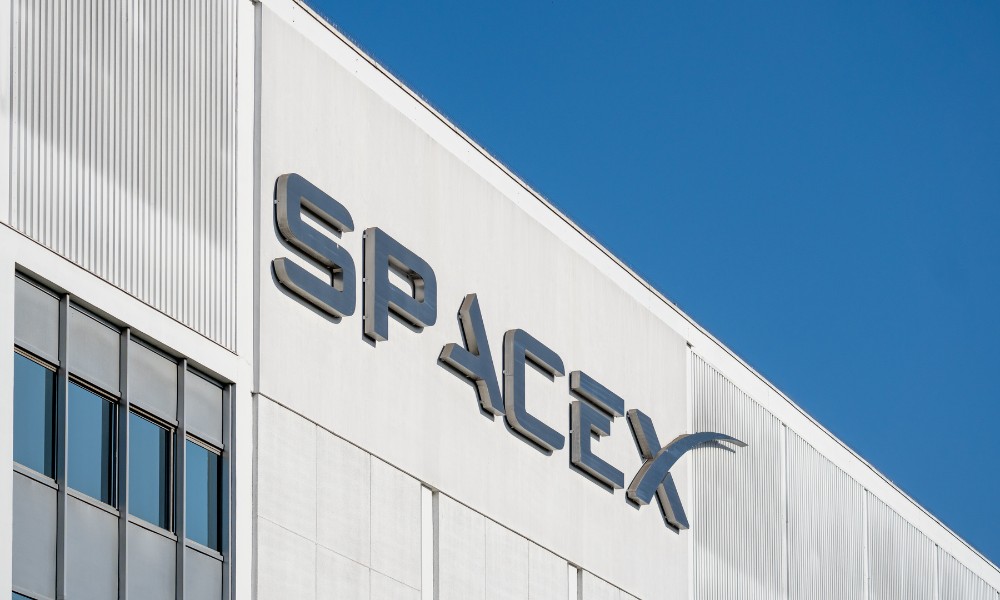
ETF provider WisdomTree has launched a fund that it is touting as a way for advisors and investors to harness growth in the space industry.
The WisdomTree Space Economy Fund (Ticker: WSPC) is listed on the Nasdaq and has an expense ratio of 0.75%. The Fund provides exposure to launch and orbital vehicles, deep space infrastructure, satellite broadband, Earth observation, defense space systems, and emerging technologies, according to the ETF provider.
The fund’s top holding is SpaceX Corp. (Ticker: SPCX), which recently enjoyed the the biggest IPO of all time, followed by launch and space infrastructure companies Rocket Lab Corp. (Ticker: RKLB) and Firefly Aerospace Inc. (Ticker: FLY).
"Space has been evolving from a government-monopolized domain to a multi-layer commercial economy for some time, but we believe that transition has now reached a point where the enabling conditions are clearly in place," said Christopher Gannatti, global head of research at WisdomTree, in a statement. "The cost revolution in launch has already happened.”
A number of ETF issuers have sought to tap the massive interest in the SpaceX mega-IPO with the launch of new single-stock funds themed around the rocket maker. Last month, Themes ETFs also launched two leveraged ETFs tied to the performance of SpaceX’s stock. In May, asset manager VanEck unveiled the VanEck Space ETF (Ticker: WARP), which tracks the MarketVector Space Index (MVWARP).
It is not just SpaceX IPO that has grabbed attention - the success of NASA’s Artemis II mission earlier this year has also thrust the space industry into the spotlight, spelling opportunities for advisors and their clients.
Clearly, the space industry spells opportunity. McKinsey projects that the so-called space economy will be worth $1.8 trillion by 2035, up from $630 billion in 2023. This includes both “backbone” applications such as those for satellites, launchers, and services such as broadcast TV and GPS, according to McKinsey, as well as “reach applications.” To illustrate the latter, in a 2024 report, McKinsey used the example of Uber, whose business relies on a combination of satellite signals and chips inside smartphones to connect drivers and rider and guide them to their destination.

Proposition 40 wealth tax could raise $30 billion, not $100 billion, as departures erode the base and voters remain split

Jump is piping FMG marketing content into post-meeting workflows as Zocks opens its platform to more than 32,000 LPL financial advisors

Trevor Uhls pleaded guilty to one count of wire fraud and one count of money laundering.

Osaic and LPL Financial routinely square off in recruiting advisors from other firms as well as from each other.

Meanwhile, Wealthspire's Ground Control business picks up a $1B private wealth firm in London, and Modern Wealth deepens its presence in California.
Knighthead Life entered the market with a competitive MYGA. A strong launch earned advisor confidence and paved the way for FIAs.
As AI makes financial information more accessible than ever, Lana Hock explains why human judgment, trust, and empathy remain the qualities clients value most in a financial advisor

