
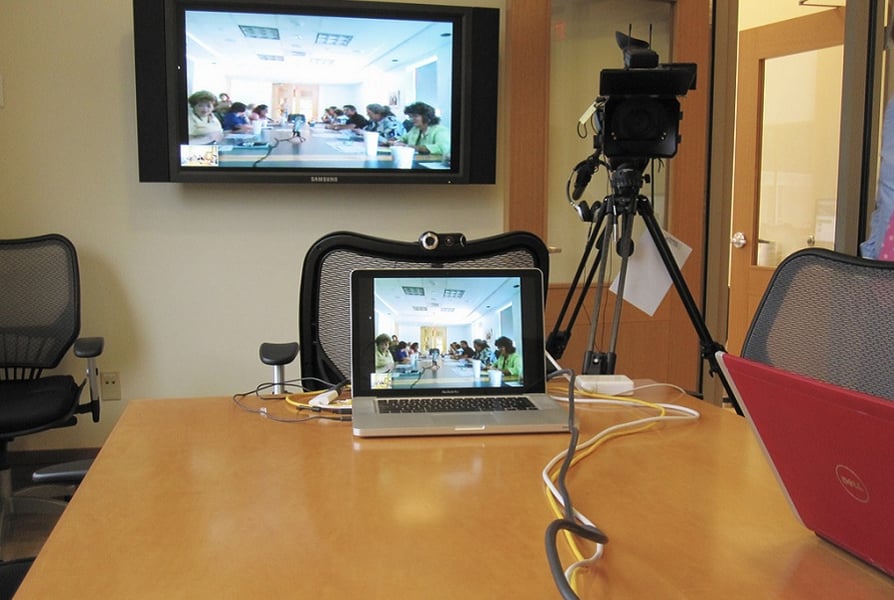
Arbitration lawyers appear reluctant to try their cases via online video during the COVID-19 pandemic.
The Financial Industry Regulatory Authority Inc. has postponed in-person arbitration and mediation hearings through July 3 due to social distancing concerns related to the outbreak. Finra is offering virtual hearing services through Zoom or teleconference if both parties agree or if arbitrators order it.
But there doesn’t seem to be much uptake since mid-March, when Finra first suspended hearings. Lisa Braganca said there’s little interest in Zoom hearings so far among lawyers who belong to the Public Investors Arbitration Bar Association.
“I do not believe that we as a group are anxious to move into Zoom hearings,” said Braganca, owner of Braganca Law. Most lawyers will “want somebody else to be the guinea pig.”
There are a couple of drawbacks to online hearings, she said. First, it’s much more difficult to read the body language of the arbitrators. When lawyers present a case, they’re always monitoring how adjudicators react to their arguments.
“You’re keeping an eye on them,” Braganca said. “There’s constant adjustment. It’s a dynamic process.”
Dochtor Kennedy, founder of AdvisorLaw, depends on arbitrators' non-verbal cues.
"I want to see everyone’s face and read their expressions,” he said. “I think you get a little more from 3-D interaction.”
Although Zoom allows participants to share documents, it’s not the same as handing out hard copies at an in-person hearing.
“It’s difficult to present documentary evidence in an effective way,” Braganca said. “We want to make sure that everyone is looking at the same part of the document at the same time.”
It’s difficult to tell how many arbitration and mediation hearings have been conducted on Zoom. Finra doesn’t discuss arbitration proceedings prior to the release of an award.
Two recent arbitration awards indicated that a Zoom hearing was used in the process. One involved a breach of contract claim by a registered representative against Barclays Capital Inc. Another was a case centering on a customer claim against Raymond James and a Raymond James claim against a third party.
The highest profile use of Zoom occurred for a hearing near the end of the arbitration process in a case that resulted in a $10.5 million decision against Wunderlich Securities.
In a motion to vacate the award filed in a New York federal court, Wunderlich’s attorneys asserted that during the March 12 Zoom hearing, one arbitrator was “looking at other screens, typing, and eating during the course of the presentation” while another blocked her screen and another walked away from his screen.
Braganca said Wunderlich is unlikely to prevail in its challenge. Judges usually give deference to arbitrators. The fact that one of the hearings was conducted on Zoom “is irrelevant.”
George Friedman, a former Finra arbitration director, said it’s too early to tell whether Zoom hearings will gain traction. Awards that will indicate online proceedings probably won’t be filed for weeks or months.
Friedman acknowledges there is some initial reluctance to embrace Zoom for arbitration hearings; nonetheless, he sees them as a viable alternative amid the uncertainty caused by the pandemic.
“I would recommend to a client that they do a video hearing because God knows then they will be able to have a hearing with all participants in the same room,” said Friedman, editor-in-chief of the Securities Arbitration Commentator. “It’s not a perfect solution, but it’s the best we can do.”
In a recent blog post, Friedman encouraged Finra to make a rule change giving arbitrators more latitude to order Zoom hearings.
Eventually, lawyers will get on board with Zoom hearings, Kennedy said. “I think we’re going to see a significant increase in the number of Zoom video hearings, it’s just going to take a little time.”
Braganca shares that outlook.
“It might, in the end, be something that is really good for investors,” she said. “Two years from now, I look forward to doing Zoom hearings. But we’re all going to have to change.”

Also, CAPTRUST adds a $300 million planning team from Sanctuary in its home market of Raleigh, and Sequoia Financial Group buys a Boulder family office.

New nonvoting shares would let the Meta CEO cover eyed Proposition 40 tax without losing control, in exchange for an eight-year residency pledge

New research exposes a wide gap in how affluent parents and their adult children understand and prepare for the transfer of family wealth.

A new AIC report finds a 13.2% median annualized return over 10 years, outpacing public equities, real estate, and fixed income.

Most Americans entering retirement lack a realistic picture of what health care will actually cost them and advisors may be their last line of defense.
Knighthead Life entered the market with a competitive MYGA. A strong launch earned advisor confidence and paved the way for FIAs.
As AI makes financial information more accessible than ever, Lana Hock explains why human judgment, trust, and empathy remain the qualities clients value most in a financial advisor

