
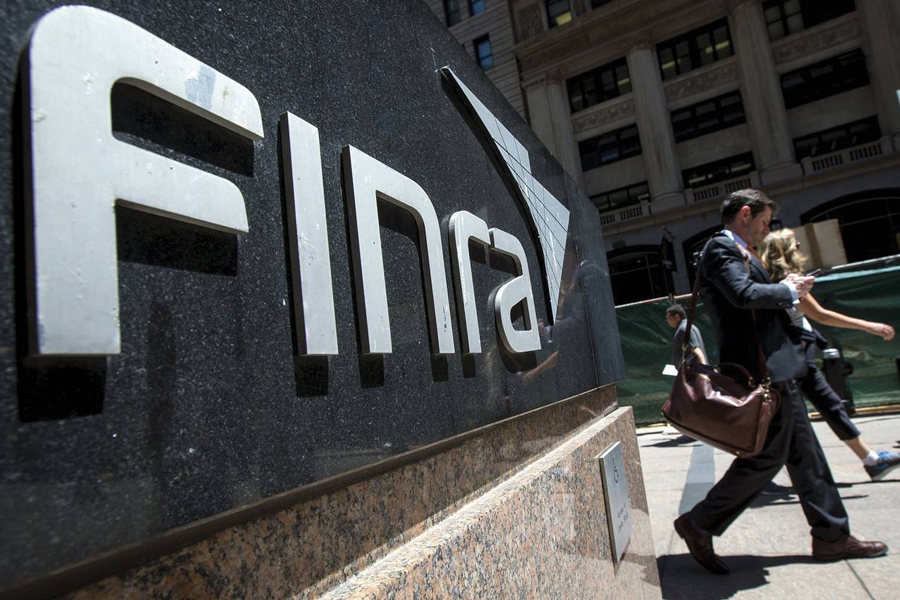
Finra expelled Monmouth Capital Management from the financial industry Friday for repeatedly committing trading and disclosure misconduct in violation of Regulation Best Interest.
The Financial Regulatory Authority Inc. said that from Aug. 1, 2020, through Feb. 28 this year, six Monmouth registered representatives traded excessively in 110 customer accounts, 42 of which were churned, resulting in $3,953,492 in commissions and trading costs for customers, according to the letter of acceptance, waiver and consent.
Each of the accounts suffered substantial losses and more than half of the accounts belonged to senior customers, Finra said.
The broker-dealer self-regulator said Point Pleasant Beach, New Jersey-based Monmouth failed to establish written supervisory procedures to stay in compliance with Finra trading rules.
In addition, Finra charged that from Nov. 9, 2020, through Feb. 28 of this year, Monmouth made false and misleading disclosures on its Client Relationship Summary, or Form CRS, about how it monitored accounts and how much it charged for trades.
Finra said the trading offenses and the Form CRS shortfalls violated Reg BI, the broker-dealer standard of care that has been in force since June 2020. The Securities and Exchange Commission promulgated Reg BI in order to raise the broker advice standard above the previous suitability rule.
Monmouth is the second firm Finra has tossed out of the financial industry for Reg BI missteps. The first was SW Financial earlier this year.
“Monmouth abdicated its responsibility to reasonably supervise its representatives’ trading, resulting in substantial harm to customers, including Gold Star families,” Christopher Kelly, Finra senior vice president and acting head of enforcement, said in a statement, referring to relatives of military service members. “The egregiousness of the firm’s sales practice and supervisory violations necessitated expulsion of the firm from Finra membership.”
Reg BI requires that broker-dealers and their reps act in the best interests of a customer when a recommendation is made and not place the firm’s or a rep’s interests ahead of the customer’s interests.
The lack of oversight of accounts meant that Monmouth recommended excessive trading, contradicting Reg BI rules. For instance, Monmouth recommended short-term, in-and-out trading to a customer with limited investment experience and a moderate risk tolerance, and the customer routinely followed those recommendations, Finra said in the AWC.
Monmouth agreed to the settlement and expulsion from the industry without admitting or denying Finra’s findings. Finra said the action resulted from a customer complaint about a former Monmouth rep. A spokesperson for the firm was not immediately available for comment.

Shorter waits for failed SIE and Series 7 candidates take effect Jan. 19, speeding the path to registration

Raymond James and Cetera also welcomed advisors from UBS and LPL as competition for experienced teams stays fierce

Jim Walesa worked in the securities industry for 39 years before leaving in 2021.

As the market turned from pricing in cuts to betting on hikes this year, the developing reality of a K-shaped economy has had real implications for households and investors alike.

Alleged cash payments, stolen client data, and a court that jumped the gun
Knighthead Life entered the market with a competitive MYGA. A strong launch earned advisor confidence and paved the way for FIAs.
As AI makes financial information more accessible than ever, Lana Hock explains why human judgment, trust, and empathy remain the qualities clients value most in a financial advisor

