
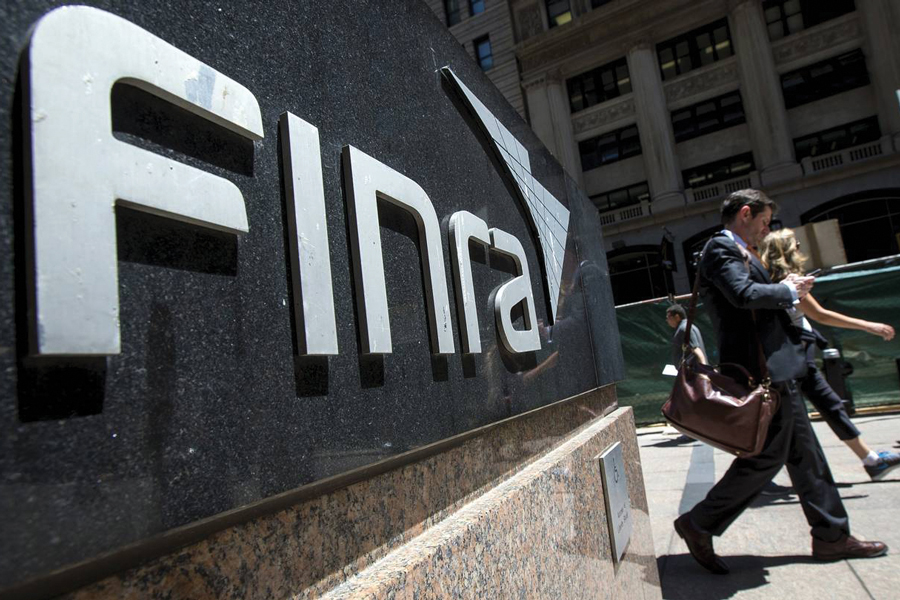
Finra could allow remote participation in arbitration proceedings on a permanent basis, Chief Executive Robert W. Cook said Tuesday.
When the coronavirus pandemic broke out in March 2020, the Financial Industry Regulatory Authority Inc. suspended in-person arbitration hearings due to social distancing concerns. The organization resumed in-person hearings at all of its 69 nationwide sites last August.
But Cook said there is still demand to conduct hearings by Zoom or at least to have some witnesses appear remotely.
“We’ve got a great arbitration task force that has industry representatives, representatives of the investor community who are going to help us think about how we can continue to have a hybrid environment in this space going forward,” Cook said at a virtual conference sponsored by the McDonough School of Business at Georgetown University.
Lawyers representing customer claimants against brokerages and registered representatives in the Finra arbitration system expressed mixed feelings about remote arbitration.
The arbitration process could evolve thanks to the lessons learned during the pandemic.
“The challenge now is how do we move to a third paradigm — from mostly in-person to entirely remote and now a hybrid,” Cook said. “How do we make that work effectively? How do we bring forward the best of both of those two worlds as we step into, hopefully, a new era post-pandemic.”
The Public Investors Advocate Bar Association asserted last spring that remote hearings benefit brokers and harm investors. The organization urged Finra to resume in-person hearings at all of Finra’s hearing sites, a step the broker-dealer self-regulator took later in the year as the number of Americans who had been vaccinated increased and the nation began to reopen.

Senators say brokerages leave accounts exposed to fraudulent transfers without verification, intensifying pressure as FINRA weighs its own fraud-hold rule

Meanwhile, the founder of advisor list gives reasons for secret $6 million payment to editor.
Internal C-level promotion comes as US Bank builds out private banking, athlete-focused advice and alternatives infrastructure.

A structured financial plan doesn't just prepare clients for the future, it transforms how they respond to the present.

Regulated prediction markets for retail brokerage clients is the latest sign that prediction markets are entering the mainstream investing toolkit.
Northern Trust’s Ken Lassner shows advisors how to convert volatility into after-tax portfolio gains
Dan Biagini of American Equity says the steady decline of pensions, longer lifespans and a reset in interest rates are rewriting how advisors build retirement income

