
It's been several weeks since New Jersey resident Michael Treadway filed a class action lawsuit against Betterment in New York federal court, claiming the firm fell short of its duties to customers in its cash sweep program.
According to the legal action filed on July 10, which has been reported across several industry news outlets, the firm swept client cash into deposit accounts that paid no interest at all, thereby violating its fiduciary duty as a registered investment advisor.
As reported earlier by CityWire and WealthManagement.com, the complaint cited Betterment's own materials acknowledging that funds held in its Transfer Sweep Program earn no yield, even as the firm's advisors were paid based on balances maintained in partner banks' accounts.
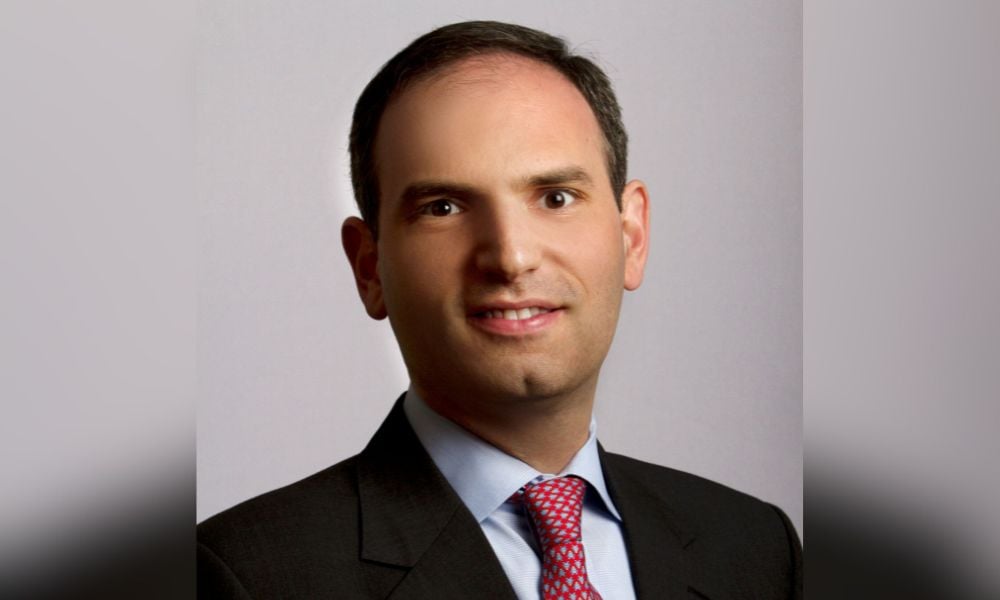
For Gary Zimmerman, founder and chief executive of cash management platform Max – which also offers an enterprise-grade platform for RIAs looking to manage cash for their clients – the lawsuit is less a one-off legal challenge than the latest data point in a reckoning he has been anticipating since the 2008-09 financial crisis, when he first came to realize the risks embedded in brokered cash sweep programs.
"This is not the first firm to be sued either by clients or by the SEC over these cash sweep programs," Zimmerman said in an interview with InvestmentNews.
He pointed to settlements Wells Fargo and Merrill Lynch entered into with the SEC in January 2025 over similar charges, where they paid a combined $60 million in civil penalties. A similar investigation into Morgan Stanley was closed a few months later without enforcement action.
Zimmerman argued that a structural quirk sets the Betterment case apart from those earlier sweep controversies – namely, that the firm is dually registered as both an investment advisor and a broker-dealer, two designations that carry different legal obligations.
"Registered investment advisors have a fiduciary duty to their client, whereas broker dealers only have to meet a standard of suitability," Zimmerman said. "So suitability, it doesn't have to be the best product. It just has to be kind of good enough."
A dually registered firm like Betterment, he said, is able to "talk out of both sides of [its] mouth," invoking fiduciary language on one hand while operating a sweep program that behaves more like a broker-dealer profit center on the other.
Read more: Cash sweep rates thrust into the spotlight
While brokerage programs such as the one Betterment operated do disclose the amount of yield clients should be able to expect from being placed in its cash sweep program, Zimmerman insists that "falls short" of resolving the underlying conflict they may have with customers.
"Some of these brokerage sweep programs market themselves as being free [for the customer], and they're not free. You're paying for it by accepting a lower yield," he said. In his view, the only way to truly eliminate conflicts in a cash sweep program is if the platform was not the one setting the rates.
"We believe the claims are without merit and intend to defend against them vigorously," a Betterment spokesperson told InvestmentNews via email regarding the lawsuit. "We're unable to comment further on the specifics of pending litigation."
Zimmerman pointed to Capgemini's World Wealth Report, which found that North American households with $1 million or more in investable assets – roughly the top 4% of U.S. households – hold between 23% and 25% of their liquid assets in cash, and collectively account for about half of all retail cash in the country. He estimated that figure at roughly $5 trillion, much of it "dramatically underinsured and under-earning what it could be."
Rather than routing deposits through an intermediary's omnibus account, Max lets banks compete directly for a client's deposits, with the full rate – going up to 3.43%, according to its website – passed through. "We don't set the interest rates," Zimmerman said. "A hundred percent of the interest that the banks are willing to pay goes directly to the client, not to us."
Apart from Max and Betterment, Altruist introduced its own high-yield cash product for advisors in 2024; that cash sweep offering, Altruist Cash, currently touts a 3.20% APY, with up to $6 million in FDIC coverage through its partner banks. Flourish, which has a more singular focus on savings (and more recently, mortgage lending), offers a 3.25% APY on its own cash sweep product, with FDIC insurance coverage going as high as $7.5 million for business accounts.
Beyond Betterment's cash sweep program, Zimmerman pointed to a couple of real-world nightmare scenarios that snared consumers seeking higher yields from FDIC-protected savings accounts. Synapse, a banking-as-a-service provider, filed for bankruptcy in 2024, leading to the disappearance of more than $100 million in client funds across the wider network of fintech apps that used it as a middleman to place client funds into higher-returning savings accounts.
That failure, as well as the failure of a similarly modeled fintech called Beam, came about because end-users' funds were commingled into large deposit accounts; while the money in those accounts is FDIC-insured, Synapse's operating model made it difficult if not impossible to reconcile which dollars belonged to whom after the business imploded.
Handling client cash offers a potential way for wealth firms and advisors to deepen their relationships with clients – a people-first industry phraseology that often translates into handling more client assets.
Read more: Capturing more wallet share with cash
However, Zimmerman said that opportunity isn't always evident to advisors who face a multitude of demands on their time. There's also the fact that cash money is hardly ever top of mind among clients, who have been largely conditioned to focus more on stocks and other asset classes that have historically promised more effective yields in terms of beating inflation in the long run.
"Really the key is prioritizing this and including it in the discussion," Zimmerman said. "We have a lot of advisors on Max who now just make this part of their default process when they onboard new clients [as it] will help the clients earn more and keep their cash safe and liquid."

Investors bet on AI-driven portfolio automation as advisory firms grapple with time-consuming manual work and rising demand for personalization.

Michael C. Graham passed away in November. He was 53.

The proposed changes around retail communications and certain representations of projected performance or targeted returns have tangible implications for B-D firms' compliance policies and procedures.

The independent wealth firm's latest move in Massachusetts a dedicated non-advisory platform for ultra-wealthy families as RIA family office spinoffs keep multiplying.

Savant Wealth Management's tax subsidiary is taking a new name and two new partners as the RIA continues layering accounting services onto its wealth platform.
Northern Trust’s Ken Lassner shows advisors how to convert volatility into after-tax portfolio gains
Dan Biagini of American Equity says the steady decline of pensions, longer lifespans and a reset in interest rates are rewriting how advisors build retirement income

