
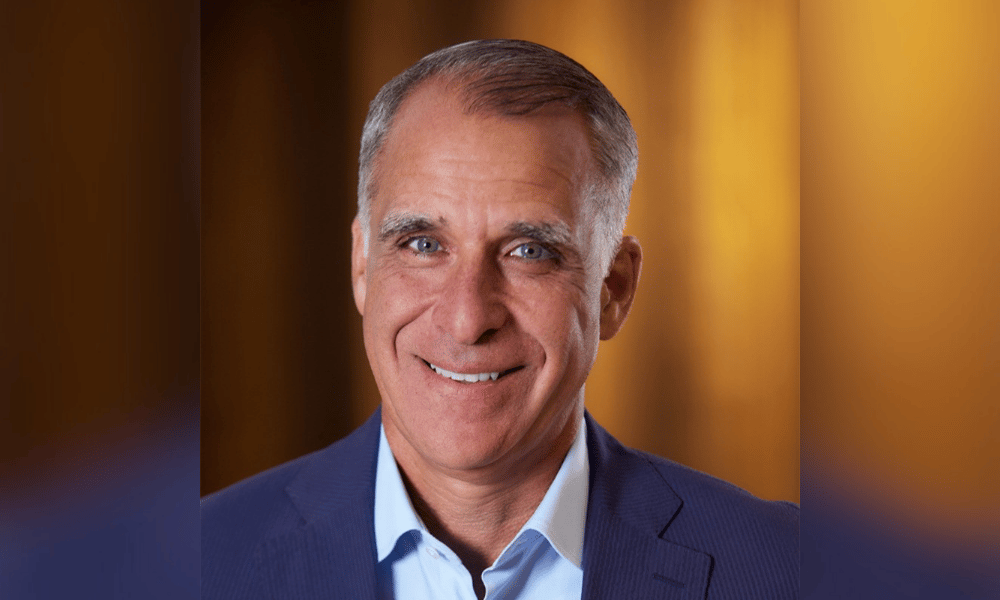
As Envestnet approaches its second year as a private company, Chief Relationship Officer Andrew Stavaridis says the transformation has brought a new sense of focus and freedom — both internally and among its clients.
Since its acquisition by Bain Capital, Envestnet has been reorienting around what Stavaridis calls a five-year “value creation plan” that prioritizes core technology development, go-to-market investment, and client support infrastructure. The company is hiring across product, development, and customer success teams to strengthen its advisor-facing capabilities.
“Being a public company was great at the time — it helped us grow and acquire firms,” Stavaridis told InvestmentNews during the Schwab IMPACT conference in Denver. “But being a public company can be hard when you’re managing on a quarter-to-quarter basis. The biggest difference now is that we can make long-term decisions based on what’s best for Envestnet and our clients.”
He said Bain’s approach has been to center Envestnet on what it does best. “Bain’s approach has really been, 'let’s get focused around our tech strategy.' What are we going to focus on that’s core to Envestnet, core for our clients. And then where do we invest? How do we accelerate that growth? How do we accelerate the development and the products and solutions we’re bringing to market?” Stavaridis said.
That focus includes investment in technology and customer-facing resources. “We’re going to be investing in front-facing sales people so that they’re engaging more with our advisors and supporting our advisors,” he said. “But it’s not just the front-facing sales people. It’s also the marketing, right? It’s how are we leveraging our marketing support to the advisors.”
Stavaridis added that Envestnet is also reshaping its client success infrastructure. “We want to invest more in how we’re supporting those advisors, how we’re supporting those institutions,” he said.
Bain’s five-year strategy, he noted, has given the company a long-term roadmap. “They look at how does Envestnet grow over the next five years? What are the key things that we need to get that growth? It’s the focus on development integrity, and then it’s the go to market and [provide] support there.”
After months of rollout, the firm’s clients are responding positively. “We’ve been out in front of our clients… and really started to deploy what our strategy would be, and the focus will be our roadmap, our product roadmap, our solution roadmap,” Stavaridis said. “They’re very excited about the fact that we’re getting back to core. We’re getting back to really leaning in on the things that they want when it comes to the trading and UMA platform, billing, the reporting engine, how we’re expanding the capabilities and reporting and then the overall experience and UI of the platform.”
Employees, too, are energized by the transformation. “The fact that they’re starting to hear that there’s investment, and they’re seeing it — it’s not just, ‘Hey, we heard it from the leadership team,’” he said. “We are already starting to hire staff in the product and development areas… and we’ll start to do some of the go to market over the next couple of months. So they’re seeing it in action.”
Looking to 2026, Envestnet aims to deliver a more unified and scalable technology experience. “One of the key things that we’re hearing from our clients is getting more tech forward, scalable,” Stavaridis said. “They don’t want that swivel chair. They’re focused around the experience of the client, opening accounts, viewing accounts, servicing those accounts.”
He stressed Envestnet’s digital engagement strategy is designed to reinforce the advisor-client bond. “Whatever we’re doing from an engagement has to connect that client to the advisor,” he said. “We’re not in that business” of disintermediating advisors. “We think about digital engagement, where that client really is looking to the advisor, still getting advice, but being able to act on their own.”
“For Envestnet, that’s going to be more expanding into the high net worth arena,” Stavaridis said. “We have significant capabilities in our UMA that can help advisors with personalized portfolios… so that they can create any type of high net worth portfolio that would have tax overlay, potentially direct indexing, but again, scalable.”
He added that “2026 [will see] a significant increase in terms of high net worth flows on the platform — one, because the tech’s there… and then also just the capabilities of the direct indexing [and] tax overlay that we have in there.”
Envestnet is one of the top TAMPs with built-in impact investing platforms for US advisors and RIAs. Explore Envestnet TAMP’s key features and unique benefits for RIAs and advisors, and their clients.

Iowa's Greenwood Wealth Partners exits D.M. Kelly as UBS and Ameriprise win Merrill Lynch recruits in California and Florida

Less than 1% of pool funds went to actual trading, CFTC says

Plus, SEIA builds a governed data foundation for its in-house AI and Snappy Kraken debuts a read-only marketing coworker for advisors.

He owes $364 million but pays $100 a month

Broadridge, Wedbush and Alaris Acquisitions have also filled senior wealth management roles with hires from J.P. Morgan, Osaic and SageView.
As AI makes financial information more accessible than ever, Lana Hock explains why human judgment, trust, and empathy remain the qualities clients value most in a financial advisor
Northern Trust’s Ken Lassner shows advisors how to convert volatility into after-tax portfolio gains

