It appears that the Apple iPad is losing popularity, at least among financial advisers.
Although 65% of the more than 700 advisers surveyed for
InvestmentNews' 2015 most-popular technology report said they use an iPad, that is down from the 77.5% of advisers who used the Apple product last year, based on the same sample size.
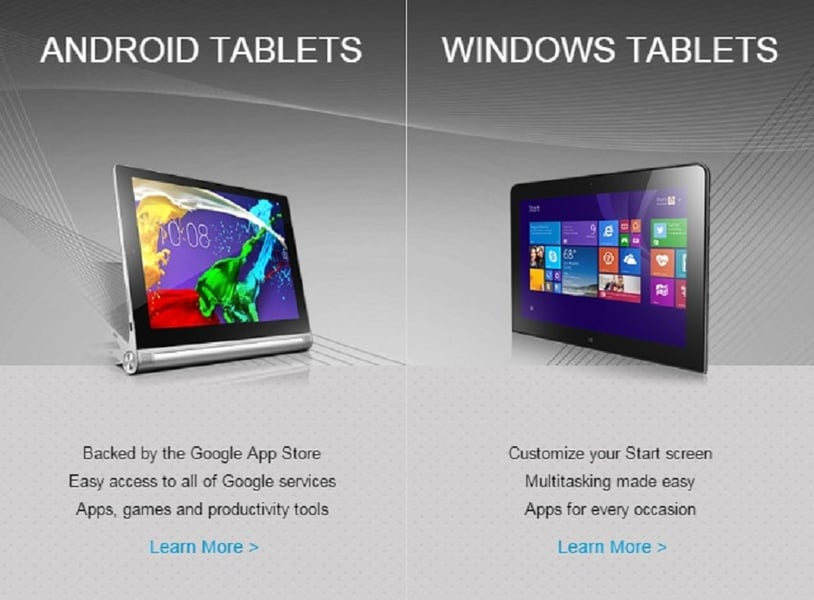
Apple's loss appears to be Microsoft's gain as Windows tablets are getting a bit more love from advisers, going from 8.3% adoption last year to 18.5% this year. Android-based tablets went up slightly, from 10.2% last year to 11% this year, while 1.6% of advisers said they use one of the Microsoft Surface tablets, a product that was not included in
last year's results.
In addition, Amazon's Kindle lost some ground, going from 1.9% adviser adoption to 1.1%, while the use of other tablet options increased slightly, from 2.1% last year to 2.8% this year.
These trends are reinforced by looking back at the 2013 tech survey results, which showed 85% of advisers said they used iPads, 9.5% used Android-based tablets and only 2.2% used Windows tablets. Amazon products accounted for just 1.3% of advisers in 2013, and 1.6% said they used another type of tablet. The BlackBerry PlayBook made an appearance that year with 0.4% of respondents before disappearing from the list.
Tablets used by advisers
Source: InvestmentNews Data
The increasing use of tablets other than iPads may be due to the overall popularity and increasing competition in the tablet product category, said Lorraine Ell, president and director of training at Excellat Consulting, a technology firm for advisers.
"I do see more and more advisers using tablets now," Ms. Ell said, attributing that to more vendors offering tablet apps and more advisers incorporating tablets into their client conversations.
And as it turns out, the change in tablet usage by financial advisers is seen as a trend in the overall division of mobile market share as well.
According to Good Technology's second-quarter
Mobility Index Report, the Android and Windows operating systems are seeing a surge in the tablet category: iOS-powered tablets — Apple iPads — dropped from 81% overall market share in the first quarter to 64% in the second quarter. Meanwhile, Android grew from 15% to 25% and Windows from 4% to 11%.
Only two quarters ago, Windows tablets — including the Windows-branded tablet and the Microsoft Surface — made up only 1% of tablets used by general consumers.
Reid Hartsfield, an adviser with BB&T Wealth in Jacksonville, Fla., said that he has been using an iPad for three years, but would consider a Windows tablet, especially now that
Windows 10 is out. He uses the new operating system and says it is even better than the well-liked Windows 7, and far better than Windows 8.1, which many disliked.
Regardless, he has found his iPad to be useful for his practice, especially when he has client meetings on the go.
"You have all of your old notes with you at a moment's notice," Mr. Hartsfield said.
While other brands are certainly gaining steam, for some firms, the iPad is still their preferred product.
Rose Swanger, a financial adviser with Advise Finance in Knoxville, Tenn., said her iPad is more compatible with broker-dealers than other products may be. She got hers only a few months ago after Pershing announced its revamped NetX360 platform, along with its iPad app.
But Lora Hoff, a financial adviser in Dallas, said that she's always loved the non-Apple products, even when they weren't considered the go-to tablet. Previously she had an Android-based Motorola tablet, and now she works with a tablet from Lenovo, which manufactures both Android and Windows-based tablets.
"I had always been in an office environment and using Windows-based products, even when smartphones were more readily usable," Ms. Hoff said.
She particularly likes the flexibility in software, and said it's best for business purposes.
"To me, Apple is dumbed down if you want to do anything fancy," she said.