
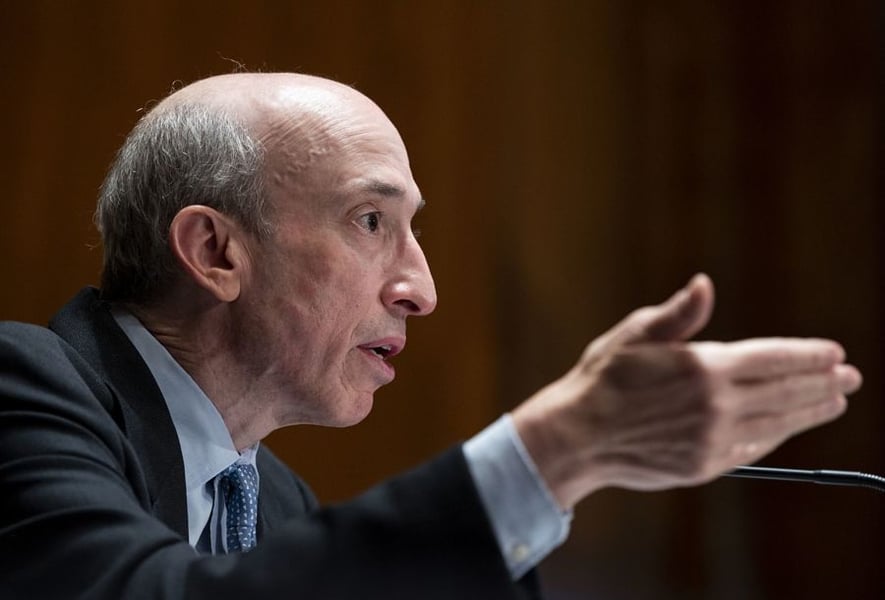
Artificial intelligence holds the promise of greater efficiency and effectiveness for financial advice but also the peril of heightened potential for conflicts of interest, SEC Chair Gary Gensler said Monday.
Gensler said that AI models enable “narrowcasting,” in the sense that they can be used to make predictions about individuals and communicate with each of them differently. That could mean zeroing in on unique characteristics of investors -- such as risk appetite, family and work background, and debt obligations – and helping financial advisors deliver recommendations that work particularly well for the precise profile of the customer.
On the other hand, narrowcasting also makes it easier “to find each individual’s maximum willingness to pay a price or purchase a product,” Gensler said in a speech at the National Press Club in Washington. That can lead to conflicts of interest.
“In finance, conflicts may arise to the extent that advisers or brokers are optimizing to place their interests ahead of their investors’ interests,” Gensler said.
He pointed out the SEC has on its regulatory agenda a potential rulemaking that targets advisor conflicts in the use of predictive analytics, machine learning and similar technologies as they apply to investor interactions.
“It really does provide potential to be much more effective and efficient,” Gensler said of AI’s impact on investment advice. But he warned about the potential downside of “narrowcasting and then sort of finding a way to steer us potentially into the wrong product for us because of conflicts that are there as well – or even worse to deceive us.”
Gensler, who called AI "the most transformative technology of our time," didn’t provide an exact road map of where the SEC is headed on regulating its use in investment advice. But he did say that even as AI fraudsters are “zeroing in on our personal vulnerabilities,” certain staples of SEC oversight can apply.
“Make no mistake, under the securities laws, fraud is fraud,” Gensler said. “The SEC is focused on identifying and prosecuting any form of fraud that might threaten investors, capital formation, or the markets more broadly.”
The SEC won’t necessarily be anti- or pro-AI in its regulatory approach and doesn’t intend to stifle innovation.
“We’re technology-neutral,” Gensler said. “We have to look at the outcomes of the use of [AI] technology. There are challenges around protecting investors, about the conflicts of robo-advisors … considering their interests ahead of yours.”

More than 1,000 employees have signed a union-backed letter opposing the bank's new three-day office mandate.

The release addresses account-level suitability gaps, consolidates trade management, and extends single sign-on to the Addepar client portal.

T. Rowe Price's sixth annual study reveals how retirement advisors are embracing AI, private credit, and personalized plan design.

House-passed measure would let fraud victims deduct losses and waive early-withdrawal penalties on stolen retirement funds.

Anthropic's Enterprise plan offers advisors stronger data controls — but smaller RIAs may struggle with the cost.
Northern Trust’s Ken Lassner shows advisors how to convert volatility into after-tax portfolio gains
Dan Biagini of American Equity says the steady decline of pensions, longer lifespans and a reset in interest rates are rewriting how advisors build retirement income

