Creative Planning is among the largest registered investment advisers in the country, with
$42 billion in assets under management among 96,000 client accounts. Until a few months ago, the firm's growth had been purely organic, a remarkable feat for a firm of its size.
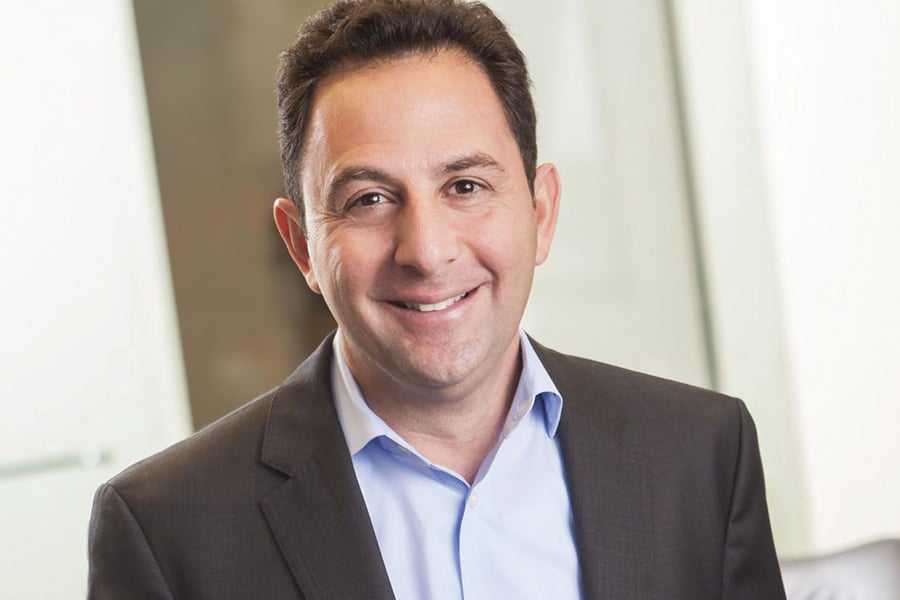
Peter Mallouk, president of the firm, sat down with reporter Greg Iacurci to discuss his new outlook on RIA deals, economics of the advisory business, and why the M&A market will never be hotter than it is right now.
Note: The interview has been edited and condensed for clarity.
Greg Iacurci: Your acquisition of The Johnston Group, a $500 million RIA, in February was your first. Is it one of many anticipated deals?
Peter Mallouk: It's one of many. But we anticipate it'll always be a small minority of our growth.
There are lot of boxes that need to be checked that would prevent us from being an M&A machine that will acquire someone every week.
GI: Is it getting harder to grow organically?
I think we have more client referrals now than we've ever had. Brad Johnston and his team were doing
financial planning, they were managing money, using the same custodians. Within 30 days [of meeting] we'd figured everything out. I just looked at it and said, 'There are firms that could fit in perfectly.' Up until then, I thought, 'It'll be so messy, why bother?'
You'll see a few more [acquisitions] here in the coming months. But they'll be supplementary, not our core strategy.
[Recommended video: Amy Webber on Goldman Sachs United Capital deal and RIA valuations]
GI: Do you have a vision in mind for, now that you've made your first acquisition you want to do X number?
I'm willing to open this door now. If it looks as close to perfect as possible, I'll walk through that door. Before I wouldn't have even had the conversation.
I don't need to do a whole bunch of deals or have any pressure from outside parties saying you need to do a deal every two weeks or 45 days. I don't have an M&A team.
GI: You're the team.
[Laughs] That's right.
GI: What's your view of the M&A market right now?
It's the hottest it's ever been and possibly ever will be. It's just bonkers right now. I don't know where the top is but it's not going to get a lot better than right here. So many sellers are going, 'This is crazy, these valuation levels.' Just three years ago they were about half where they are now.
GI: Why has it gotten "bonkers"?
Private equity [money], combined with low interest rates and smaller advisers concerned they won't be able to compete in this new world. Five years ago there weren't a lot of big firms. A huge percentage of new clients are going to the top 1% of firms.
GI: Have you been approached by any PE firms?
I don't think since 2011 I've gone a month without being approached by someone. I'm still in my 40s and want to be doing this for 20 more years, so I'm not interested in selling a majority of the firm. If it's going to help me make the place more secure and be in a better position to grow, I've always been open to the conversations.
GI: You do one-on-one consulting with 401(k) plan participants. Building out participant services has been something other firms have looked at as a big growth driver. Is that something you're thinking about?
Our next acquisition is another 401(k) company. That'll be finalized in the coming weeks.
GI: How big is the firm?
It will about double where we're at [roughly $3 billion in retirement-plan assets]. Maybe go up 60%-70%. It will allow us to work with participants who want a very-low-cost, over-the-internet type deal or an in-person and low-cost approach.
GI: Is it a robo-type firm?
Not really, but it's close. It's kind of in between one-on-one- [advice] and a robo. It's very tech-oriented. The emphasis is on keeping the cost low.
GI: You'd been using Charles Schwab's Institutional Intelligent Portfolios hybrid robo-advice platform, but no longer do. What changed there?
About three-and-a-half years ago we started an emerging wealth group that works with family members of our high-net-worth clients or new clients below what was our minimum for private client service. We still deliver a plan, but it's streamlined and all done online. We were even going to take people below that amount, and so we added the Schwab portfolios. We never put any money in it. We decided we can't go much lower in terms of our account size. So it went on our
Form ADV, then we decided not to launch it, and it came off our ADV.
GI: What was the minimum account size you were going to dip below?
We were going to say, 'No matter what you have, we'll find a process for you.'
The private wealth side is $500,000 and emerging wealth — the online approach — is $50,000. We were trying to accommodate someone who had $40,000, but we just never launched the program. Our system is known for planning, and we just couldn't do it at that level.
GI: The economics didn't work?
I think it was more we philosophically couldn't get there. We thought we could. The economics would work, if you do a robo-adviser online and you don't include planning. It just wasn't philosophically consistent with what we were doing.
GI: You eliminated the chief investor psychology position, after the sexual-misconduct accusations against Tony Robbins. Are you looking to fill that appointment?
I don't think so. We had an advisory board that had quite a few people — Chris Cox, the former chair of the SEC, Jane Bryant Quinn, Jonathan Clements, and Tony Robbins. We dissolved that board. We kept Jonathan Clements as our director of financial education. The rest of the board, it was a three-year run and we dissolved it.
GI: Has there been any sort of backlash because of Tony Robbins having been on the board?
Literally nothing. It just kind of came and went.
GI: Did clients ask about it?
We had a couple clients ask. I don't believe one client of our tens of thousands of clients left. No one called and was upset. They might have had a question or two, but that's about it.