
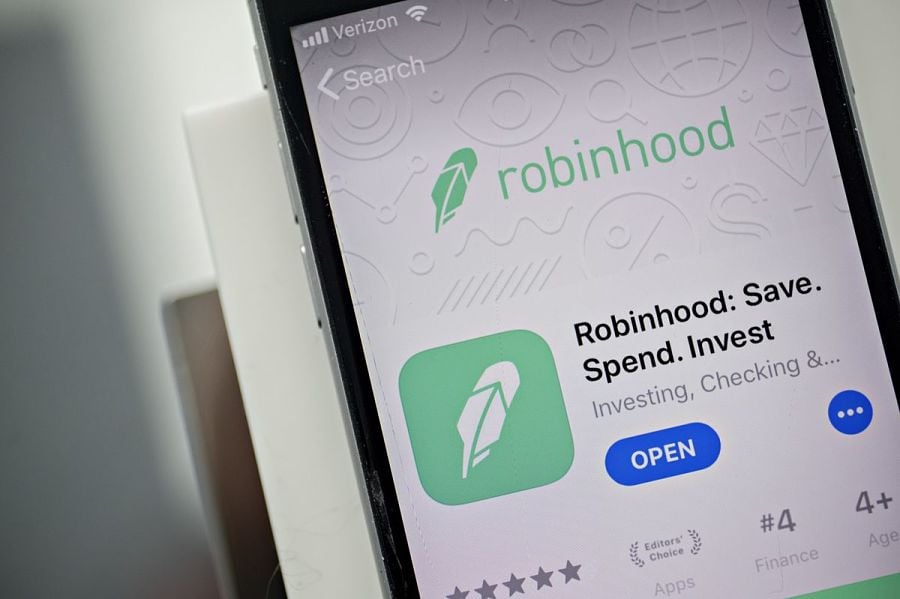
As millions of investors sign up for free stock-trading accounts, via platforms like Robinhood and Fidelity, some advisers are hopeful that the apps are a way to introduce young adults and first-time investors to financial planning — despite some of the recent criticism.
Fidelity, for one, claims the free trading app trend is an opportunity to engage investors at an early age with the expressed goal of establishing long-term relationships with these prospects and moving conversations toward proprietary products and services for a fee.
Robinhood, the undisputed king of free trades, also helps educate young investors through its online platform. The no-fee trading platform racked up 4.31 million daily average revenue trades in June, far outpacing all of its publicly traded rivals and even quadrupling the number of fee-generating trades at ETrade Financial Corp. for the same period.
The rapid growth of these free trading apps has come with complications. The tragic death of Alex Kearns, a Robinhood Financial Inc. customer who took his life in June after believing he lost some $730,000, has spurred harsh rebukes from critics.
Not all advisers see free trading apps as the right tool to attract younger clientele as the advisory community begins to discuss the long-term impacts free trading apps are having on financial planning.
“The scary part is these traders are using margin on their accounts without realizing it,” said John Bovard, owner of RIA Incline Wealth Advisors. “This can lead to a very dangerous situation for novice investors where their losses can be multiplied. These young traders are losing their money that they invested that they cannot afford to lose.”
Morningstar’s director of personal finance Christine Benz took to Twitter to express her criticism of the emerging trend the industry is seeing of more young people investing directly in stocks.
I'm going to keep on saying it: Individual stocks are not a great way for young people to get started in investing. https://t.co/i9XOcJ2AtE
— Christine Benz (@christine_benz) August 25, 2020
However, Benz did share her thoughts via a video interview on Monday about how impactful it can be for young adults to get into investing early — but to avoid doing so through individual stock investing.
“While young investors have that long runway ... if they can invest in a diversified broad basket of equities, that probably gives them a better runway to earn good long-term returns over their very long time horizon,” Benz said. “My advice would be to skip the individual stock investing.”
To be fair, free trading apps do remove the barrier of entry for young investors to take their finances into their own hands, according to Houston-based adviser Charles Adi.
“Over the years I have been trying to get my clients excited about investing without success,” he said. “Seeing their recent interest is encouraging. Yes, some will lose money and others will make money — but the lessons learned during this pandemic will be invaluable.”
For adviser Natalie Slagle, founding partner at Fyooz Financial Planning, a firm specializing in working with couples in their 30s and 40s, plenty of her clients use Robinhood and Stash for free trades and fractional share purchases.
Slagle encourages her clients to see their accounts with Robinhood or Stash as their “fun money,” she said. “If it all goes to zero, they can still accomplish their big goals. If it does well, then it will get them to their goals faster.”
Still, with the current influx of users flocking to free trading apps, some advisers are feeling the sting of increased competition. “Right now, business is getting drained away from professional financial advisers, at least when it comes to investment management,” said Steve Zakelj, an adviser at Flatirons Wealth Management.
Other advisers disagreed, however. Founder and president of Woodson Wealth Management Jamie Lima said that free trading apps do not impact him as a financial planner.
“I don’t think they are going to kill the role of an adviser like Uber or Lyft killed the role of a taxi driver,” he said. “I do think they can work in tandem as these apps provide much-needed access to investing for those that previously could not afford to do so, and as these clients grow as investors, they will likely see the need to seek out help from a planning perspective. That’s where we come in.”
While Zakelj, too, can see the clear positive that more young adults are being introduced to financial planning via free trading apps, the misinformation on the apps might do more harm than good for the industry, he said.
Free-trading apps can make mistakes in the key assumptions they make about clients from the information keyed in on the platform, said Zakelj. For example, one online platform assumed a future Social Security payment based solely on current income. “It's a nice starting assumption, but that's not how Social Security works,” he said. “The results could be disastrous.”
In the end, clients should realize that like most everything else in life, you usually get what you pay for, he said. “If you're paying nothing, the product is either not that great, or in some cases, the product may be you.”

Salespeople at the firm often went beyond the matching algorithm to recommend network advisors on its Zoe Wealth platform, according to the regulator.

The Protect College Sports Act would cap school payments and codify NIL rights, with implications for advisors guiding young athletes.

"I know the number that I want to be able to retire on, and now I just want out," says Wilmington Trust's Marguerite Weese, describing a common refrain among business-owner clients.

Bessemer and Brown Brothers Harriman veteran Robert Ludricks III and private markets specialist Olof Akesson join the ultra-high-net-worth push on the East Coast.

765 investors were promised 260% annual returns on truck leases
As AI makes financial information more accessible than ever, Lana Hock explains why human judgment, trust, and empathy remain the qualities clients value most in a financial advisor
Northern Trust’s Ken Lassner shows advisors how to convert volatility into after-tax portfolio gains

