
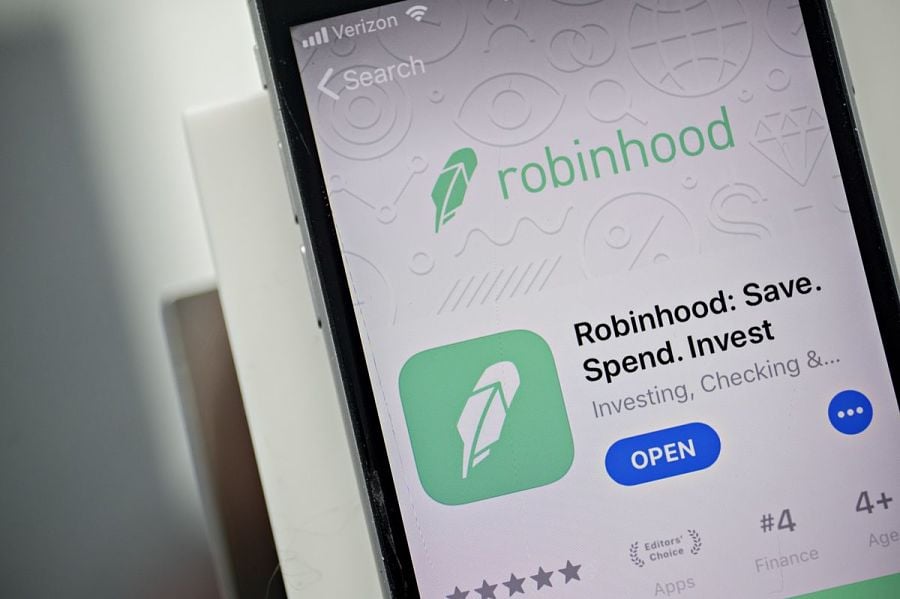
Robinhood Markets Inc. customers experienced technical issues on the company’s online service when U.S. markets opened on Monday morning and the outage lasted the entire U.S. trading day, preventing customers from making trades as stocks surged after last week’s rout.
The systemwide issue began as the markets opened, with clients unable to access their accounts. Almost two hours later, Robinhood Markets Inc. said the problem had been identified and its staff was working on a fix. By 4 p.m. in New York, access had not been restored.
Clients blasted the closely held company on social media for not being able to make trades.
“One of the most anticipated trading days and your service is down at market open,” one user wrote. Another user said: “What is going on -- I can’t do any trades -- you will lose me as customer going forward. This ridiculous.”
Robinhood is having issues since 9:38 AM EST. https://t.co/JyliGLnyar RT if it's down for you as well #robinhooddown
— Downdetector (@downdetector) March 2, 2020
Downdetector, a website that tracks real-time outages online, reported the issue at the market open.
The failure was a setback for a Silicon Valley startup that has sought to lure young, tech-savvy investors who want to trade entirely online. Founded in 2013, the Menlo Park, Calif., company made a name for itself by offering commission-free trading on a mobile app. Since then, it has garnered millions of customers and a valuation of $7.6 billion.
Financial technology companies may have difficulty dealing with higher trading volume in more volatile markets, said Craig Pirrong, professor of finance at the University of Houston. “Particularly, is the technology scalable enough to handle the amount of orders they’re getting?” he said.
Recently, much larger competitors including Charles Schwab Corp. and Fidelity Investments have dropped some trading fees, essentially matching Robinhood’s offering. Companies including Jack Dorsey’s Square Inc. have also started offering the ability to trade stocks for free.
U.S. stocks surged the most in 14 months Monday as investors gained confidence that central banks would intervene to mitigate the economic impact of the coronavirus. Last week, the S&P 500 Index suffered its worst week since 2008.
During the market decline, Fidelity and Schwab customers experienced technical issues that were quickly repaired.

Just over 10% of advisors' wealth clients come from defined contribution plans, as capacity, data and technology gaps block the bridge to wealth

Deal creates a $20B-plus custody platform for private market investing in IRAs, months after Schwab closed its Forge Global purchase

Despite the good times, advisors should tread carefully, said one veteran industry executive.

Cullen marks the fourth firm the New York-based RIA aggregator has bought in 2026 as deal volume heads for a record year.

The quality of AI ROI measurement depends on pre-deployment decisions around business outcomes, leadership alignment, and establishing trusted information, among other factors.
Knighthead Life entered the market with a competitive MYGA. A strong launch earned advisor confidence and paved the way for FIAs.
As AI makes financial information more accessible than ever, Lana Hock explains why human judgment, trust, and empathy remain the qualities clients value most in a financial advisor

