
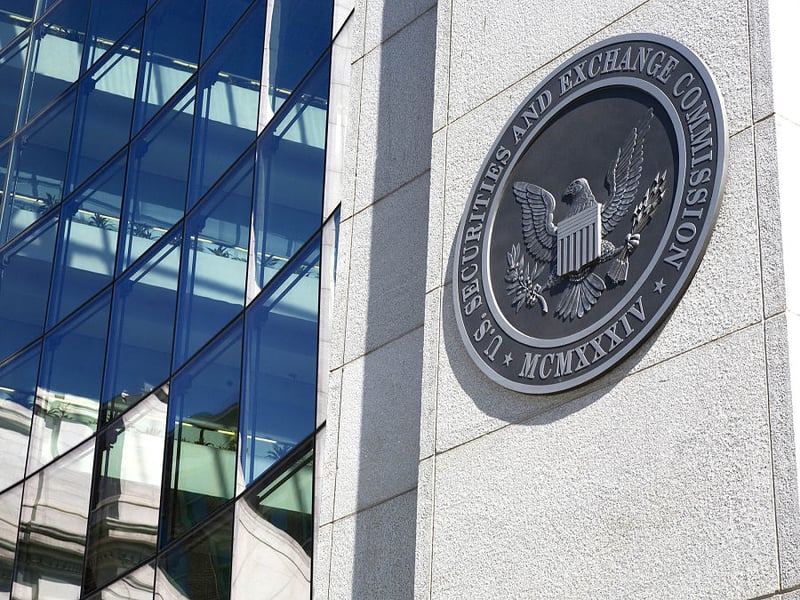
Financial firms must ensure their compliance programs keep pace with emerging technologies such as text messaging, SEC officials said Wednesday.
Last month, the Securities and Exchange Commission ordered JPMorgan to pay $125 million for failing to keep track of employee communications about business on their personal devices through text messaging applications, such as WhatsApp, and personal email.
The SEC found that from January 2018 through November 2020, employees at all levels of J.P. Morgan Securities, a broker-dealer subsidiary of JPMorgan Chase & Co., sent thousands of text messages that were not preserved, a violation of securities laws. The lack of record keeping also hampered several SEC investigations.
As texting becomes ubiquitous, so will compliance dangers.
“I think the message is that firms need to adapt their internal controls and corporate compliance programs to evolving technologies,” Sanjay Wadhwa, deputy director of the SEC Enforcement Division, said during an online conference hosted by the Northwestern University Pritzker School of Law. “I think firms will really need to look at what their legal obligations are and how their practices are helping them … meet their legal obligations.”
The compliance programs must be specific to a firm’s business model.
“You need bespoke policies, policies that really address risks you face as a firm in your particular space,” Gurbir Grewal, director of the SEC Enforcement Division, said at the conference.
Grewal emphasized that follow-through is also important. He pointed to the fact that JPMorgan had record-keeping policies and procedures in place but didn't follow them.
The SEC order states that the use of text messaging was rife at the firm and involved supervisors who were supposed to ensure compliance with the requirement to preserve communications.
“You really have to have implementation,” Grewal said.
Record keeping may sound mundane, but the SEC takes it seriously.
“The message of this case is record-keeping requirements of the securities laws are sacrosanct,” Wadha said. “They go to the very heart of our mission of protecting investors.”
Grewal, a former New Jersey attorney general, said there's declining faith in financial markets that's attributable to “repeated lapses” by market participants and a perception that they’re not being held accountable.
“We in the Enforcement Division are doing our part to restore that trust in our institutions,” Grewal said. “For us, it revolves around three components. The first is robust enforcement. The second is really focusing on robust remedies where appropriate, and the final piece of it is encouraging robust and proactive compliance.”

Wells Fargo adds two bank-channel recruits, UBS lands a JPMorgan Chase veteran, and a multi-family office lifts Atlas past $1B

“The state comes down on you in years when you make 40% returns for clients,” said Bill Swayne, the advisor and son of Candace Swayne.

The Independent broker-dealer giant has had “active conversations” with the Claude maker, which is days away from its expected IPO

For Gen X clients entering life after work, answering the financial question isn't enough to solve the entire retirement equation.

Tools from Grantd, Income Lab and Healthspan Wealth aim to keep RIAs involved in clients’ biggest money decisions
Growing wealth, evolving priorities, and untapped opportunities are reshaping how women approach long-term investing.
Knighthead Life entered the market with a competitive MYGA. A strong launch earned advisor confidence and paved the way for FIAs.

