
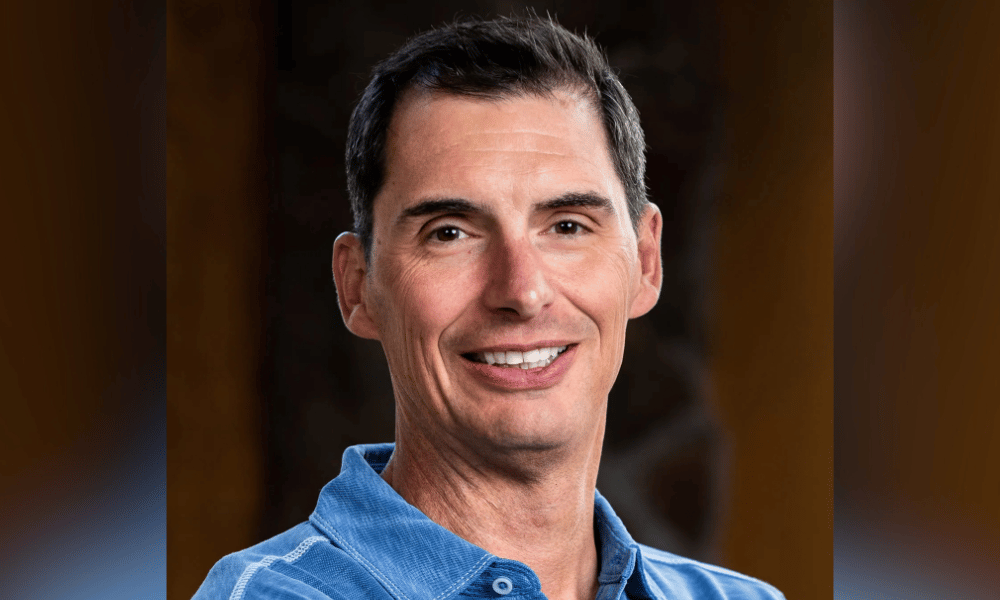
Are clients really interested in how much alpha you can generate? And how confident are you that this will be a differentiator? For Gene Farrell, CEO of Vanilla, advisors must shift their focus because estate planning is emerging as the most powerful, and most underused, tool in the battle for clients.
When asked whether advisors give estate planning enough attention, Farrell didn’t equivocate. “Absolutely not,” he told InvestmentNews at this year’s Schwab IMPACT conference in Denver, Colorado.
“What advisors are realizing is that investments are no longer enough. They’re not able to achieve investment alpha, and clients frankly don’t believe they can achieve investment alpha. So, they're looking for ways to better support clients and frankly justify the fees that they earn.”
A major driver, he noted, is the “massive wealth transfer” already underway; roughly $124 trillion expected to move between generations over the next two decades. The planning work tied to that transition is happening now.
“The data supports it, about 93% of clients want their advisor to help them navigate their estate planning process. Yet only 24% of clients are getting that service from their advisor today.”
Farrell said estate planning forces a level of personal engagement most advisors aren’t used to but desperately need to embrace.
“It’s probably the most intimate conversation an advisor’s ever going to have with a client,” he said. “You're diving into who they love, their family and what those relationships look like, their wealth… Many advisors manage a portion of the client’s estate, but to do a proper estate plan you really need to understand the entire picture.”
Clients’ fears around family conflict, over-entitlement, and legacy tend to surface quickly. “They're really anxious to understand, how do I do that in a way that doesn't cause a fight, or spoil their kids, or cause more harm than good?”
Farrell outlined three key business benefits for advisors who lean into estate planning.
“Retention is certainly job one,” he said. Without a relationship with the next generation, assets almost always leave the firm following a client’s death.
Second is clearer visibility into the client’s entire financial life. “When my advisor out of the blue says, ‘Talk to me about the other assets you have that I'm not managing,’ my first thought is he's got something he’s trying to pitch me. Versus if he said, ‘Let’s review your estate plan,’ and we need the total balance sheet. It’s a different conversation.”
That often leads to consolidation. “We have many, many customers that report significant growth in assets under management through the estate planning motion.”
The third is differentiation. “Everybody can talk about the personalized portfolio… It's completely undifferentiated,” Farrell said. “When you lead with, ‘I'm going to show you how to protect your family,’ that gets people's attention.”
“For the high end, we have the industry-leading tax engine” covering federal and state estate taxes, inheritance taxes, non-resident taxes and generation-skipping taxes, Farrell said. For younger or newer planners, “we have a robust document creation service… almost a TurboTax type of wizard experience.”
Across the industry, firms are racing to stand out in a world where performance no longer separates one advisor from another. Estate planning gives advisors a way to connect with families on decisions that matter most.

Salespeople at the firm often went beyond the matching algorithm to recommend network advisors on its Zoe Wealth platform, according to the regulator.

The Protect College Sports Act would cap school payments and codify NIL rights, with implications for advisors guiding young athletes.

"I know the number that I want to be able to retire on, and now I just want out," says Wilmington Trust's Marguerite Weese, describing a common refrain among business-owner clients.

Bessemer and Brown Brothers Harriman veteran Robert Ludricks III and private markets specialist Olof Akesson join the ultra-high-net-worth push on the East Coast.

765 investors were promised 260% annual returns on truck leases
As AI makes financial information more accessible than ever, Lana Hock explains why human judgment, trust, and empathy remain the qualities clients value most in a financial advisor
Northern Trust’s Ken Lassner shows advisors how to convert volatility into after-tax portfolio gains
