
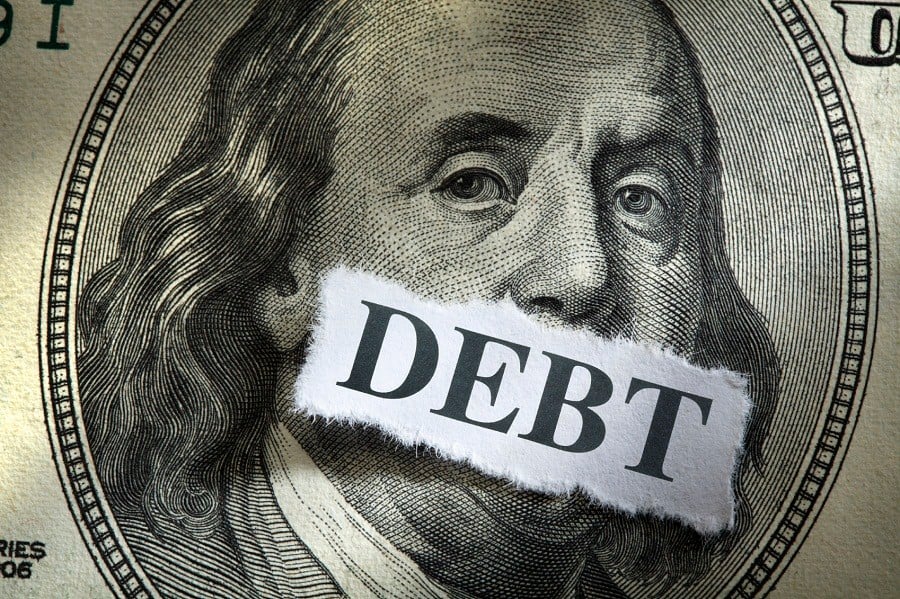
Financial advisors doubt lawmakers will let the United States default on its debt obligations and are reassuring their clients that the latest political storm over the issue will pass.
The battle over the debt ceiling commenced last Friday when Treasury Secretary Janet Yellen sent a letter to House Speaker Kevin McCarthy, R-Calif., warning that the U.S. will hit its debt limit of $31.4 trillion on Thursday. She indicated the agency can take “extraordinary measures” to pay the country’s bills until early June.
“Failure to meet the government’s obligations would cause irreparable harm to the U.S. economy, the livelihoods of all Americans and global financial stability,” Yellen wrote.
Congressional Republicans, who won a five-seat House majority in November’s midterm elections, are digging in and threatening not to agree to a debt ceiling increase unless it's accompanied by steep cuts in domestic spending.
They will be negotiating with President Biden and a Democratic Senate majority.
“The American people recognize the danger posed by out-of-control deficit spending and demand Congress do everything in its power to get our fiscal house in order,” House Ways and Means Committee
Chairman Jason Smith, R-Mo., said in a statement.
Advisors are confident the standoff will create political sparks but not a financial or economic fire because lawmakers will raise the debt ceiling before catastrophe strikes, as they have done in the past.
“One way or another, they’re going to reach an arrangement because all of this is a political exercise,” said Harris Holzberg, owner of Holzberg Wealth Management. “The federal government is not going to default on its debt as such. It’s important that we as advisors understand this game of chicken and don’t get spooked by it.”
Eric Amzalag, owner of Peak Financial Planning, expressed a similar outlook.
“It’s largely political theater, in my opinion,” Amzalag said. “I think eventually the debt ceiling will be passed — or a temporary extension.”
George Jameson, an advisor at Blackbridge Financial, will be following the debate over the debt ceiling but not necessarily sitting on the edge of his chair worrying about whether the U.S. and global economy are headed over a cliff.
“I’m not really too concerned about getting the debt ceiling passed,” Jameson said. “It may not be as smooth as it has been in the recent past. I don’t think they’ll have the backing of enough of the general public to go through with [a default]. The consequences would be too dire.”
The part of the general public that may be most focused on the debt-ceiling standoff are advisors’ clients, who wonder how default could affect their investments.
“People are curious and unsure of what to make of it,” Amzalag said.
He tries to reassure clients when they bring up the debt ceiling, as they have over the last few days.
“Don’t panic,” Amzalag said he tells them. “This is not the worst scenario we’ve faced in the last 10 years. It will be a blip on the radar.”
If it’s more than a blip, it could result in a credit rating downgrade for the United States — as it did in 2011 — or much worse.
“From both an economic and a financial perspective, a failure to raise the debt ceiling would be an unmitigated disaster,” David Kelly, chief global strategist at JPMorgan Funds, wrote in a Tuesday analysis. “Financial chaos would, presumably, eventually lead to some compromise in Washington. However, this might not occur soon enough to prevent a recession and could leave some lasting scars, including a permanent increase in the cost of funding U.S. federal debt.”
But advisors aren't yet adjusting investment allocations.
“We build our portfolios to be sturdy, to withstand whatever storms come our way,” Holzberg said.
In the case of the debt ceiling, the storm could dissipate before it even starts in earnest over the summer.
“It’s really hard to make any portfolio changes based on any political event that may or may not happen,” Jameson said.
It’s likely the debt ceiling fight won’t end until the last minute.
“It will be a bumpy ride, but ultimately, it will be resolved,” Holzberg said.

Docupace also rebuilt its wealth operations platform around a single client record, while Focus Financial picks Nevis to bring AI to its advisors.

Consolidators handled 53% of deals through September as smaller sellers stalled amid market volatility, DeVoe & Company finds.

Shook Research has a new name and brand, Veritant, and will continue its coveted rankings of financial advisors.

The Supernova-powered lending line follows a Flourish Cash rollout as the insurer pushes private-bank-style tools to its 6,000-plus advisors

New Escalent research finds younger, more diverse DC plan participants are open to rollovers - but increasingly prefer outside firms.
Knighthead Life entered the market with a competitive MYGA. A strong launch earned advisor confidence and paved the way for FIAs.
As AI makes financial information more accessible than ever, Lana Hock explains why human judgment, trust, and empathy remain the qualities clients value most in a financial advisor

