

The global sum of socially conscious debt is barreling toward $5 trillion as Wall Street’s pursuit of sustainable investments fuels demand for the bonds and loans.
The Institute of International Finance expects $1.7 trillion this year in debt sales geared toward environmental, social and governance causes, a deluge that will vastly expand the $4.8 trillion universe of ESG debt. Another $2 trillion of the debt is forecast in 2024 as governments adopt a global biodiversity framework and commercial banks face pressure to decarbonize portfolios, according to the industry group.
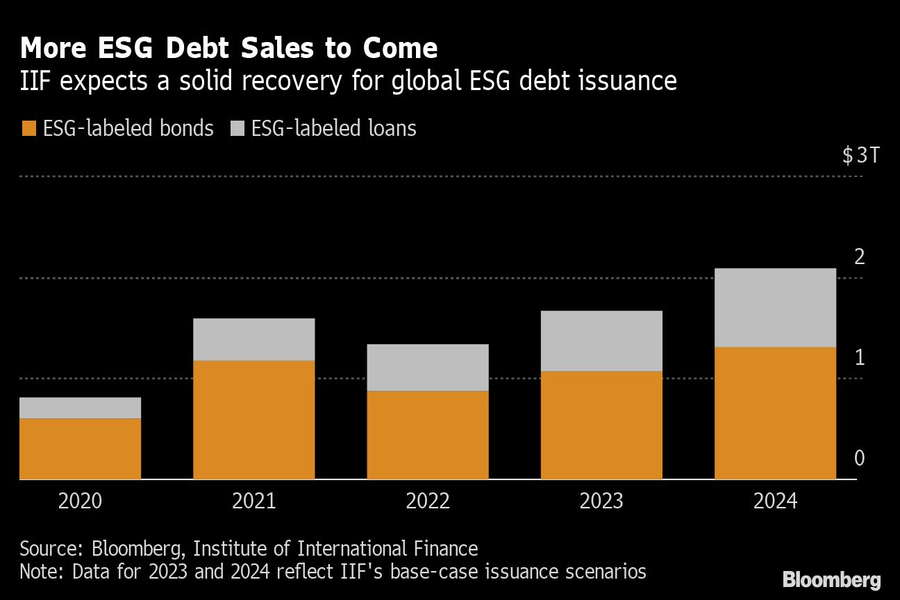
“We anticipate a strong rebound in 2023 as demand for ESG debt continues to surge,” IIF economist Khadija Mahmood and Director of Sustainability Research Emre Tiftik wrote in a Thursday report. “With a softening U.S. dollar — and easier global financial conditions anticipated — international funding pressures should ease further.”
The IIF’s call comes even as conservative politicians in the U.S. push back against the industry, with Florida state officials going so far as to pledge a purge of such thinking from its pension funds.
While overall bond sale activity was tempered in 2022 as major central banks increased interest rates to combat inflation, ESG sales reached a record in emerging markets due governments including China, Turkey and Mexico, the IIF said.

Retiring RIA seller David Laidlaw alleges the Carnegie valued his stake on $11.7 million EBITA while pitching potential buyers on $21.3 million.

New tool gives RIAs and family offices AI help vetting private market deals, with some users reportedly halving review time.

Investors got projected returns dressed up as real ones, SEC says

Parents must still act to get the $1,000 federal seed and employer contributions, giving financial advisors a role in the rollout.

FINRA booted Rudy Anguiano from the industry for “conversion - the intentional and unauthorized taking of another person’s property.”
As AI makes financial information more accessible than ever, Lana Hock explains why human judgment, trust, and empathy remain the qualities clients value most in a financial advisor
Northern Trust’s Ken Lassner shows advisors how to convert volatility into after-tax portfolio gains

