Marks first non-payment on GOBs by insolvent state capital; 'indication of how severe the problem is'
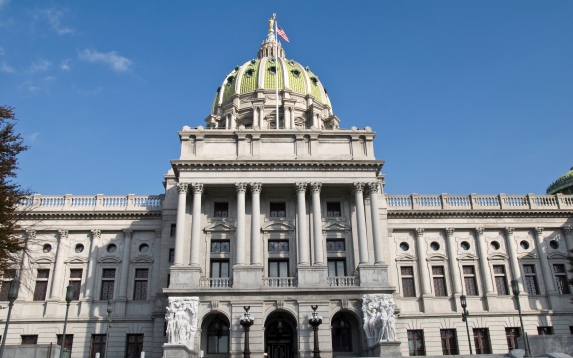
Harrisburg, Pennsylvania's insolvent capital, says it will miss general-obligation bond payments for the first time next week as its receiver seeks approval for a plan to sell assets.
The city, whose debt load of more than $300 million is five times its general-fund budget, will miss $5.27 million in payments due March 15 on two series of bonds, according to a notice its receiver posted on the Electronic Municipal Market Access system, a database for filings by debt issuers.
State law bars the city from seeking bankruptcy court protection until July. A majority of the City Council sought unsuccessfully to take that step last year.
“It's just an indication of how severe the problem is,” said Dan Miller, the city's controller, in a telephone interview. “Without a bankruptcy judge, we can't get a solution.”
Ambac Assurance, a unit of Ambac Financial Group Inc. (ABKFQ), insures the city's general-obligation debt. The city anticipates that the paying agent for the debt will ask the insurer to cover next week's obligations, according to today's notice.
Incinerator Debt
While Harrisburg in 2009 started skipping payments on debt related to an incinerator project, it hasn't defaulted on general-obligation bonds. Harrisburg's fiscal crisis is driven by more than $300 million in debt from an overhaul and expansion of its waste-to-energy facility, which doesn't generate enough revenue to cover the payments.
In December, David Unkovic was appointed as the city's receiver, a first for the state, after Pennsylvania Governor Tom Corbett, a Republican, declared a fiscal emergency to ensure vital services, which included making payroll and paying debt obligations.
“My first priority as receiver is to ensure that vital and necessary services such as police and fire are maintained within Harrisburg during the state of fiscal emergency,” Unkovic said in a statement today. “The city will not be making these payments to ensure sufficient cash flow so the citizens of Harrisburg continue to receive essential services.”
Harrisburg almost missed payments on its general-obligation debt in the past two Septembers. Last year, it made the outlays with the help of a $7.5 million advance on a lease of municipal land paid by the Harrisburg Parking Authority. In 2010, the community averted a default after then-Governor Ed Rendell, a Democrat, expedited state funds to make the debt payments.
Unkovic's recovery plan for the community of 49,500, which must be approved by a state court, calls for the sale and lease of city assets, raising taxes and fees, and winning concessions from municipal unions.
A bid to put Harrisburg into Chapter 9 proceedings was dismissed on Nov. 23 by U.S. Bankruptcy Judge Mary D. France in Harrisburg. She said the filing wasn't allowed under state law. The City Council is seeking to appeal that decision.
--Bloomberg News--