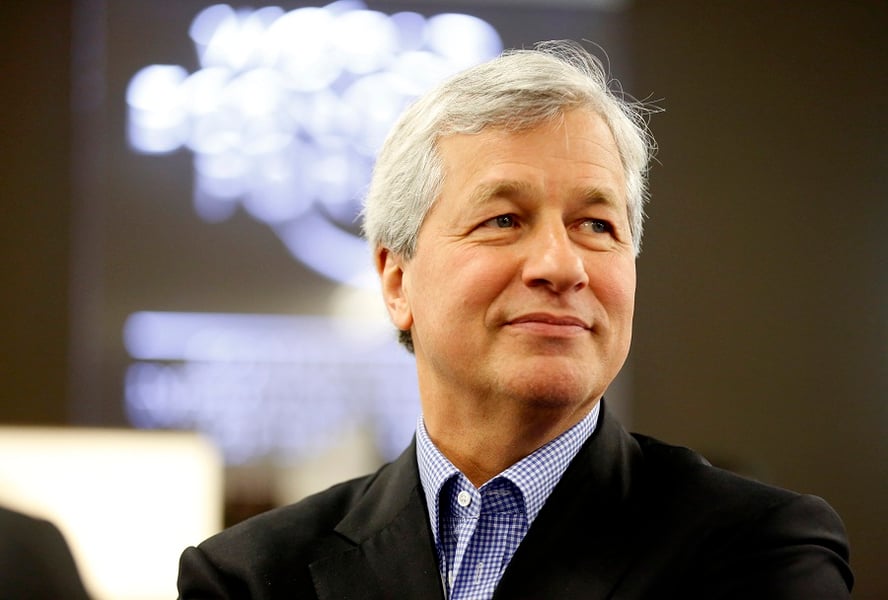
Not content with a previous warning investors should brace for U.S. yields of 4%, Jamie Dimon went one further at the weekend, suggesting 5% was a distinct possibility.
The JPMorgan Chase & Co. CEO said Saturday that people should be prepared to deal with the benchmark 10-year note yield at 5% or higher.
"I think rates should be 4% today," Mr. Dimon said Saturday at the Aspen Institute's 25th Annual Summer Celebration Gala. "You better be prepared to deal with rates 5% or higher — it's a higher probability than most people think."
The 3% level is still providing stiff resistance for the 10-year Treasury yield this year. It briefly rose through the mark last week before falling back for the fourth time this year. That's despite a U.S. jobless rate below 4%, economic growth above 4%, and a rare surge in late-cycle government borrowing.https://www.investmentnews.com/wp-content/uploads/assets/graphics src="/wp-content/uploads2018/08/CI11656886.PNG"
Unease about the length of the economic cycle may be behind the stalled rise in yields. "The market is starting to look beyond the 2020 time frame and pricing in some
recession risk," said Tom Garretson, U.S. fixed-income portfolio strategist at RBC Wealth Management.
(More: Morgan Stanley: Correction worse than February looming)
Inflation Gauge
In addition, concerns about rising prices appear to be ebbing. In the U.S., the five-year break-even rate, a gauge of inflation expectations, has fallen to just under 2%, down from this year's high of almost 2.2 percent.
Still, Mr. Dimon remained positive on the outlook for financial markets. The current bull market could "actually go for two or three more years" because the economy is still doing quite well and markets usually turn right before the economy, he said.
Cyber attacks are "probably the biggest risk" to the U.S. today, though banks are quite well protected, Mr. Dimon said.
"We're very, very protected," he said.
The JPMorgan CEO reiterated comments he made last year on bitcoin, calling cryptocurrencies a "scam" and saying he had "no interest" in the world's largest digital currency. He suggested governments may move to shut down the currencies, because of an inability to control them.
Mr. Dimon had urged investors to prepare for higher rates in an interview in May, given the possibility growth and inflation could prove fast enough to prompt the
Federal Reserve to hike more than anticipated, and the increase in financing by the U.S. Treasury.
(More: Jamie Dimon of JPMorgan Chase sees opportunity to increase share of wealth management market)