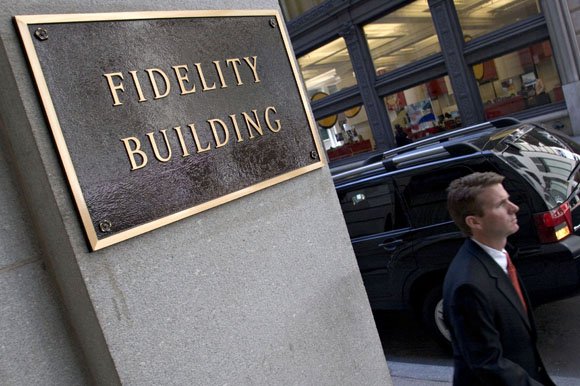
Fidelity Investments is marrying the concepts of target date portfolios and municipal-bond investing with the launch of a series of funds today.
The Fidelity Defined Maturity Funds are four municipal-bond portfolios with maturity dates ranging from 2015 to 2021. Unlike traditional bond funds, these portfolios will mature and liquidate at their stated date and thus have declining interest rate risk — something many investors are worried about these days, said Mark E. Sommer, the lead portfolio manager of the funds.
"These funds have much less interest rate risk than traditional bond funds," he said, noting that unlike traditional bond funds, the price volatility of the funds is designed to decline toward maturity.
Traditionally, retail investors use individual municipal bonds to fund specific events in their lives, such as retirement or their children's' education, said Miriam Sjoblom, associate director of fund analysis at Morningstar Inc. American households own about 37% of the municipal-bond market and represent the largest holders, according to
Federal Reserve data.
But with these funds, investors can fund events while having the diversification of a mutual fund and the expertise of its managers, Ms. Sjoblom said.
“Municipalities are going through a really tough time and investors can no longer rely on the insurers of muni-bond funds,” she said. “In this environment, you are really gambling if you aren't diversified.”
Fidelity couldn't have better timing with the funds' launch. The one-week period through June 8 was the first time since last November that muni-bond funds saw inflows— taking in $274 million, according to Lipper Inc.
“When we initially thought about launching these funds, the reaction we got was: ‘Now?'” Mr. Sommer said.
But post-2008, financial advisers and retail investors have seen how different one municipal-bond fund can be from another. “The market used to be much more homogenous,” he said, noting that the difference between the best-performing municipal-bond fund and the worst-performer was around 8%. “But then in 2008, you saw closer to a 40% difference,” he said.
Fidelity does have competition in this space. Last January,
BlackRock Inc. launched a series of municipal-bond ETFs with different maturation dates. The iShares S&P AMT-Free Muni Series comprises six ETFs with $166 million in assets and an expense ratio of 0.3%.
Fidelity looked at ETFs when coming up with its own product — but decided to adopt a mutual fund structure instead, Mr. Sommer said, declining to elaborate.
The Fidelity funds each will close to new investors 12 months before its respective maturation date. “We don't want investors coming in at the end and using the funds as money market funds, thus diluting the value for other shareholders,” Mr. Sommer said.
The total operating expenses for retail and institutional shares of the funds are 0.4% and 0.65% for adviser shares.