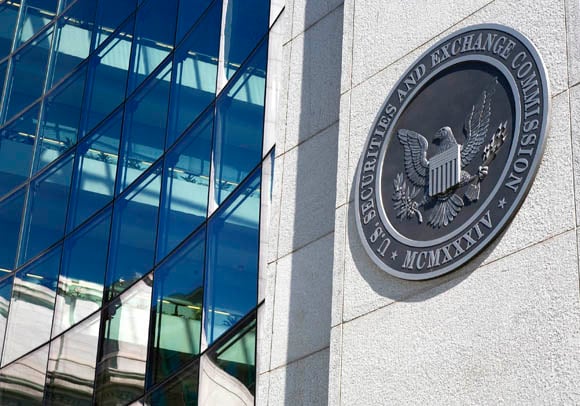
Regulators are clamping down on municipal bond issuers that made political contributions to public officials in states where they have underwritten bonds.
On Friday, the Securities and Exchange Commission subpoenaed documents from the Massachusetts state treasurer's office, looking into ties between the former Treasurer Timothy Cahill, his former staff members and aides, and The
Goldman Sachs Group Inc.
As first reported in The Boston Globe, the Massachusetts state treasurer's office received the SEC subpoena one month after Goldman removed itself from two state bond deals because a vice president at the firm, Neil Morrison, had worked on Mr. Cahill's campaign for governor.
Under the Municipal Securities Rulemaking Board regulations, broker-dealers or muni securities dealers can't engage in muni securities business with an issuer within two years after any contribution made by the firm or an individual associated with the firm. According to the
Financial Industry Regulatory Authority Inc.'s BrokerCheck, Mr. Morrison was terminated from Goldman on Dec. 19 over “allegations involving outside activity without preapproval.”
Kevin Callahan, a spokesman for the SEC, declined to comment.
Michael DuVally, a spokesman at Goldman, also declined to comment.
Also last week, Finra sent a letter to members of the California Public Securities Association, a lobbyist group for the muni bond industry, about payments made to political action committees as well as information on whether they received refunds of payments, including from municipalities, according to reports.
James Cervantes, chairman of the association, didn't return calls.
Nancy Condon, a Finra spokeswoman, declined to comment.
The SEC and Finra requests come as the muni bond market has been hit with mass redemptions over fears of widespread defaults.
Last month, Meredith Whitney, the bank analyst who predicted the credit market crash, forecast 50 to 100 “significant muni bond defaults this year. In December, investors pulled nearly $13.4 billion out of muni bond funds.
Regulators may be paying closer attention to muni bond conflict of interest issues now because of the volatility and also because more retail investors own muni bonds than ever before, said Robert Kane, founder of BondView LLC, which operates a website for muni bond investors.
“Before 2008 it was mostly the big firms and hedge funds that owned municipal bonds,” he said. “But now 70% of the municipal bond market is owned by retail investors. These products are top of mind.”
And while the conflict-of-interest issues have nothing to do with the volatility in the muni bond market, it is possible that the continuing bad press has caused regulators to take a closer look, said John Mousseau, managing director and portfolio manager at Cumberland Advisors Inc.
“Not to say that where there is smoke there is fire, but this kind of turmoil may have caused the SEC to look at this,” he said.