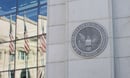
The Securities and Exchange Commission slapped Illinois with securities fraud charges last week, claiming that the state misled municipal bond investors about how it funded its pension liabilities.
The SEC filed an order last Monday instituting cease-and-desist proceedings against the state, contending that it raised more than $2.2 billion from 2005 to early 2009 in a series of bond offerings.
Investors in those offerings weren't made fully aware of Illinois' underfunded pension plans and the risks to the state's condition, according to the SEC.
The state agreed to settle the charges without admitting or denying the findings.
“Having a resolution and not an open-ended inquiry is a positive for the state to move forward for future bond issuance,” said Bridget Byron, executive director of finance at the Illinois state treasurer's office.
Illinois' pension system was underfunded by $83 billion in 2011, with assets covering just 43% of its liabilities, according to the SEC.
In 1995, the Illinois General Assembly put into effect a statutory funding plan to try to improve the pension system's funding status.
The goal was to reach a 90%-funded ratio by 2045, the SEC said.
But rather than immediately funding plan contributions, state legislators gradually increased them over a 15-year-period, the SEC claimed.
That schedule set back the state in closing its liability gap and pushed the burden of covering those pension expenses into the future.
It didn't help that there were two years — 2006 and 2007 — in which the legislature cut those contributions and didn't compensate for those cuts with funding increases in subsequent years, according to the order.
“For the majority of the years under the statutory funding plan, the state's annual required contributions were insufficient to prevent the growth of its unfunded liability,” the SEC said.
Between 1996 and 2010, the state's unfunded-pension liabilities rose by $57 billion, with “insufficient contributions under the statutory funding plan ... the primary driver of this increase,” outweighing market performance and benefit changes, the SEC claimed.
Illinois took some remedial steps in April 2009 when it provided muni bond investors with a link to a monthly briefing from the state's Commission on Government Forecasting and Accountability. That report had information on the drop in state pension plan assets.
The state also put together a pension modernization task force in June 2009 to evaluate the structure of its pension systems, the SEC noted.
[email protected] Twitter: @darla_mercado