
Summers, Roubini warn of premature Fed rate hike

Summers, Roubini warn of premature Fed rate hike
Fed policy makers risk making a mistake that will be difficult to correct if they raise interest rates on Wednesday, say former U.S. Treasury Secretary Lawrence Summers and economist Nouriel Roubini.
DEC 09, 2015
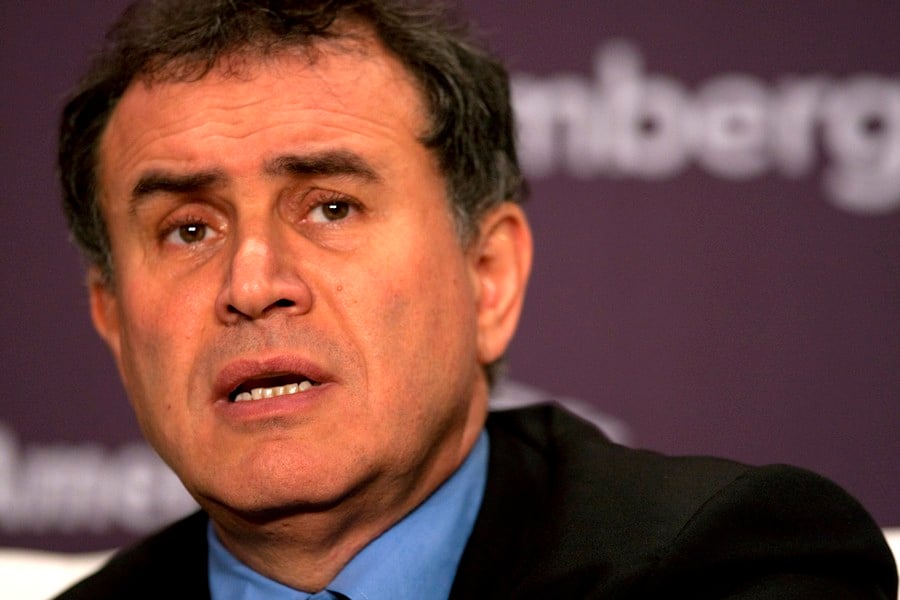
Federal Reserve policy makers risk making a mistake that will be difficult to correct if they raise interest rates on Wednesday, according to former U.S. Treasury Secretary Lawrence Summers and economist Nouriel Roubini. “There are still substantial questions about the growth prospect, about the prospect of achieving the 2% inflation target, about uncertainties in financial markets,” Summers said in an interview with Bloomberg Television in Dubai. “In a world where error is inevitable, it's much better to make easily reversed errors than to make difficult-to-reverse errors.” The U.S. central bank is widely expected to start lifting benchmark borrowing costs even as inflation runs at an annual pace of 0.2%. The economy is likely to grow at 2.5% this year and next, little changed compared with 2014, according to economists estimates on Bloomberg. “A decision to delay rates runs risks that are easily reversed by subsequently raising rates, whereas a decision to raise rates, if it proves to have been the wrong decision, is a much more difficult decision to correct,” Summers said. (More: Pace of rate hikes will be 'irregular' - El-Erian) Nouriel Roubini, chairman of Roubini Global Economics, echoed similar sentiments. “Suppose that you are a bit more cautious and you start moving slowly and the economy becomes too strong and inflation picks up, you'll be behind the curve but still you can tighten a bit faster,” he said in an interview in Dubai. The dilemma facing the Fed is that “labor market data suggest it's time to start hiking, but there is no sign of inflation in the economy,” Roubini said.

Latest News

Workplace financial education linked to stronger financial habits, but participation remains low

New EBRI research found workers who participated in employer financial education reported higher confidence, literacy and financial satisfaction.

The rise of the super advisor: How AI is redefining competitive advantage in wealth management

Beyond operational excellence, the winning advisors of the future are the ones who can reach across multiple disciplines without discarding specialist skills.

F.L.Putnam buys Seascape Capital, deepens New Hampshire footprint

Deal marks firm's 11th acquisition, pushes AUM above $11 billion as Seascape's Portsmouth team joins the RIA.

SEC's quarterly reporting retreat meets an investor revolt

The Investment Adviser Association, CFP Board, and the CFA Institute warn semiannual filings would widen information gaps and raise costs for advisors and clients.

Advisor moves: FiNet practice Merrit Point tucks in $1B Truist team in Florida debut

Elsewhere, a Commonwealth team in Massachusetts converts to Cetera, while Janney draws four former Wells Fargo advisors to its Radnor, Pennsylvania office.

SPONSORED Who builds the income when the pension disappears?

Dan Biagini of American Equity says the steady decline of pensions, longer lifespans and a reset in interest rates are rewriting how advisors build retirement income

SPONSORED Why direct indexing stopped being optional

Direct indexing is on pace to outgrow ETFs and mutual funds. Northern Trust's Ken Lassner explains why the advisors who get it wish they had started sooner.