
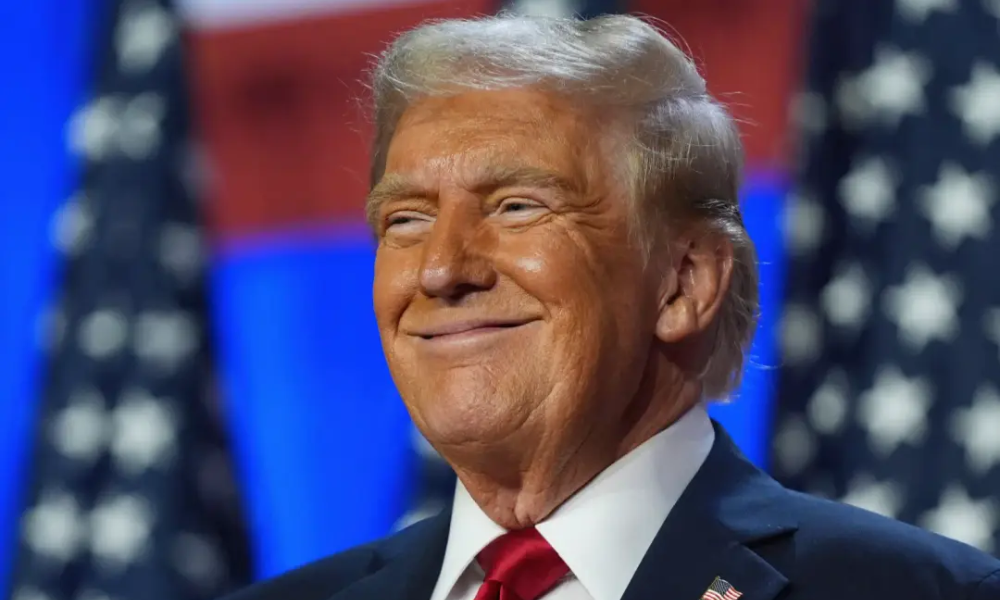
President Donald Trump has promised every adult American citizen a $5,000 cash payment (which he dubbed a "Trump Dividend") if Republicans retain control of both chambers of Congress in the November 2026 midterm elections.
It’s a proposal that would cost more than $1 trillion and immediately drew scrutiny over its fiscal and legal viability when the president made the announcement during a keynote address at the Republican Party's midterm convention in Dallas, Texas, on September 9, 2026.
"If the Republicans win the House of Representatives and the United States Senate, both of them… I will issue a dividend to every adult citizen in the United States of America for $5,000," he told the crowd, adding that recipients would be required to spend the money domestically.
The White House did not immediately respond to media outlet requests for details on how the program would be funded or administered.
With approximately 270 million American adults, according to US Census data, a universal $5,000 payout would carry a price tag of roughly $1.3 trillion, but Trump suggested the funding could come in part from tariff revenues, though he offered no detailed mechanism.
To put the scale in context: the U.S. government paid more than $1.27 trillion in interest on the national debt in the current fiscal year to date, according to the U.S. Treasury's fiscal data portal.
Defense spending in fiscal year 2026 reached approximately $1.36 trillion, per USASpending.gov. The national deficit was nearing $1.8 trillion for the fiscal year to date or approximately 5.8% of gross domestic product, with total federal outlays exceeding $6 trillion between October 2025 and July 2026.
U.S. government borrowing costs have risen sharply in recent weeks, driven by concerns about persistent inflation, Treasury buybacks, and elevated debt levels. The national debt stood at approximately 122.6% of GDP in the first quarter of 2026, according to data cited by CNBC.
The ‘Trump Dividend’ proposal faces a potential legal challenge because under U.S. federal law (specifically 18 U.S.C. § 597) offering or making a payment to induce someone to vote, withhold their vote, or vote for or against a candidate is a criminal offense, punishable by a fine, up to one year in prison, or both. A willful violation can carry a sentence of up to two years.
However, election law specialists quoted by the New York Times suggested Trump's promise could be interpreted as a pledge to cut taxes - which is legal - and may also be protected under the First Amendment's free speech guarantee. The legal picture remains unresolved.
The proposal echoes previous Trump administration cash-payment initiatives that did not materialize. Early in his second term, Trump backed the idea of a $5,000 "DOGE dividend," intended to distribute savings from the Department of Government Efficiency - then led by Elon Musk - directly to Americans.
That proposal never advanced. A separate $2,000 "tariff rebate" also failed to emerge after the Supreme Court ruled against the administration's tariff regime in February 2026, according to CNBC.
Democrats currently hold a projected lead in the race for House control, according to the New York Times polling tracker - meaning the electoral conditions attached to the payment may not be met. Republicans control Washington at a moment when, as a Fox News poll conducted in July 2026 found, roughly half of voters believe the Democratic Party's positions are too liberal, yet the GOP's own favorability has declined to similarly negative territory.
Advisors fielding client questions about the dividend should approach the conversation carefully. The proposal is contingent on an election outcome, faces significant legal and fiscal scrutiny, and has a precedent of similar Trump administration payment promises that did not materialize.
That said, with oil prices exceeding $100 per barrel, driven in part by disruption to the Strait of Hormuz following the U.S.-Israel conflict with Iran, and consumer affordability ranking as the top issue heading into the midterms, Trump is making an explicit bid to link economic relief to Republican electoral success.
For clients holding U.S. equities, fixed income, or inflation-sensitive assets, advisors may want to frame the proposal within the broader fiscal picture of a federal deficit already approaching 6% of GDP, rising borrowing costs, and a political environment in which large-scale spending promises are becoming a recurring feature of the electoral cycle.

Advisors must navigate misinformation and generational expectations as technology reshapes client relationships.

The regulator has been trying to reach imprisoned advisor Jason Foley.

Magnificent 7 firm continues to ‘right size’ workforce in AI-related shift also seen in financial services.

Healthcare inflation running at 280% of CPI - and most HSA holders are sitting in cash.

New research identifies the practice habits driving 121% DC AUM growth among the industry's top performers.
Knighthead Life entered the market with a competitive MYGA. A strong launch earned advisor confidence and paved the way for FIAs.
As AI makes financial information more accessible than ever, Lana Hock explains why human judgment, trust, and empathy remain the qualities clients value most in a financial advisor

