
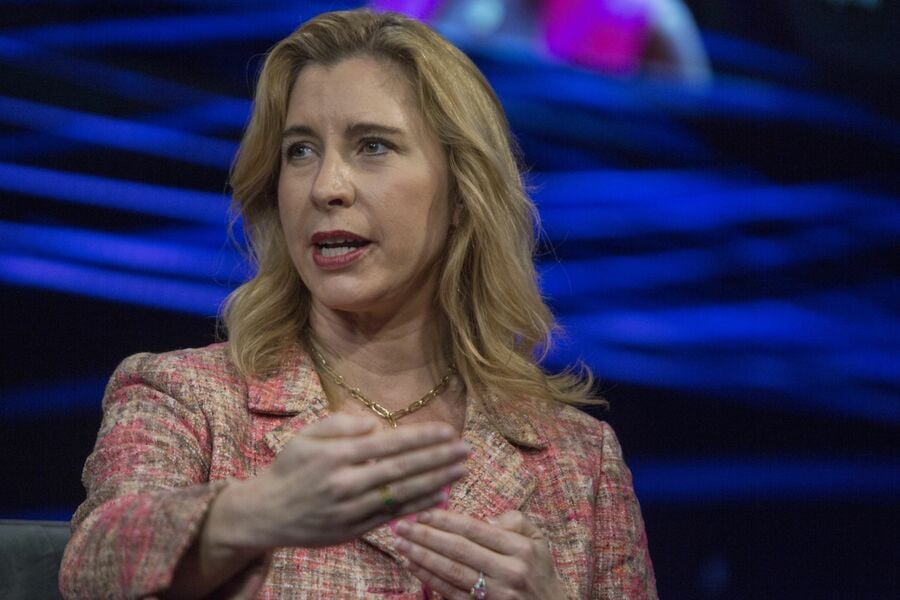
Investors should get out of bonds as rates rise and diversify their portfolios with exposure to commodities such as agricultural products, oil and metals facing supply disruptions due to the war in Ukraine, according to Rebecca Patterson, chief investment strategist for Bridgewater Associates.
“You should absolutely have commodities in your portfolio,” Patterson said during an interview last Friday with David Westin on Bloomberg Television. “We don’t know if bonds as a diversifier are dead or in a coma. I think they’re probably in a coma,” she said on “Wall Street Week.”
Stocks and bonds swung wildly this week as investors sought clues to the economy’s direction, Federal Reserve policy and the impact of the war in Ukraine. The Bloomberg US Aggregate Bond Index is down 7.9% this year through Friday, compared with a 5.8% loss for the S&P 500 Index.
Bridgewater Associates, which oversees $150 billion, posted a 16.3% return in the first quarter as macro funds benefited from volatility in global markets.
Gregory Peters, co-chief investment officer at PGIM Fixed Income, said bonds are getting more attractive as yields rise and provide protection against a potential recession.
“Bonds are increasingly attractive here, not less attractive,” Peters, whose firm had almost $1 trillion under management as of Dec. 31, told Westin. “We’re seeing more alpha opportunities than we have in a long time. So somewhat perversely, we’re pretty excited.”

“People aren't effectively using their wealth in retirement,” said David Blanchett of Prudential.

Second-generation NFL ref Shawn Hochuli co-founded IWM Partners in Irvine, California, a wealth management practice with more than $500M in client assets

U.S. seniors lose $28.3 billion annually as a result of financial exploitation, according to a 2023 AARP study.

Cornerstone Capital and Echo Wealth Management add about $1.7 billion as RIA M&A heads for a record year.

Bogus SEC filings, WhatsApp groups, and AI trading signals that never existed
As AI makes financial information more accessible than ever, Lana Hock explains why human judgment, trust, and empathy remain the qualities clients value most in a financial advisor
Northern Trust’s Ken Lassner shows advisors how to convert volatility into after-tax portfolio gains

