
Monetary policy might sound abstract, but you see its effect every day in rates, credit conditions, and market swings. When the central bank shifts its stance, client behavior often changes with it.
This guide explains what monetary policy is, why it matters for your investment decisions, and how it can shape portfolio mix and risk. Keep it handy when you walk clients through the next policy move.
Monetary policy is the central bank's playbook for managing money and credit in an economy. In the US, it covers the Federal Reserve's actions and communications aimed at maximum employment, stable prices, and moderate long‑term interest rates, as directed by Congress. Monetary policy focuses on the overall supply of money and the cost of borrowing across the system, not on individual sectors or companies.
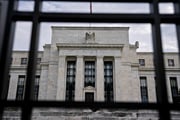
The Federal Reserve Act of 1913 gave the Fed primary responsibility for setting US monetary policy, a role it still holds today. In practice, this means the Fed adjusts conditions in money and credit markets to guide inflation and employment toward its mandate.
If you work with clients, knowing how monetary policy works helps you read market moves more clearly. To see how leading professionals navigate that environment, check out our special report on the top financial professionals in the US.
Monetary policy works by changing how much money is available in the economy and how expensive it is to borrow. The Federal Reserve adjusts money and credit conditions to support its legal goals of promoting:
In practice, the central bank works with two broad stances of monetary policy:
Contractionary policy raises interest rates and limits the growth of the money supply to cool demand. Higher borrowing costs can slow spending, business activity, and hiring, which helps bring down inflation.
By contrast, expansionary policy lowers interest rates and increases the money supply to support demand. Cheaper borrowing can lift business investment, household spending, and hiring, which helps an economy during slowdowns or recessions.
The table below highlights the key differences between contractionary and expansionary monetary policy:
| CONTRACTIONARY VS. EXPANSIONARY MONETARY POLICY | |||
|---|---|---|---|
| Stance | Goals | Actions | Effects |
| Contractionary |
|
|
|
| Expansionary |
|
|
|
The Federal Open Market Committee (FOMC) makes decisions based on economic conditions, primarily inflation and employment levels, to stay within its dual goals. Each stance, however, comes with a trade-off:
Visit and bookmark our Investing News Section for easy access to the latest shifts on monetary policy and their impact on investments.
These are tools that the central bank uses to change money and credit conditions. Traditionally, the Federal Reserve uses three main tools to steer short-term interest rates and the supply of bank reserves.
Open market operations (OMOs) are the Fed's day‑to‑day buying and selling of securities in financial markets. By purchasing securities, the Fed adds reserves to the banking system and puts downward pressure on short‑term interest rates. Selling securities drains reserves and tends to push those rates higher.
The FOMC sets the short-term objective for these operations, usually a target range for the federal funds rate. Traders at the New York Fed then conduct transactions with primary dealers to keep market rates trading near that target. For advisors, changes in the fed funds target often foreshadow shifts in yields across the curve.
The discount rate is the interest rate the Federal Reserve charges eligible institutions that borrow directly from its discount window. These loans give banks a backstop source of liquidity when they need short-term funding and have adequate collateral.
By raising or lowering the discount rate, the Fed can influence banks' funding costs and how freely they extend credit to households and businesses. When the rate is higher, banks tend to be more cautious about borrowing from the Fed and passing on credit. When it is lower, the discount window can help support the smooth flow of credit during stress.
Reserve requirements set the minimum share of certain deposits that depository institutions must hold, either in their vaults or on account at the Fed. These ratios are defined in Regulation D and apply to specific categories of transaction accounts and other liabilities.
Changing reserve requirements alters how much of each deposit dollar banks can lend or invest. Higher requirements tie up more funds in reserves and can restrict credit growth, while lower requirements free up funds for loans and securities purchases. Even though formal reserve requirements have shifted over time, the concept remains important for understanding how regulation shapes bank balance sheets and liquidity.
The FOMC conducts monetary policy by setting the target range for the federal funds rate. That rate is the Fed's main policy rate and is chosen to support its dual mandate for employment and inflation. After each regular meeting, the FOMC votes to leave, raise, or lower that target range and explains its decision in a public statement and press conference.
Once the target range is set, the Fed uses its monetary policy tools to keep the effective federal funds rate trading within that range. Adjustments in the policy tools help align market interest rates with the FOMC's stance, so broader financial conditions match its chosen level of ease or tightness.
To sum things up, implementation of monetary policy follows a two-step process:
This process links the Committee's policy decisions to the borrowing costs that matter for households, businesses, and markets.
The Fed describes its latest decisions and the reasoning behind them on the Board of Governors website. You can review the most recent FOMC statement and press conference here to see how policymakers are framing current conditions.
Monetary policy shapes the level and path of interest rates, which feed directly into asset prices and expected returns. When the Fed eases or tightens, it changes borrowing costs, discount rates, and risk appetite across markets, so each asset class reacts differently.
Stocks represent ownership in companies and depend on earnings growth, financing costs, and investor risk appetite.
Here's what new investors need to know about investing in stocks.
Bonds are fixed-income securities with prices that move inversely to yields.
Get practical tips and strategies on how to invest in bonds in this guide.
Cash and savings accounts provide liquidity and limited market risk but depend heavily on short-term interest rates.
Find out how RIAs can maximize cash management in client portfolios in this article.
Real estate investments rely on financing costs, rental income, and property values, all of which are sensitive to interest rates.
For advisors, the key is to link the current policy stance to these asset-class patterns rather than react only to headlines. From there, you can adjust portfolio mix, time horizons, and risk budgets in line with your clients' goals and constraints.
When monetary policy shifts, portfolios feel it through changing rates, liquidity, and risk sentiment. Advisors who plan ahead on duration, diversification, and client messaging are in a better position to manage drawdowns and capture new opportunities.
Here are some strategies that investment advisors and RIAs can use:
Proactive management starts with understanding how rate changes filter through fixed income and risk assets. When rates are rising, you might trim long-duration bond exposure and add short- or intermediate-term paper that is less sensitive to price declines. Bond ladders can also help you roll maturing bonds into new issues at higher yields over time.
Diversification helps smooth returns when policy shifts unsettle a single asset class. You can tilt toward higher-quality issuers and business models when volatility picks up. At the same time, you can use sectors or instruments that help offset interest-rate drag, such as select equities or higher-yielding bonds. For some clients, a measured allocation to alternatives or inflation-linked securities can add extra protection against policy-driven shocks.
Even a well-built portfolio can fail if clients abandon the plan at the wrong time. Explain how specific monetary policy moves affect their holdings, then tie that back to their time horizon and goals. Use simple scenarios to show the trade-offs of "doing nothing" versus making thoughtful, incremental changes, and discourage emotional, all-or-nothing shifts.
Monetary policy will keep changing, but a consistent framework for adjustments, diversification, and communication can help you guide clients through each cycle. The goal is not to guess every Fed move, but to keep portfolios aligned with the plan you built together.

Investors who have seen strong returns so far from riskier emerging markets are betting on a rally

Stocks slipped around the world early Friday as anticipation of further tightening in the US intensified ahead of key stats

As the recession outlook moves further down the road, advisors see the Fed keeping rates higher for longer, boosting the appeal of fixed income.

Consensus estimates are that the US economy will dip into recession later this year or early next year.

The timing of additional increases will be based on incoming data, Powell said in his opening statement.

FolioBeyond's Rising Rates ETF is being renamed the Alternative Income and Interest Rate Hedge ETF.

Scrambling to stay ahead of the central bank's next move, advisors and market watchers think the Fed is trying to keep the markets on their toes.

The Federal Reserve signaled it would likely resume tightening to cool inflation, projecting more increases than economists and investors expected.

Banks' interest is growing in the evolving technology of artificial intelligence and its likely impact on their business.

The odds of passing the X-date without an increase in the debt is around 25% and rising, according to JPMorgan.

The Fed raised interest rates by a quarter percentage point Wednesday, but the FOMC statement no longer included a line about anticipating 'additional policy firming.'

Excluding the iShares ESG Aware ETF, sustainable funds saw positive net sales so far this year, according to data from Morningstar Direct.

The money flowing into Treasuries has some market watchers believing that the Fed's next move will be a rate cut, and that it could come as soon as June.
It’s the second straight rise of 25 basis points following a string of aggressive moves starting in March 2022, when rates were near zero.
