

Gold reached a seven-year high as concern over the economic impact of the coronavirus boosted demand for haven assets and fueled speculation that the Federal Reserve will ease monetary policy before year-end.
Prices extended gains above $1,600 an ounce to the highest since February 2013. Copper headed for a third straight decline, while the dollar strengthened and U.S. equities fell after a jump in confirmed infections in South Korea and Japan.
Bullion has climbed almost 7% this year amid mounting concern over the economic impact of the virus. While the minutes from the Fed’s last meeting indicated that thee central bank could leave rates unchanged for many months, futures traders maintained expectations for at least one cut sometime in 2020. Low rates are a boon for gold, which doesn’t pay interest.
“The minutes suggest that the bar to ease policy is clearly lower than to lift rates,” Colin Hamilton, an analyst at BMO Capital Markets, said in an email. “In particular, they back up Powell’s recent comment that policymakers would not tolerate continued below-target inflation. This commentary was viewed as supportive gold.”
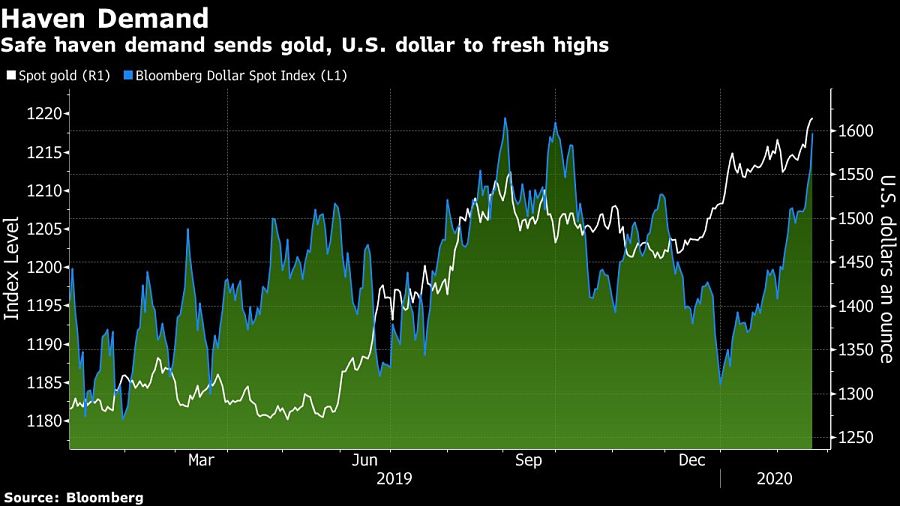
Spot gold advanced for a third straight day, rising as much as 0.7% to $1,623.73 an ounce. Holdings in global exchange-traded funds backed by bullion have risen to a fresh record, and are on course for a sixth weekly expansion, the longest streak since November.
“It looks like a self-fulfilling prophecy,” said ABN Amro Bank strategist Georgette Boele. As prices broke out, the move has attracted more investors into gold, she said.
Gold could reach $1,650 over the coming weeks, according to UBS Group’s global wealth management unit.
“With U.S. equity valuations elevated, any further upsets could see another bout of volatility, a further rally in government bonds and a higher gold price,” analysts Wayne Gordon and Giovanni Staunovo said in a note.
Copper prices, meanwhile, fell as much as 0.7% and are headed for the lowest close in over a week, and zinc hit the lowest level since 2016. Chinese officials again changed the way the nation officially reports the number of infections and asked firms not to resume work before March 11. That caused fresh worries, along with new fatalities outside of China, weakening demand for industrial metals.
“Hubei’s announcement that firms will remain closed until March 10th is reviving concerns that the follow-through impact may be more prolonged than anticipated,” TD Bank analysts including Bart Melek said in a note to clients.
‘What goes up’
In other precious metals, silver, platinum and palladium declined. All four major precious metals have risen this week.
Palladium, used in vehicle pollution-control devices, has been supported by concerns over a widening global deficit, and a pledge by the Chinese government to stabilize car demand.
Spot palladium has risen about 38% this year. The gains have still been eclipsed by those of rhodium, a less-liquid precious metal from the same group that expanded its year-to-date advance Thursday to 110%.
Both rhodium and palladium are advancing on tight supplies and as demand from the car industry remains strong, Anglo American Plc said Thursday.
Still, the coronavirus is threatening Chinese auto sales, with factories across the nation having suspended production and the global supply chain disrupted. That means prices have room to retreat in the short-term, Anglo’s CEO Mark Cutifani told investors. “What goes up quickly can come down twice as quick,” he said.

Chicago-based Mesirow Fiduciary Solutions adds flexPATH's plan-level outsourced fiduciary book, boosting its retirement market reach to $164 billion.

Also, Raymond James's employee advisor channel adds breakaways from Wells Fargo and Stifel, while UBS welcomes an ex-Morgan Stanley duo in Indiana.

It promised guaranteed principal and 10% monthly returns. The SEC says it invested nothing.

Ten years after entering the fee-based annuity market, MassMutual Ascend says nearly half its lifetime sales came in the past two years alone – but barriers remain among fee-only advisors.

Amplify, WealthReach, Zeplyn and Zocks have unveiled partnerships aimed at automating portfolio management, content creation, account opening, and client communication.
Northern Trust’s Ken Lassner shows advisors how to convert volatility into after-tax portfolio gains
Dan Biagini of American Equity says the steady decline of pensions, longer lifespans and a reset in interest rates are rewriting how advisors build retirement income

