A little over three years ago — Aug. 24, 2015 —
the S&P 500 plunged 5.3% in just a few minutes. The flash crash spooked stock investors, but it was particularly terrifying for investors in exchange-traded funds: iShares Select Dividend ETF (DVY) dived 36%, Guggenheim S&P 500 Equal Weight (RSP) tumbled 42% and iShares Conservative Allocation Fund (AOK) dropped 50%.
The 2015 flash crash wasn't unprecedented: In 2010, another flash crash dropped some ETF prices as much as 60% in a span of just 20 minutes, according to the Securities and Exchange Commission. For a few horrific seconds, shares of the iShares Russell 1000 Growth Index ETF (IWF) traded for a penny. Vanguard Total Stock Market ETF (VTI) sold for 13 cents.
What happened? In short, market makers walked away at the worst possible time.
Can it happen again— Yes.
ETF pricing depends on the ability of large investors to arbitrage the difference between the value of an ETF's underlying shares and its market price. When the two prices diverge too far, institutional investors can buy or sell creation units – blocks of stock in proportion to an ETF's holdings – and profit from the price difference between the two. In normal times, this keeps a fund's net asset value and its market price reasonably closely aligned.
All of this depends on a properly functioning exchange, though. During the two flash crashes, market orders were so unbalanced that trading creation units — bundles that may contain more than 500 securities, as in the case of the Vanguard offering — was nearly impossible. In the 2015 crash, there were 1,278 trading halts involving 471 different stocks and ETFs.
"Anything that happens at the exchange level tied to stocks inside the ETF will impact the ETF," said Todd Rosenbluth, senior director of ETF and mutual fund research at CFRA.
The 2015 flash crash occurred during the first few minutes of trading on a Monday. Some investors, worried about emerging-market problems and Chinese markets, had put in orders to sell over the weekend. What they didn't realize was that a market order executes at the first available bid, which can be far below its Friday closing price. Those who put in stop-loss orders suffered the same fate: If you put in an order to sell at $100 per share, you get the next bid, which could be $50 or less. The same rules would apply for stocks, Mr. Rosenbluth noted.
After the 2010 flash crash, the Securities and Exchange Commission modified some of its rules on trading halts. The new rules provide for halts when a stock rises or falls a specified percentage from its recent trading ranges, rather than by a percentage limit from its previous sale. As bad as the 2015 flash crash was, it would have been worse without those rules.
The revised rules don't preclude another flash crash, although they do seem to have lessened the problems from the most recent one. According to the SEC, 80% of all exchange-traded products didn't experience a trading halt in 2015, and most of the halts occurred in smaller ETPs.
Perhaps the biggest problem stems from ETF investors themselves. One of the major criticisms of ETFs is that they allow investors to trade immediately — something that most investors probably shouldn't do.
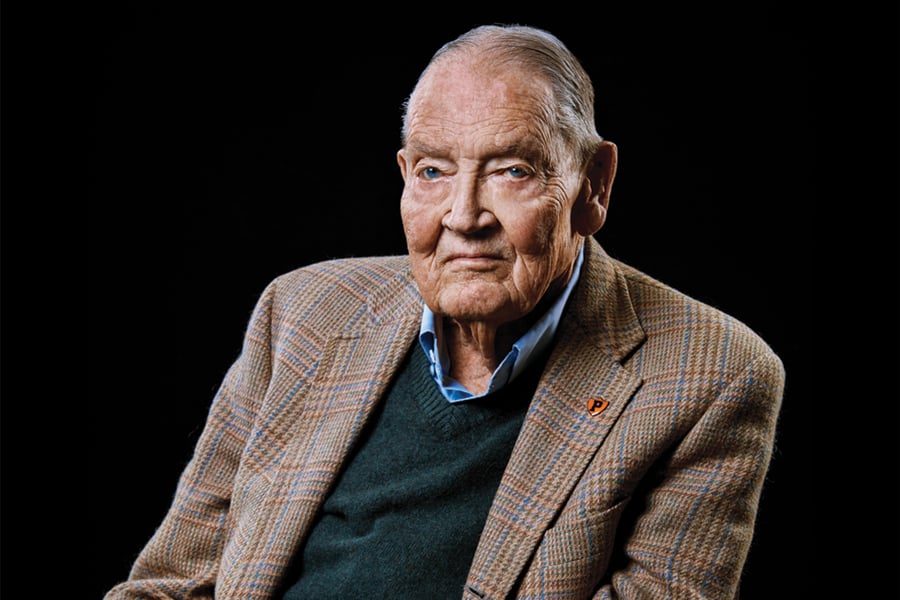
"My thesis is that ETFs are fine as long as you don't trade them," John Bogle, Vanguard's founder,
told InvestmentNews in 2016. "As long as they're not traded, they can be more convenient for some people."
Trading on gut feelings often leads to nausea.
"You shouldn't trade on a whim just because you have the ability to," Mr. Rosenbluth said. "Investing in a diversified product doesn't eliminate trading-related snafus."
If you don't understand how market orders and stop-loss orders work, you could be bellyaching about your trades for a long time.