
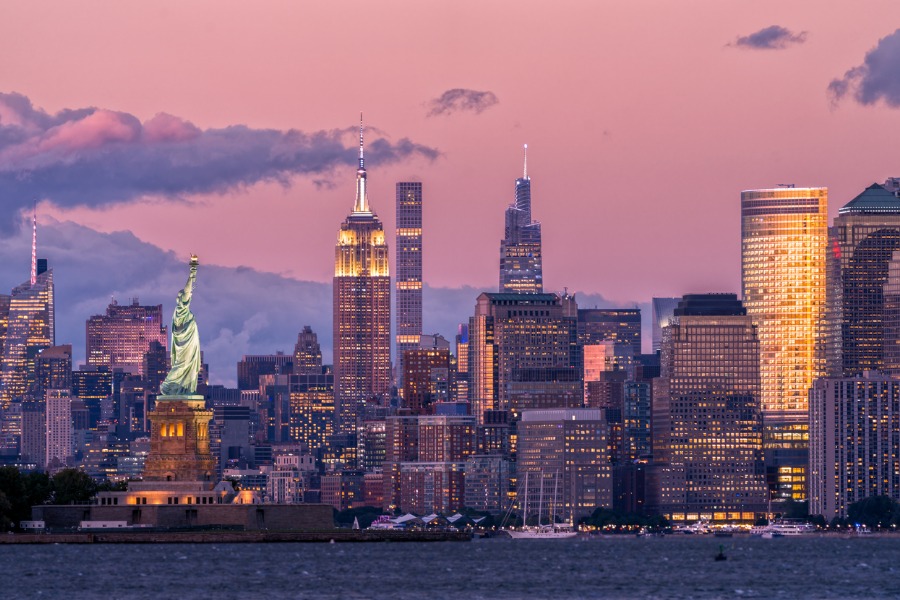
New York City is the world’s most-congested urban area for the second year in a row, costing the city an estimated $9.1 billion in lost time, a new report shows.
A typical motorist driving through the most populated city in the US lost 101 hours last year because of traffic during peak commuting times, the most among nearly 1,000 cities across the globe, according to the 2023 Global Traffic Scorecard from INRIX Inc., a traffic-data analysis firm.
Mexico City ranked second on the list, followed by London, Paris and Chicago. Other US cities in the global top 10 include Los Angeles and Boston, according to the report. Rankings are determined by the influence of congestion relative to population.
“Traffic congestion is both a bane and a barometer of economic health; it symbolizes bustling activity yet simultaneously hampers it,” Bob Pishue, transportation analyst at INRIX, said in a statement. “The surge in traffic congestion in urban areas indicated a revival of economic hubbub post-COVID, but it also led to billions of dollars in lost time for drivers.”
New York City tops the list again after Governor Kathy Hochul earlier this month indefinitely paused a tolling plan that aims to reduce traffic and raise money to update the city’s aging transit network. The congestion pricing initiative, the first in the US, would charge motorists driving into Manhattan’s central business district, which runs from 60th street to the southern tip of the island.
That area is getting more congested. Trips into downtown Manhattan increased by 13% last year, according to the INRIX report. Vehicles in downtown Manhattan drove at a speed of 11 miles per hour during peak morning periods in the first quarter of this year, an 11% drop from the same time frame in 2023.
INRIX estimates that gridlock cost the US more than $70.4 billion in 2023, a 15% boost from the prior year, with an average driver losing 42 hours to traffic congestion.
An increase in hybrid work and more flexible work schedules sparked by the pandemic has shifted the traditional peak travel times. Average hourly trip count for the middle of the day increased by 23% while dropping by 12% in the early morning hours and 9% in the afternoon, according to the report.
“Although congestion is returning to pre-COVID levels, we’re seeing interesting changes in congestion patterns due to the lingering effects of the pandemic,” Pishue said in the statement. “The continuation of hybrid and remote work is creating new travel peaks from what we’ve seen previously.”
The busiest corridor in the US last year was Interstate 4 in Orlando, Florida, between Beachline Expressway and the Western Beltway, jumping from 10th place in 2022, with drivers losing 124 hours when traveling on that route at 5pm, according to the report.

Just over 10% of advisors' wealth clients come from defined contribution plans, as capacity, data and technology gaps block the bridge to wealth

Deal creates a $20B-plus custody platform for private market investing in IRAs, months after Schwab closed its Forge Global purchase

Despite the good times, advisors should tread carefully, said one veteran industry executive.

Gallagher data reveals a huge gap in financial confidence between employees who work with an advisor and those who don't.

PEP assets hit $34bn at year-end 2025 as advisors navigate mandate deadlines and a 48% employer interest rate.
Knighthead Life entered the market with a competitive MYGA. A strong launch earned advisor confidence and paved the way for FIAs.
As AI makes financial information more accessible than ever, Lana Hock explains why human judgment, trust, and empathy remain the qualities clients value most in a financial advisor

