
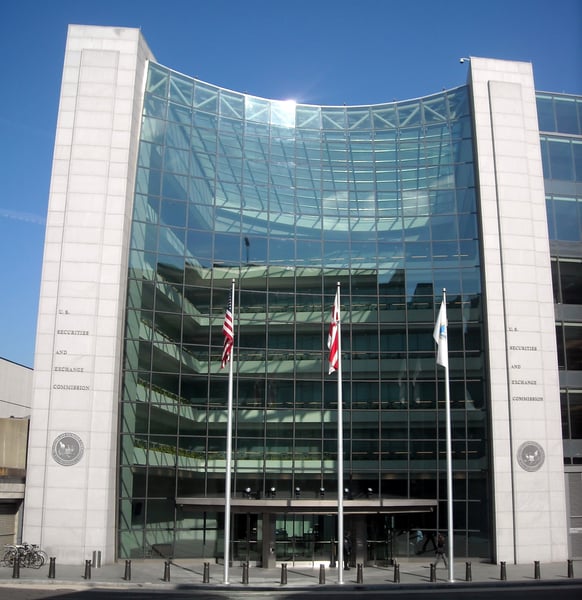
Full involvement by Americans in capital markets is an aspirational goal, and one that requires a partnership between agencies, according to regulators at a Tuesday event in Washington, D.C. Securities and Exchange (SEC) commissioner Hester Peirce spoke with Financial Services Institute (FSI) president and CEO Dale Brown during a fireside chat as a part of FSI's Capital Hill Day. Peirce said that the US's "capital markets are the envy of the world," and have good reguatory framework. But, she said, one area where the SEC can do better is to strive toward full participation.
"We would like to have full involvement by the public in our capital markets," Peirce said.
Robert Cook, president and CEO of the Financial Industry Regulatory Authority (FINRA), noted that, while today's markets are incredibly complicated, "we do need a regulatory structure that has more industry voice." Self-regulatory organizations (SROs) such as FINRA are one of the better ways to accomplish this, according to Cook.
"SROs can run utilities, reporting systems, and arbitration, which the SEC doesn't typically run," Cook said.
The SEC, which plays a supervisory role over FINRA needs the SRO to be the frontline regulator for broker-dealers. Cook noted that one of his missions, called "FINRA Forward," aims to constantly improve and evolve to live in an industry that constantly evolves as well. Cook listed several priorities, which included modernizing the rules, empowering member-firm compliance, and helping with cyber- and fraud risk. Cook said, "Are the rules getting in the way of running modern business? We don't want to impose unnecessary burdens during our oversight activity."
Peirce noted as well the need for this balance and the SEC's need to add value, rather than creating more problems. When considering regulation, Peirce said, "is there a problem that the private markets can solve?"
Peirce agreed in the essential nature of partnerships between the SEC and SROs such as FINRA, and there must be a healthy balance between federal, state, and SRO regulators. At the federal level, she said they must consider who is the right regulator for the various financial products, and at the state level, they are the "eyes and ears, but we need to do a better job working with these regulators," she said.
Lastly, she warned of the risk of the SEC offloading too many responsibilities to FINRA. "The SEC needs to be more careful about what we want FINRA to do," she said. "We need to keep a pulse on the market."

According to a federal charges Bradley Heppner, 60, received more than $150 million in payments through funneling money from GWG Holdings to a shell company.

A $1B fund allegedly skimmed 30% off the top, then swapped cash for locked-up stock.

Insiders allegedly rewrote projections three times in four days.

TCI Wealth Advisors also has also tapped JIFFYAI to unify onboarding and servicing, while TradePMR adds ICE market data to its Fusion advisor platform

Also, CAPTRUST adds a $300 million planning team from Sanctuary in its home market of Raleigh, and Sequoia Financial Group buys a Boulder family office.
Knighthead Life entered the market with a competitive MYGA. A strong launch earned advisor confidence and paved the way for FIAs.
As AI makes financial information more accessible than ever, Lana Hock explains why human judgment, trust, and empathy remain the qualities clients value most in a financial advisor
