
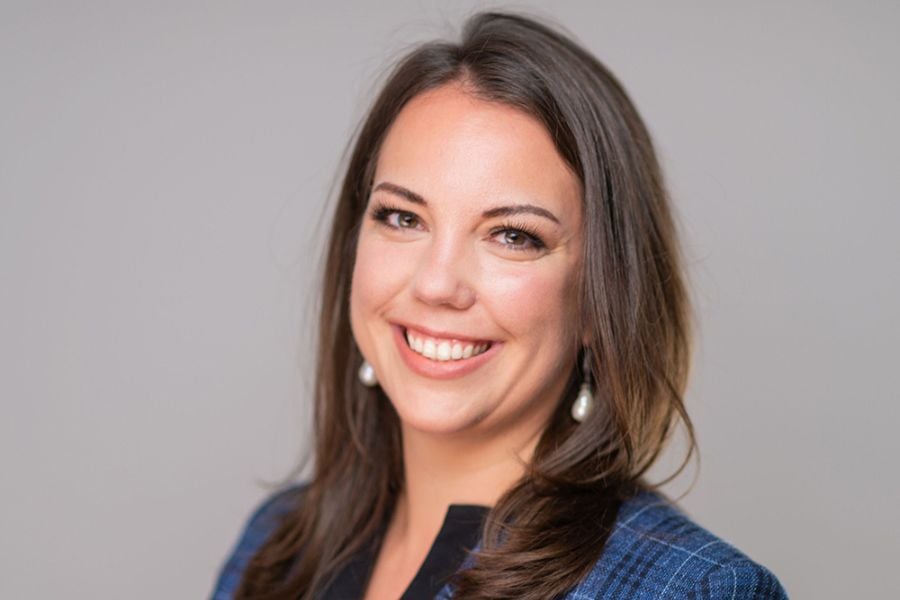
Making the turn from accumulation to philanthropic distribution is not as simple as it sounds, says Chloe Wohlforth, partner at Angeles Wealth Management.
But for those willing to put in the effort, the payoff can be enormous across generations.
“Unfortunately, most Americans are living in this mode of scarcity and are rather fearful of outliving their assets. The clients I'm working with are lucky where they're in a sea of privilege, where their assets are really long term in nature,” Wohlforth said. “When I mean long term, I mean that we're building portfolios for long-term compounding growth, for these assets to work for them, not only for their life, but for multiple generations.”
She says that when it comes to charitable giving, it's during those portfolio meetings when her clients really start to think big picture about their wealth, and how it’s more than merely a way for them to get “from point A to point B.”
It’s in those meetings where their eyes are opened and they can see how they can use the power of their wealth to reflect their values. And that’s the moment where Wohlforth says the conversations become intensely personal.
“The real question is ‘What is our client's legacy?’” she said. “What does that mean? And so we make sure that the plans we put forward reflect that and can make sure that their legacy is carried forward.”
There are a number of ways that clients can donate money to charity, including donor-advised funds and other sorts of trusts. To find the right fit for a client, Wohlforth says the first step is to have a transparent conversation about what they want to accomplish.
After that, she says it depends on whether the client is leaving the assets to family or giving them directly to charity.
“There's tons of different ways, but it's really that transparent conversation that's the key to making sure that we utilize these different strategies that are in place,” Wohlforth said. “There are experts out there that already have all the tools that are perfect for this time and we're in a very specific time right now with the sunsetting happening in 2025 of the 2017 Tax Cut and Jobs Act.”
Of course, getting family members around a table to hash out a giving plan is not easy. Each member has their own vision for what to do with the assets at stake.
“If a family has two generations and they're looking to give to charity, and the first generation wants to give to a charity that the second generation really disagrees with, then the thing to focus on is that they're a mission-driven family and that they're united by the fact that they want to give money away,” Wohlforth said.
That's the type of conversation that excites her, because she sees how it can unite a family.
“I think that there is a real value in focusing on the unity and just the fact that giving away to charity is powerful and something that can unite a family, even if the beneficiaries are different and might cause some friction,” Wohlforth said.

The financial advice industry has been facing inquiries into its cash sweep programs for years now.

Investor money allegedly went to strip clubs, exotic cars, and landscaping

Procyon adds $415 million in assets under management in New Jersey while Savant picks up a $213 million Southern California planning firm

With a growing number of real estate-rich Baby Boomers aging into retirement, some advisors may be failing to consider all the options available for those clients' assets.

Cornerstone Advisors study reveals compliance bottlenecks stall campaigns weeks after customer opportunities close.
As AI makes financial information more accessible than ever, Lana Hock explains why human judgment, trust, and empathy remain the qualities clients value most in a financial advisor
Northern Trust’s Ken Lassner shows advisors how to convert volatility into after-tax portfolio gains

