
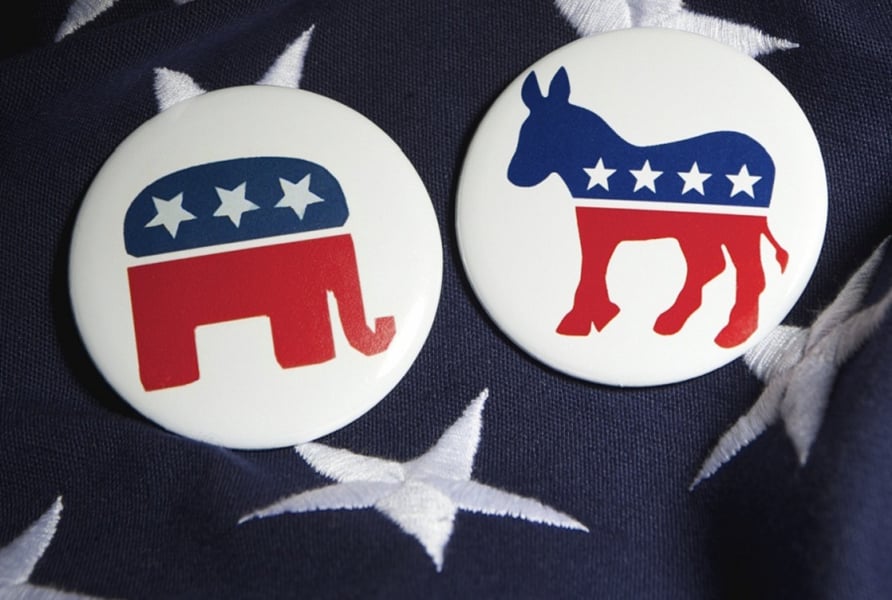
Get on up folks, it’s (political) party time America.
The Republican National Convention kicks off in Milwaukee on Monday night while the Democrats will be gathering only a few weeks later in Chicago. All the networks - not to mention Tweeters, bloggers and other social media influencers - will be spread across the stadium floors covering the action.
Meanwhile, carefully watching the speeches from their homes, offices and home-offices will be fund managers, financial advisors and every-day investors. All of whom tuning in to assess each party’s platform and discern how it will affect their respective portfolios.
Ahead of those two seismic events, InvestmentNews touched base with a few financial folks to see how this summer’s political pyrotechnics will impact their financial futures.
Ben Cook, portfolio manager for the Hennessy Energy Transition fund, on oil and gas stocks:
“Historically speaking, a Democrat in the executive branch of the office has actually been better for commodity prices. The policies that typically restrict the projects that ultimately facilitate the production and transportation and storage of energy tend to limit the amount of supply in the market and, and ironically, lift commodity prices, which helps energy producers.”
George Milling-Stanley, chief gold strategist, State Street Global Advisors, on precious metals:
“Geopolitics is particularly nasty right now and unfortunately in history, whenever the geopolitical situation has been bad, gold has done well. But also the economy is a little rocky, too, with the possibility that the Fed might keep rates too high for too long. Higher for longer is all very well, but too high for too long could push us into recession. That could be very, very good for gold as well.”
Doug Fincher, portfolio manager at Ionic Capital Management, on inflation:
“What's one of the things that Trump has talked about? He's talked about replacing Powell, the core of his inflation fight, not to mention 10 percent tariffs. We've got $35 trillion in debt, the annualized payments on our debt are $1 trillion. Deficits, potential inflation, crazy monetary policy - I don't think either is going to do anything about the deficit. And it's interesting because in the last couple months, you've seen interest rates actually rally on good economic data, particularly in the long end. I think that's telling you that the inflation mavens in the bond market are saying we're more worried about the potential fiscal side of the house than we are even about inflation.”
Alex Morris, CEO of F/m Investments, on US Treasuries:
“There's a lot of thought out there saying that a Trump victory is going to add more inflation. But I live in Washington, DC, and I hear a lot of campaign promises that rarely come into fruition. And historically, regardless of which party is in office, things tend to go pretty well for the U.S. economy. So we think that we're so far so good. It's going to matter less who wins and more what folks think about that win. The legitimacy of that win, and then that new part that whoever is in power is able to actually get some things done.”
Philipp Carlsson-Szlezak, author of Shocks, Crises and False Alarms on the “next” financial crisis:
“I think they will be able to deal with the next structural or big crisis. In moments of crisis, usually the ability to act rises. Bipartisanship suddenly comes back. You come together to get stuff done. And so usually in times of crisis is when we see the biggest pieces of legislation move quickly. That was true in 2008, Tarp back then only $700 billion. And you saw it again in the pandemic when the numbers went much, much bigger. Why? Nobody wants to see the house burned down. So politicians come together to mobilize big resources.”

The financial advice industry has been facing inquiries into its cash sweep programs for years now.

Investor money allegedly went to strip clubs, exotic cars, and landscaping

Procyon adds $415 million in assets under management in New Jersey while Savant picks up a $213 million Southern California planning firm

With a growing number of real estate-rich Baby Boomers aging into retirement, some advisors may be failing to consider all the options available for those clients' assets.

Cornerstone Advisors study reveals compliance bottlenecks stall campaigns weeks after customer opportunities close.
As AI makes financial information more accessible than ever, Lana Hock explains why human judgment, trust, and empathy remain the qualities clients value most in a financial advisor
Northern Trust’s Ken Lassner shows advisors how to convert volatility into after-tax portfolio gains

