
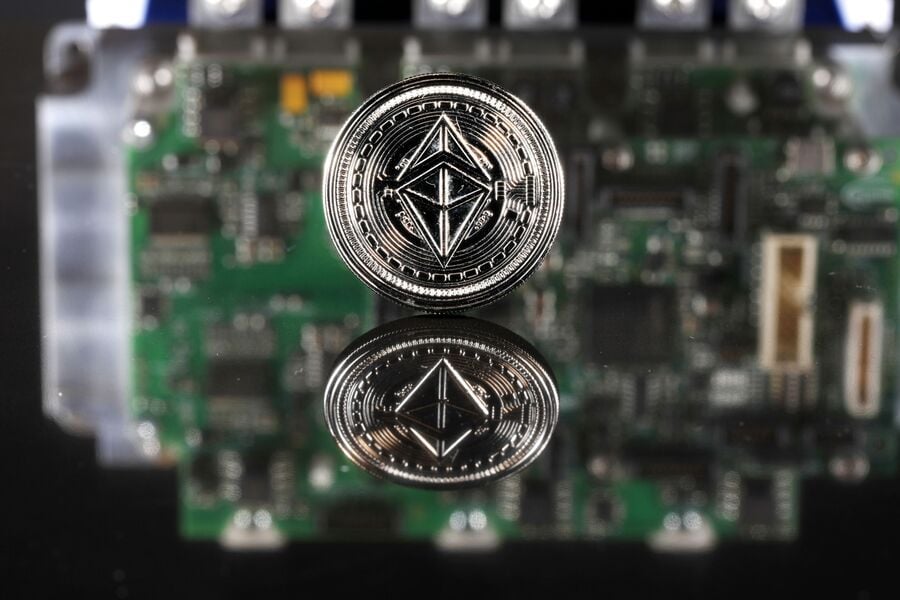
US regulators were seen approving the first exchange-traded funds that invest directly in Ether, the world’s second-largest cryptocurrency, in the latest boost to the $2.4 trillion digital-asset industry.
The Securities and Exchange Commission signed off on spot-Ether ETF applications from 21Shares, Bitwise Asset Management Inc., BlackRock Inc., Invesco Ltd. Franklin Templeton, Fidelity Investments and VanEck, according to regulatory filings as well as statements from asset managers on Monday.
The SEC didn’t immediately return requests for comment.
The development paves the way for the imminent trading of the products. It’s been heralded by industry proponents as the latest sign that policymakers are capitulating to the virtual-currency boom after the success of US-listed Bitcoin ETFs, which have gathered billions of dollars from retail and institutional investors alike since January.
It all marks a softening in the regulatory climate after fund issuers were bracing for a rejection earlier this year. But optimism for approval suddenly rose in May, when the SEC signed off on filings by venues including Cboe Global Markets Inc., Nasdaq and the New York Stock Exchange to list the products.
Several issuers including BlackRock and Fidelity are waiving fees for an extended period of time once their funds begin trading.
Ether, the native token of the Ethereum blockchain, is up more than 50% year to date.
“Our clients are increasingly interested in gaining exposure to digital assets through exchange-traded products (ETPs) which provide convenient access, liquidity and transparency,” said Jay Jacobs, US head of thematic and active ETFs at BlackRock, in a statement. “Ethereum’s appeal lies in its decentralized nature and its potential to drive digital transformation in finance and other industries.”
In late June, VanEck submitted a filing for a product investing in Solana, the fifth-biggest cryptocurrency by market value, another attempt by ETF issuers to ride demand for digital assets.

A Nationwide survey finds 47% of GLP-1 users have never discussed the drugs’ financial impact with an advisor, even as many dip into savings.

The hundreds of millions of dollars from a sale of Inspired Healthcare properties does not mean an immediate windfall for investors.

Its SEC filings said one thing - a congressional probe said another.

Sham agreements allegedly padded revenue by 345%.

"Most pre-retirees are uncomfortable making key retirement income decisions without an advisor's help," said Chris Bailey of Cerulli.
Knighthead Life entered the market with a competitive MYGA. A strong launch earned advisor confidence and paved the way for FIAs.
As AI makes financial information more accessible than ever, Lana Hock explains why human judgment, trust, and empathy remain the qualities clients value most in a financial advisor

